The Federal Reserve's Beige Book lands in a week where June CPI and PPI data will either confirm or challenge the market's fully priced-in December rate hike.
The Federal Reserve releases its Beige Book Wednesday as investors brace for June inflation data that will test whether the market's fully priced-in quarter-point hike by December remains justified, with the summary of economic conditions set to provide the first district-level snapshot since Chairman Kevin Warsh took over.
"The Beige Book will provide the first district-level snapshot of economic conditions since the June meeting, where the minutes showed almost all participants willing to hold or ease if inflation slows," said Daniela Hathorn, analyst at Capital.com. "Kevin Warsh's continued refusal to provide explicit forward guidance means markets remain highly data dependent."
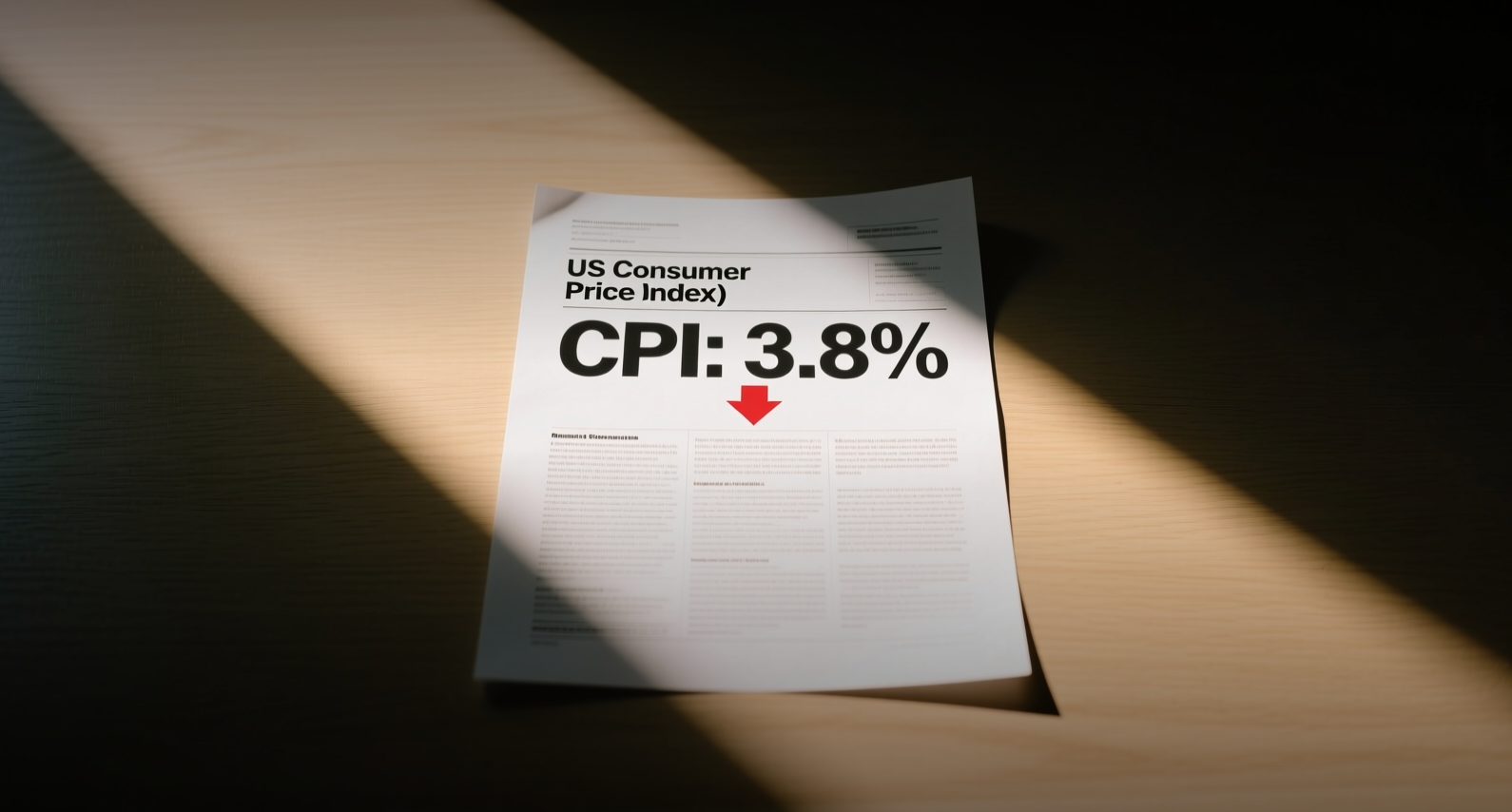
Economists expect June headline CPI to rise 3.8% year-on-year Tuesday, cooling from May's 4.2% pace, with core CPI slowing to 2.8% from 2.9%. The Producer Price Index Wednesday is forecast to ease to 6.2% year-on-year from 6.5%, with both monthly readings expected to show a 0.1% decline. The data arrives after the June Fed minutes revealed a split: almost all participants were willing to hold or ease if inflation slows, while almost all leaned toward firming if inflation proved frustrating.
The Beige Book's qualitative assessment of labor market tightness and wage pressures will carry extra weight given that policy divide. OIS markets currently price one quarter-point hike by the December meeting, according to Bloomberg data. If the Beige Book shows softening conditions alongside cooling CPI, rate-cut expectations could re-emerge; if it confirms persistent inflation, the hawkish consensus will harden.
The Beige Book, a summary of economic conditions across the Fed's 12 districts compiled ahead of each policy meeting, arrives at 2 p.m. Washington time Wednesday. It will be the first such report under Warsh, who took over in June and has maintained the Fed's data-dependent posture without offering explicit forward guidance.
The last time the Beige Book used language suggesting broad-based softening was in the second half of 2024, preceding a 50-basis-point cut in September of that year. The S&P 500 rose 1.5% in the week following that release, while two-year Treasury yields fell 12 basis points. A repeat of such language now would carry different implications given the current 5.25% to 5.50% fed funds rate, which has been unchanged since July 2023.
Tuesday's CPI report will set the tone for the Beige Book's reception. The headline reading of 3.8% would still be nearly double the Fed's 2% target, but the deceleration from May's 4.2% would mark the first meaningful cooling since January. Core CPI at 2.8% would be the lowest since early 2024. The PPI data Wednesday morning will provide a pipeline inflation read before the Beige Book's afternoon release.
The cross-asset stakes are clear. Two-year Treasury yields have held near 4.80% as the market priced out rate cuts, while the Bloomberg Dollar Index has gained 3.2% this quarter. A Beige Book that corroborates softer inflation could trigger a reversal in both, while one that highlights persistent wage pressures would reinforce the dollar's bid and keep yields elevated.
The next Fed policy decision is Sept. 16-17, followed by meetings in November and December. The Beige Book's characterization of labor market conditions — particularly wage growth and hiring difficulty — will be scrutinized for clues on whether the committee's internal divide tilts toward action or patience.
This article is for informational purposes only and does not constitute investment advice.