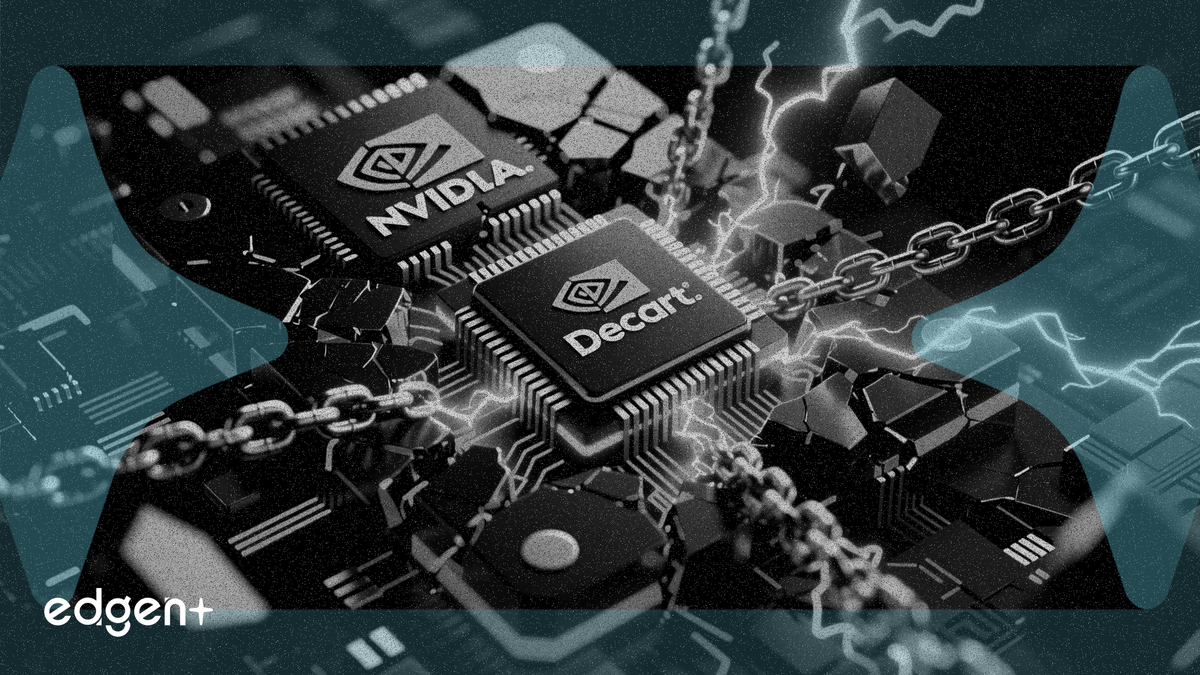
Una startup con sede en San Francisco ha recaudado 300 millones de dólares de inversores, incluida la propia Nvidia, para crear un "gran ecualizador" para el mercado de chips de IA.
Decart, una startup de software de IA, ha asegurado 300 millones de dólares en una nueva ronda de financiación para acelerar la adopción de su software agnóstico al hardware, un desafío directo al bloqueo de proveedores que ha ayudado a convertir a Nvidia en la fuerza dominante en la computación de IA. La ronda, liderada por Radical Ventures, valora a la empresa de un año de antigüedad en casi 4.000 millones de dólares, un aumento significativo con respecto a su valoración de 3.100 millones de dólares en agosto.
"Mover modelos entre diferentes hardwares es increíblemente difícil, y hemos visto empresas firmando contratos por valor de cientos de millones de dólares para ayudarlas a cambiar modelos de un hardware a otro", dijo Dean Leitersdorf, cofundador y director ejecutivo de Decart, en una entrevista. "Somos algo así como el gran ecualizador".
El producto principal de la empresa, el Decart Optimization Stack (DOS), es un motor de software que permite a los desarrolladores de IA mover sus modelos entre procesadores de Nvidia, Amazon.com, Google y otros sin una costosa programación personalizada. En una señal notable del potencial de la tecnología, Nvidia se unió a la ronda de financiación, un movimiento contraintuitivo dado que la plataforma de Decart reduce directamente la fricción de usar chips de la competencia. Otros patrocinadores incluyen a Atreides Management y al cofundador de OpenAI, Andrej Karpathy.
La inversión destaca un punto crítico de dolor en la industria de la IA: la escasez de potencia informática y una profunda dependencia del hardware de Nvidia, que controla aproximadamente el 90 por ciento del mercado de chips de IA. A medida que las empresas invierten miles de millones en infraestructura de IA, la capacidad de usar cualquier chip disponible de cualquier proveedor podría reducir drásticamente los costes y acelerar los plazos de los productos, una oportunidad de mercado que Decart está valorada ahora en casi 4.000 millones de dólares para capturar.
El desmoronamiento del foso de CUDA
Durante años, la principal ventaja competitiva de Nvidia no han sido solo sus potentes GPU, sino su entorno de software patentado CUDA. Este ecosistema de software hacía difícil y costoso para los desarrolladores cambiar sus modelos de IA para que funcionaran en hardware de otros fabricantes. Sin embargo, este "foso" de software está siendo desafiado a medida que la industria adopta cada vez más marcos universales como PyTorch y JAX, diseñados para ser agnósticos al hardware.
La plataforma DOS de Decart es un habilitador clave de este cambio. Actúa como una capa de abstracción, ocultando la complejidad del hardware subyacente al desarrollador. Para un programador, un clúster de chips mezclados puede funcionar como un sistema único y unificado. Esto promete convertir el hardware subyacente en una materia prima, obligando a los fabricantes de chips a competir más directamente en precio y rendimiento en lugar de depender del bloqueo de software.
Una apuesta contraintuitiva
La participación de Nvidia en la ronda de financiación es un movimiento revelador. Si bien DOS podría erosionar su dominio del mercado basado en CUDA, la inversión sugiere que Nvidia ve el cambio hacia la abstracción de hardware como inevitable y quiere una participación en un potencial creador de reyes. Al invertir, Nvidia obtiene información sobre una parte crucial del ecosistema y se protege contra el riesgo de ser desplazada por una solución impulsada puramente por software.
"Cada chip será mejor por esto", dijo Victor Lazarte, socio general de Benchmark, uno de los primeros inversores de Decart. El sentimiento sugiere que un mercado de hardware más fluido y competitivo beneficia a toda la industria de la IA al acelerar la innovación y reducir los costes, una marea que aún podría elevar a todos los barcos, incluido el de Nvidia.
La inyección de 300 millones de dólares permitirá a Decart contratar ingenieros agresivamente y adelantar su hoja de ruta de productos. La empresa, fundada en 2023 por los ingenieros israelíes Dean Leitersdorf, Orian Leitersdorf y Moshe Shalev, también desarrolla "modelos de mundo" para simulación 3D, con Twitch de Amazon y sus divisiones minoristas entre sus clientes.
Para los inversores, el ascenso de Decart pone de relieve la capa de software de la estructura de IA como un campo de batalla crítico. Si bien las acciones de Nvidia (NVDA) se han disparado por las ventas de hardware, el éxito de empresas como Decart podría presionar sus márgenes a largo plazo al reducir los costes de cambio para sus clientes. El movimiento refleja la dinámica vista en otros sectores tecnológicos, donde los estándares abiertos y la interoperabilidad acaban triunfando sobre los sistemas cerrados y patentados.
Este artículo es solo para fines informativos y no constituye asesoramiento de inversión.