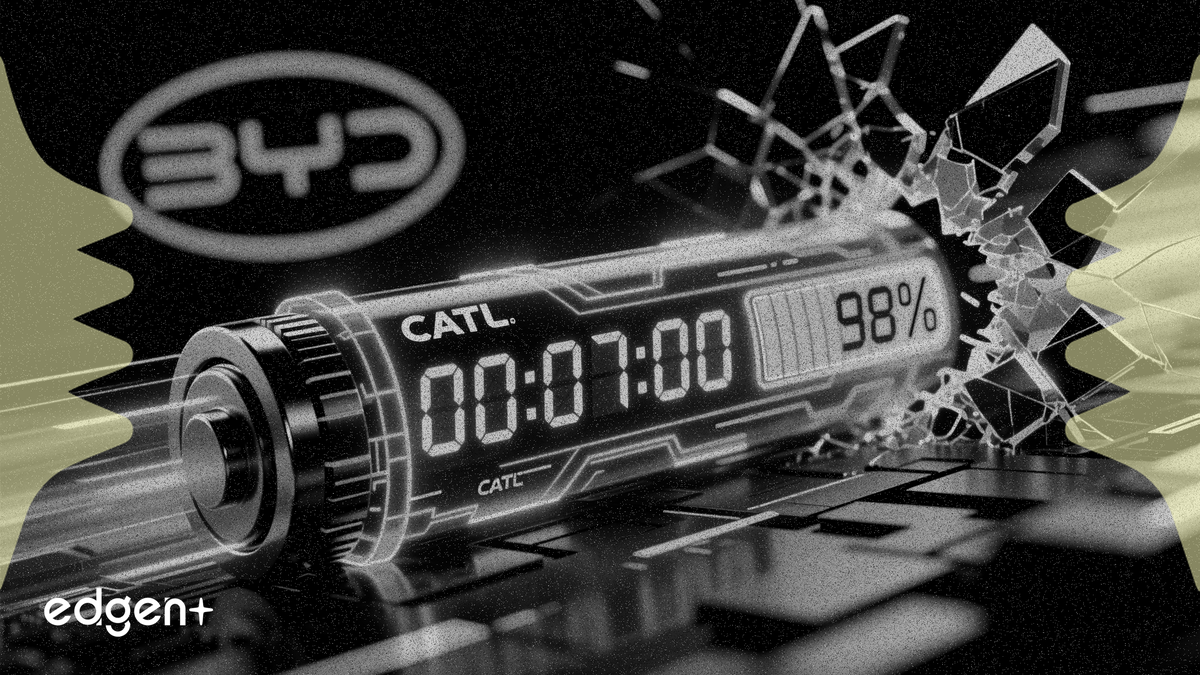
Le plus grand fabricant mondial de batteries a dévoilé une série de nouvelles technologies visant à éliminer l'anxiété liée à l'autonomie et les temps de charge, notamment une batterie capable d'ajouter des centaines de kilomètres d'autonomie en un temps record.
Contemporary Amperex Technology Co. Ltd. (CATL) intensifie la course aux batteries pour véhicules électriques (VE) en dévoilant une nouvelle batterie à charge ultra-rapide qui se recharge en un peu plus de six minutes, défiant directement son rival BYD Co. Ltd. Cette initiative, annoncée lors de la « Super Technology Day » de CATL à Pékin, vise à consolider sa domination du marché en s'attaquant aux principaux obstacles à l'adoption des VE — le temps de charge et l'anxiété liée à l'autonomie — tout en explorant de nouvelles chimies de batteries.
« Pour que la technologie chinoise s'internationalise, elle ne doit pas seulement compter sur la vitesse et l'échelle, mais aussi sur la qualité de l'innovation, la capacité de validation et la crédibilité de la marque », a déclaré Robin Zeng, président et PDG de CATL, lors de l'événement.
La batterie Shenxing Superfast Charging de troisième génération, un pack lithium-fer-phosphate (LFP), peut passer d'un état de charge de 10 % à 98 % en seulement 6 minutes et 27 secondes. C'est près de trois minutes de moins que les neuf minutes nécessaires à son principal concurrent, la Blade Battery 2.0 de BYD, pour atteindre une charge de 97 %. La nouvelle batterie de CATL peut charger de 10 à 80 % en trois minutes et 44 secondes et affiche des performances robustes par grand froid, se rechargeant de 20 à 98 % en neuf minutes à des températures de -30°C (-22°F).
Avec une part de 42,1 % du marché mondial des batteries pour VE au cours des deux premiers mois de 2026, selon SNE Research, CATL s'appuie sur sa taille pour établir de nouvelles références sectorielles. La capacité de charge ultra-rapide, rendue possible par une résistance interne record de 0,25 milliohm, correspond pratiquement au temps nécessaire pour faire le plein d'un véhicule à essence conventionnel, une étape cruciale pour convaincre les consommateurs de passer à l'électrique. Cette avancée met la pression sur les constructeurs automobiles mondiaux, y compris des clients clés comme Tesla, Toyota et Xiaomi, pour intégrer cette nouvelle technologie afin de rester compétitifs.
### Au-delà de la vitesse : 1 000 km d'autonomie et nouvelles chimies
Au-delà de la vitesse de charge, CATL a également présenté deux nouvelles batteries ciblant le marché haut de gamme à longue autonomie. La batterie Qilin de troisième génération, avec une densité énergétique de 280 Wh/kg, permet une autonomie de 1 000 kilomètres (621 miles) dans un pack ne pesant que 625 kg.
Repoussant encore les limites, l'entreprise a révélé sa batterie Qilin condensée (Qilin Condensed Battery), qui applique pour la première fois une technologie de qualité aéronautique aux voitures particulières. Cette batterie atteint une densité énergétique de 350 Wh/kg, permettant une autonomie de 1 500 km pour les berlines.
De plus, CATL a annoncé que sa batterie sodium-ion Naxtra entrerait en production de masse à grande échelle d'ici fin 2026. Après avoir surmonté des obstacles de fabrication majeurs, l'entreprise est prête pour une industrialisation au niveau GWh. Les batteries sodium-ion ne nécessitent ni lithium ni cobalt, offrant une alternative à bas coût et résiliente en ressources, ce qui pourrait impacter significativement les secteurs des VE d'entrée de gamme et du stockage d'énergie.
### Construire l'infrastructure
Pour soutenir son nouveau matériel, CATL étend son réseau de recharge. L'entreprise prévoit de construire plus de 100 000 stations intégrées de supercharge et de remplacement de batteries à travers la Chine d'ici fin 2028, en partenariat avec des constructeurs tels que Changan, Chery et SAIC-GM-Wuling. Cette architecture unifiée, où chaque station de remplacement est aussi un moyeu de supercharge, vise à créer une expérience de ravitaillement fluide et à accélérer la transition vers la mobilité électrique.
L'offensive technologique de CATL renforce son rôle indispensable dans la chaîne d'approvisionnement automobile mondiale. Pour les investisseurs, la capacité de l'entreprise à innover sur plusieurs chimies — du LFP ultra-rapide au sodium-ion économique — crée des flux de revenus diversifiés et un rempart concurrentiel redoutable. Ces avancées devraient accélérer l'adoption des VE, accentuant la pression sur les constructeurs traditionnels.
Cet article est destiné à des fins d'information uniquement et ne constitue pas un conseil en investissement.