

BYD lifted its 2026 overseas sales guidance to 1.9-2.0 million vehicles and set a 2027 target above 2.5 million as exports surged 85.7 percent year on year through August.
BYD lifted its 2026 overseas sales guidance to 1.9-2.0 million vehicles and set a 2027 target above 2.5 million as exports surged 85.7 percent year on year through August.
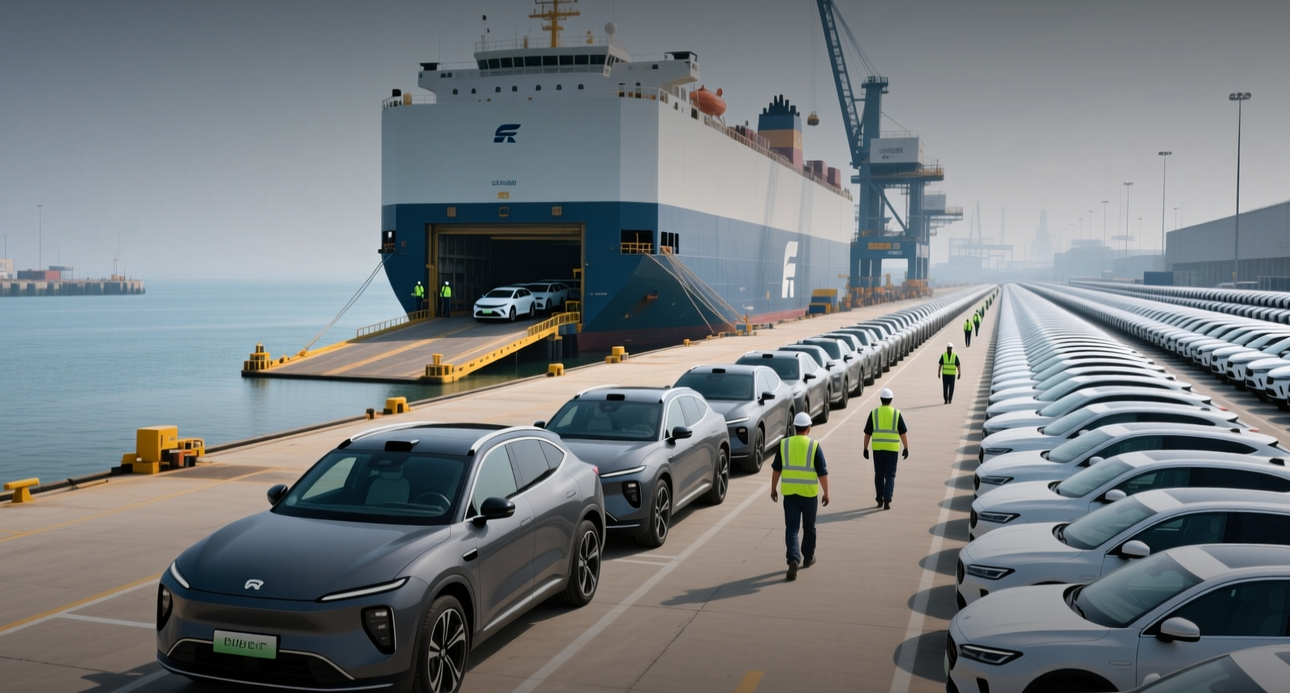
BYD's export engine is outrunning management's own forecasts, with the automaker now guiding for 1.9-2.0 million overseas sales in 2026 and more than 2.5 million in 2027 as domestic deliveries contract sharply.
Deutsche Bank analysts led by Wang Bin disclosed the revised targets in a research note Monday, citing BYD management's comments on a post-earnings call. Management said shipping capacity constrained overseas sales this year and that volumes could have been higher with sufficient capacity, according to the note.
The revised guidance marks the third increase this year, up from 1.3 million vehicles set in January and 1.5 million in March. August exports hit a record 189,466 vehicles, up 134.5 percent year on year and accounting for 43 percent of total sales that month. Between January and August, BYD moved 1,162,260 vehicles abroad, up 85.72 percent from a year earlier, while domestic sales fell 32.72 percent to 1,505,755 units.
The shift has already reshaped BYD's revenue mix. First-half overseas revenue climbed 33.9 percent to 181.27 billion yuan ($26.7 billion), accounting for 52.6 percent of total group sales — the first time BYD generated more revenue outside China than at home. Management said profit per vehicle sold overseas ran at about 20,000 yuan ($2,950) in the first half, a figure the company expects to hold broadly stable in the near term.
BYD's home market tells a different story. First-half revenue from China plunged 30.7 percent to 163.55 billion yuan, dragging group revenue down 7.1 percent to 344.8 billion yuan. Net profit attributable to shareholders fell 20.5 percent to 12.3 billion yuan. Second-quarter profit rose 30 percent year on year — the first quarterly increase in more than a year — though it still missed analyst expectations.
The contraction extends beyond BYD. Battery makers including CATL posted combined net profits exceeding 50 billion yuan in the first half of 2026, up 49 percent, while major automakers including BYD and Great Wall saw profits decline 19 percent to 28.8 billion yuan. Retail sales of electric vehicles in China fell 14 percent to roughly 4.7 million units over the same stretch.
The overseas push is supported by a growing manufacturing footprint. BYD's Indonesian plant in Subang has started production with annual capacity of 150,000 vehicles, backed by a $908 million investment. The Brazilian facility, already BYD's largest overseas market, is expanding toward 300,000 units annually. The Hungarian plant — BYD's first European passenger vehicle factory — is expected to begin assembly in November or December. Management is also evaluating additional overseas manufacturing locations, including potential takeovers of underutilized European capacity.
Local production reduces exposure to import tariffs. BYD faces a combined 27 percent duty on Chinese-built battery electric vehicles entering the European Union — a 17 percent countervailing rate on top of the standard 10 percent — and remains locked out of the United States, where duties on Chinese-built EVs exceed 100 percent.
In China, BYD is counting on flash charging technology to drive a domestic recovery. Management said the order backlog for flash charging-compatible vehicles stood at about 250,000 units, with supply shortages of the second-generation Blade Battery expected to be fully resolved in the first quarter of 2027. The company reiterated plans to build 20,000 flash charging stations in China by the end of 2026, followed by 30,000 additions in 2027 and 40,000 in 2028, bringing the total to 90,000. Overseas, BYD plans 6,000 stations by March 2027.
BYD shares, trading around €9.30, sit roughly 26 percent below the 52-week high of €12.49 touched on October 2. The stock has lost 13 percent year to date. The market's skepticism reflects the broader profitability squeeze across China's auto sector, where battery makers' earnings now run 75 percent higher than those of car companies.
For investors, the central question is whether BYD's overseas engine can generate enough earnings muscle to offset margin erosion at home. The raised targets suggest management believes it can — but the share price is still waiting for proof. Tesla, which competes with BYD in Europe and Southeast Asia, faces a formidable challenger as BYD's export volumes approach levels that could reshape regional market share dynamics.
This article is for informational purposes only and does not constitute investment advice.
