

AI chip financing is shifting from a demand story to a credit story, and Broadcom's 6 percent drop shows investors are repricing the risk.
AI chip financing is shifting from a demand story to a credit story, and Broadcom's 6 percent drop shows investors are repricing the risk.
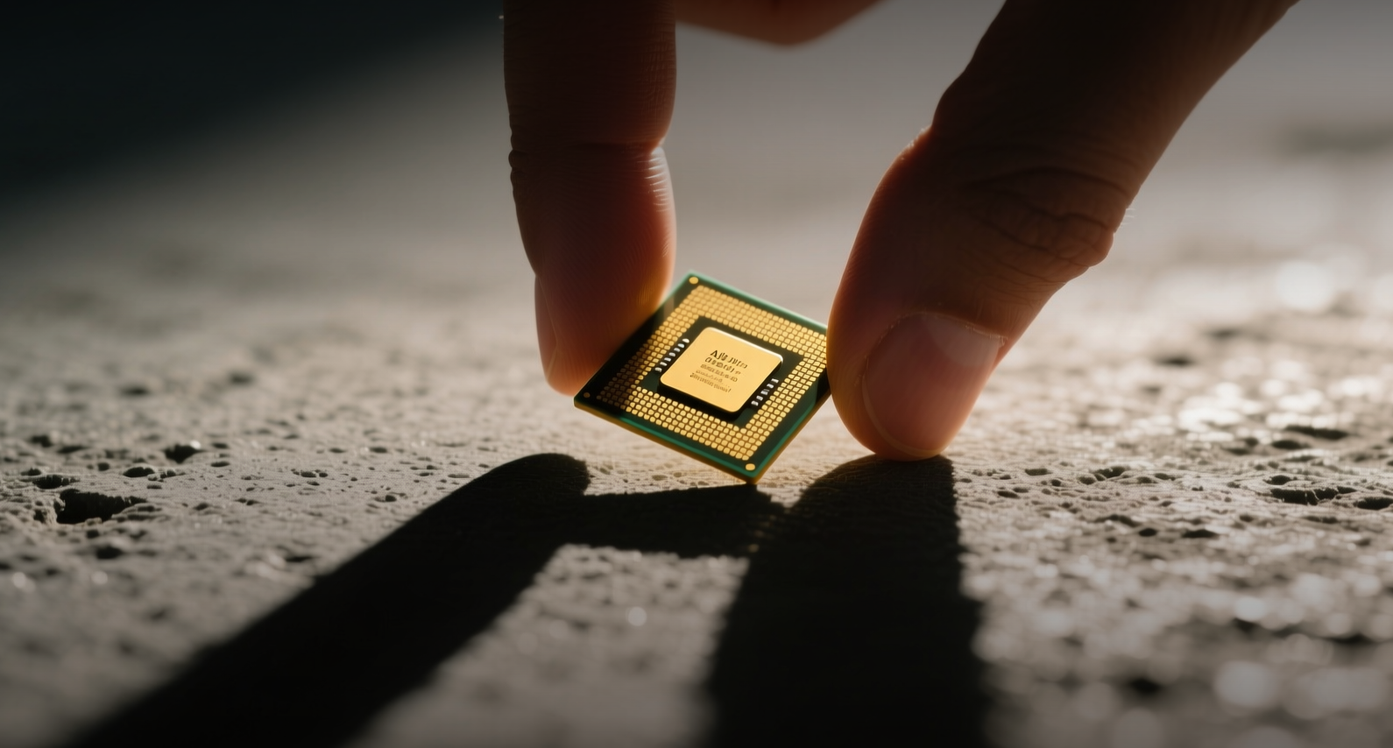
AI chip financing is shifting from a demand story to a credit story, and Broadcom's 6 percent drop shows investors are repricing the risk.
Broadcom's 5.92 percent drop to $393.08 on Aug. 14 erased $118 billion in market value as Bank of America flagged that its AI chip financing platform could carry $370 billion in guarantee exposure by mid-2029.
"Investors are repricing the guarantee exposure as debt, even though the $370 billion figure is a worst-case ceiling, not a liability Broadcom must repay," Tom Curcuruto, the Bank of America analyst who downgraded Broadcom's credit rating to marketweight, said.
The XPV platform, built with Apollo and Blackstone, leases Broadcom's custom XPU chips to customers; its first $35 billion deal backs about 1 gigawatt of compute for Anthropic. Bank of America estimates that even a 100 percent default would cost Broadcom $42 billion, while a 25 percent default rate implies $10.5 billion in losses — against roughly $85 billion in projected 2027 free cash flow after dividends.
The selloff marks a shift in how the market prices AI infrastructure: as financing becomes the main source of marginal compute, chipmakers are absorbing credit risk once carried by customers and lenders. Nvidia, which unveiled a $500 billion financing platform with Apollo, BlackRock, Blackstone, Brookfield, Goldman Sachs and KKR on Aug. 10, fell 2.8 percent the next day, and its five-year credit default swap spread has more than doubled since late May.
The number that rattled investors is a stress-test ceiling, not an actual obligation. Broadcom does not lend directly to customers; it supports the debt behind XPV through residual-value guarantees, promising to take back or resell chips if a lessee stops paying. In its latest 10-Q filing, Broadcom disclosed that even under a 100 percent default with zero recovery value, its maximum exposure on the first $35 billion deal would be $29 billion.
Bank of America's $370 billion figure assumes the platform expands to 20 gigawatts at 2 gigawatts per quarter, roughly $150 billion in new debt added in 2027 alone. The bank simultaneously raised its fiscal 2026 revenue and EBITDA forecasts for Broadcom by 10 percent and 13 percent — a sign the concern is about the financing structure, not the chip business itself.
The comparison to 2008 subprime misses a key difference: subprime collateral was depreciating homes owned by borrowers who could not pay, while AI chips are assets whose lease prices are rising. Nvidia's H100 one-year lease rate climbed from $1.70 per GPU-hour in October 2025 to $2.35 by March 2026, and six-year-old A100 chips still run in production. That is why Nvidia's Jensen Huang has offered residual-value support of up to 25 percent on some deals.
The Aug. 11 announcement of Nvidia's platform separated the market into clear winners and losers. Apollo rose 6.26 percent and KKR gained 6.88 percent — the asset managers that collect fees as the platforms scale. Google fell 3.84 percent, its worst day in six months, and Amazon dropped 2 percent, even though their balance sheets face little direct risk from the financing structures.
Broadcom's decline on Aug. 14 was isolated: the iShares Semiconductor ETF fell just 0.7 percent and Intel dropped 2 percent, showing the market was repricing Broadcom's balance sheet, not the whole sector. Applied Materials posted record third-quarter revenue and profit the same week yet still fell 5 percent after hours, a sign investors are recalculating risk premiums across the AI supply chain.
The credit market has been ahead of equities. Nvidia's five-year CDS spread has roughly doubled since late May to about 79.8 basis points, near its record 83.7 basis points, and AI-related bond issuance reached $344 billion by early August — more than $200 billion above all of 2025. CoreWeave, which issued the first compute-collateralized obligation in May, pays more than 9 percent on its latest loan, 5.5 percentage points above the benchmark.
Michael Burry, who predicted the 2008 crisis, has added short positions in AI names and warned of "Enron's shadow" over the financing model. S&P has indicated it prefers to treat residual-value guarantees as debt, which would raise reported leverage across the sector.
The next test comes in September, when Broadcom reports earnings and Nvidia's platform seeks its first actual capital raise. If hyperscaler capex guidance — already near 100 percent of operating cash flow by 2026 consensus — turns lower, the credit story could harden into a cycle story. For now, the market is pricing a valuation compression driven by rising financing costs, not a collapse in AI demand.
This article is for informational purposes only and does not constitute investment advice.
