

Key Takeaways:
- Broadcom is designing custom AI chips for OpenAI, its fifth major hyperscaler partner
- The company targets $100 billion in AI chip revenue by fiscal 2027
- Broadcom holds roughly 70% of the custom AI accelerator design market
Key Takeaways:
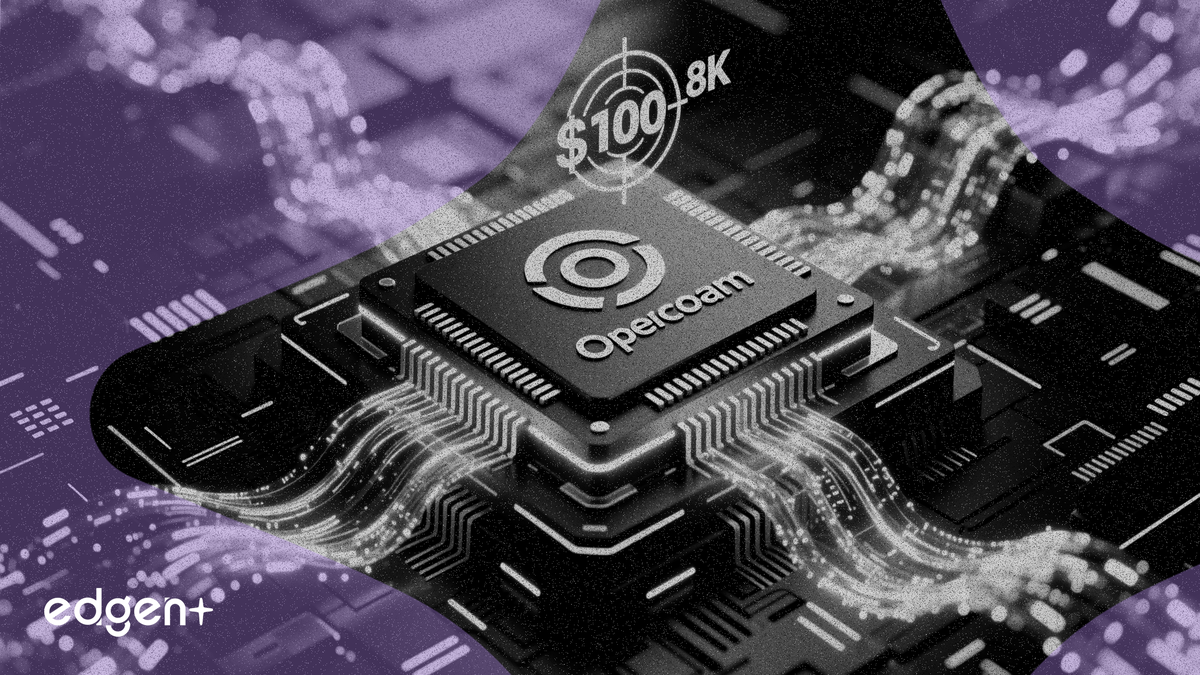
Broadcom is designing custom artificial intelligence chips for OpenAI, marking the chipmaker's deepest push yet into the hyperscaler custom-silicon market that it already dominates with a roughly 70% share.
Broadcom is developing custom AI accelerators for OpenAI and plans to deploy 1.3 gigawatts of infrastructure by fiscal 2027, deepening its hold on a custom-chip market that could generate $100 billion in annual revenue for the company.
"This partnership validates our XPU model — designing chips from the ground up for a single customer's specific workloads," Hock Tan, chief executive officer of Broadcom, said on the company's conference call.
Broadcom already works with six major customers including Google, Meta, and Anthropic. Its custom AI chip revenue jumped roughly 140% year-over-year in the fiscal first quarter to $10.7 billion, with AI networking — anchored by the 102-terabit Tomahawk 6 switch — contributing about 40% of that total. The company carries an AI-related backlog of roughly $73 billion.
The OpenAI deal positions Broadcom to capture a larger share of the $200 billion-plus annual AI infrastructure buildout, directly competing with Nvidia's general-purpose GPUs. Broadcom shares, up nearly 40% this year, trade at about 28x forward earnings as investors price in the shift toward custom silicon.
The appeal of application-specific integrated circuits, or ASICs, lies in their efficiency. Unlike Nvidia's standardized graphics processing units, which handle a broad range of AI workloads, custom chips are engineered for a single customer's specific architecture and use case — whether that is training large language models like OpenAI's GPT or running inference for Google Search and YouTube recommendations.
The development process is lengthy, requiring 18 to 24 months of joint engineering between Broadcom and its customer. Once a chip is designed and deployed, switching costs are high: a partner that wanted to move to a different designer would need to redesign its entire chip from scratch. That creates sticky, recurring revenue that Nvidia's standardized GPU model cannot replicate.
Broadcom's custom chips are fabricated on advanced process nodes at Taiwan Semiconductor Manufacturing Co. (TSMC) and packaged using CoWoS (chip-on-wafer-on-substrate) technology, the same advanced packaging method that Nvidia uses for its H100 and Blackwell GPUs. The supply chain overlap means both companies compete for the same scarce manufacturing capacity at TSMC.
Chief Executive Hock Tan has set an ambitious target: $100 billion in AI chip revenue by fiscal 2027. For context, Broadcom generated $8.4 billion in total semiconductor revenue (chips plus networking) in the fiscal first quarter alone. The company's second-quarter guidance calls for $22 billion in total revenue, representing roughly 47% year-over-year growth, with earnings per share of $2.40 — up 52% from a year ago.
The OpenAI partnership adds a fifth major AI customer to Broadcom's roster alongside Google, Meta, Anthropic, and an unnamed sixth partner. Google's relationship with Broadcom is the deepest: the two companies have collaborated on Tensor Processing Units for nearly a decade, and a supply agreement reportedly extends through 2031.
On the networking side, Broadcom's Tomahawk switches and Jericho routers provide the data center fabric that links thousands of chips inside AI clusters. The next-generation Tomahawk 7, expected in 2027, will double the switching bandwidth of the current Tomahawk 6, which already handles 102 terabits per second.
Nvidia still commands roughly 80% of the overall AI accelerator market, and its CUDA software platform creates a powerful ecosystem lock-in. But the shift toward custom silicon is accelerating. Hyperscalers including Amazon (with its Trainium chips), Google (TPUs), and Meta (MTIA) are all investing in in-house or custom-designed alternatives that offer better energy efficiency and lower total cost for specific workloads.
Broadcom's custom chips do not replace Nvidia GPUs in all scenarios — general-purpose training still favors Nvidia's architecture. But for high-volume inference tasks such as chatbot responses, search ranking, and ad targeting, ASICs can deliver comparable performance at a fraction of the power and cost.
Nvidia shares have fallen since its most recent earnings report as investor attention shifts toward the ASIC boom. The company's data center revenue of $35.6 billion in the latest quarter remains dominant, but the growth rate is decelerating as hyperscalers diversify their chip procurement.
Broadcom, with a market capitalization that recently surpassed $2 trillion, offers investors a diversified bet on AI infrastructure that extends beyond a single chip architecture. Its VMware software business adds a high-margin, recurring revenue stream that funds both its dividend and share buybacks. The company has raised its dividend for 15 consecutive years.
This article is for informational purposes only and does not constitute investment advice.
