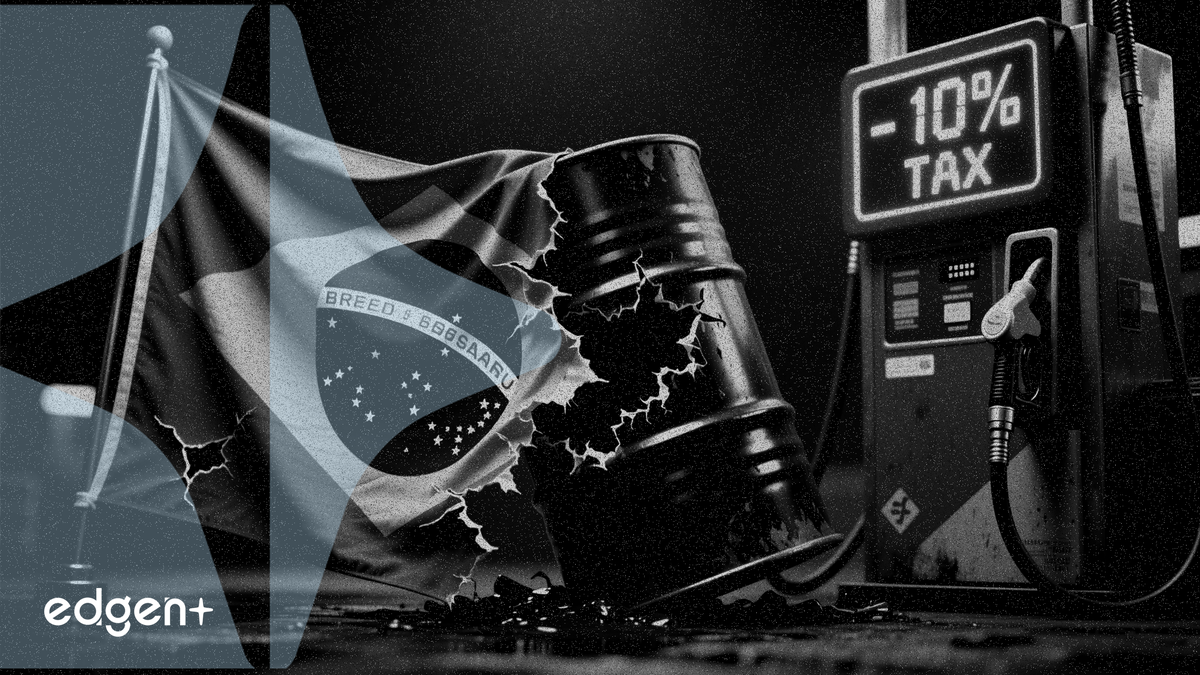
Brazil's government is intervening to shield consumers from soaring fuel costs, a move that pits short-term political relief against long-term fiscal discipline and the stability of its state-controlled oil giant.
Brazil's government will cut federal taxes on gasoline by 10 percent, it said Thursday, a direct intervention to shield consumers from crude oil prices that have surged past $100 a barrel following the conflict in the Middle East.
"This is a classic political choice between voter relief and fiscal discipline, and the voters won," said Isabella Costa, chief economist at São Paulo-based ACME Research. "The question for investors is whether this is a one-off measure or the start of a more interventionist policy that could harm Petrobras's profitability."
The administration will provide further details at a press conference at 5 p.m. local time (2000 GMT). The move is expected to provide immediate relief at the pump but will reduce government revenue, adding to concerns about the nation's fiscal health and sending the Brazilian Real down 1.2% against the dollar in afternoon trading.
The tax cut directly challenges the pricing policy of state-controlled oil company Petrobras, which is supposed to align domestic fuel prices with international markets. This intervention raises the risk of a return to a period where the company was forced to sell fuel at a loss, a policy that previously eroded investor confidence and the firm's finances.
A World Scrambling for Relief
Brazil's decision is part of a global trend, with dozens of countries from Europe to Asia cutting fuel taxes to help consumers. The Iran war has disrupted the Strait of Hormuz, a chokepoint for about 20 percent of the world's oil, pushing the average price of crude to $100 a barrel in March, according to data from Rystad Energy.
The resulting surge in fuel costs has sparked social and political pressure worldwide. In France, widespread protests in 2021 forced President Emmanuel Macron's government to make a U-turn on planned fuel-tax increases. In the U.S., where average prices have topped $4 a gallon, the pain at the pump has led to a nearly 25 percent increase in requests for electric vehicle rentals at major firms like Hertz, according to a Reuters report.
The Petrobras Dilemma
The tax reduction puts Petrobras in a difficult position. The company's management has fought to maintain a market-based fuel price policy to reassure investors after years of government interference. Forcing the company to absorb the cost of lower prices could undermine its financial stability and its ability to invest.
Investors will be closely watching the 5 p.m. press conference for details on how the tax cut will be implemented and whether Petrobras will be compensated for any resulting losses. The government's move highlights the persistent tension between its role as a majority shareholder and the need for Petrobras to operate as a competitive, profitable enterprise.
This article is for informational purposes only and does not constitute investment advice.