
Treasury Secretary Scott Bessent told CNBC he holds "asymmetric information" about the long bond market that other investors lack — then declined to say what it is.
Treasury Secretary Scott Bessent told CNBC he holds "asymmetric information" about the long bond market that other investors lack — then declined to say what it is.
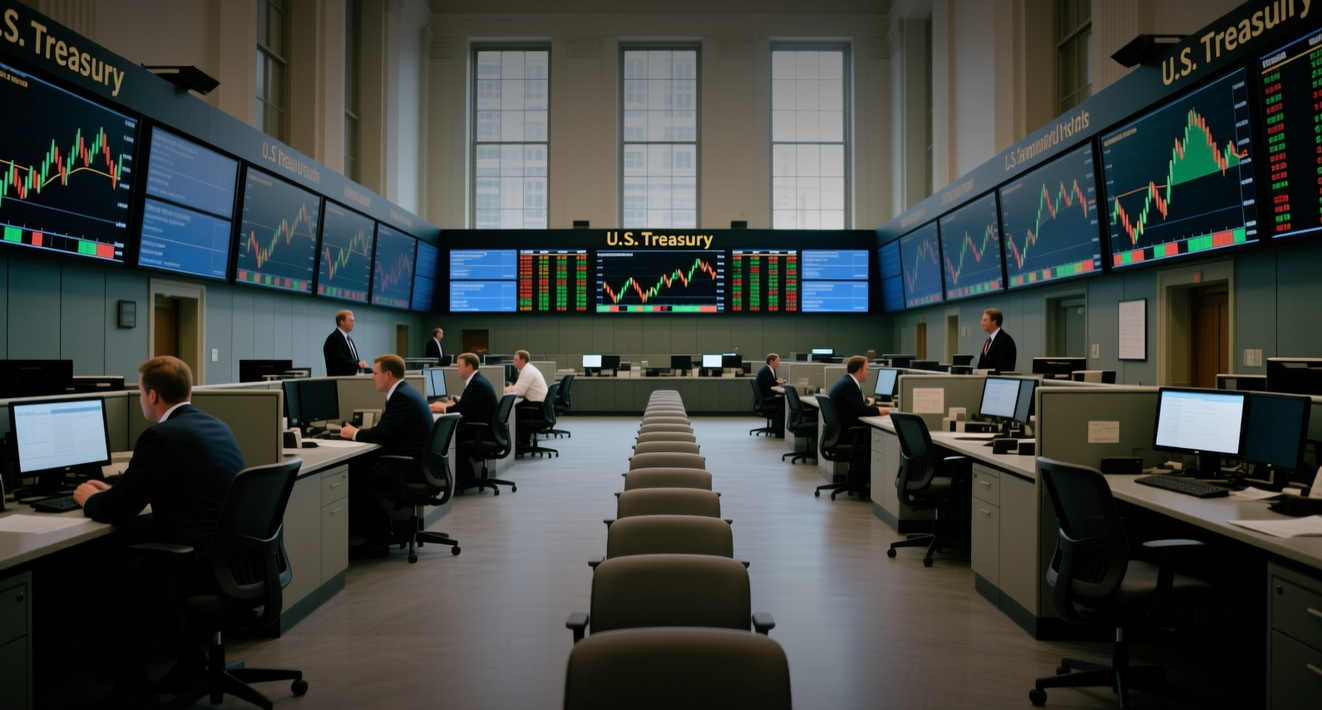
The 30-year Treasury yield rose to 5.23% on Aug. 20, erasing most of the rally from Treasury's doubled buyback program, after Bessent claimed to hold information the market lacks without disclosing it.
"People have bad information. I have asymmetric information," Bessent told CNBC's Sara Eisen on Squawk on the Street, adding that the market should ask "what do I know that the market doesn't know?" He declined to identify the information.
The 30-year yield closed at 5.31% on Aug. 17, 5.28% on Aug. 18, and 5.19% on Aug. 19 after Treasury announced it would raise per-operation buyback size from a $2 billion maximum to a $4 billion minimum and double frequency from two to four operations per quarter, effective Sept. 9. By Aug. 20, the yield had climbed back to 5.23%, while the 10-year sat at 4.69%, near the top of its trailing-year range.
The episode tests whether Treasury's intervention can hold against structural fiscal pressures. U.S. public debt has crossed $40 trillion, and Bessent's fiscal case — a deficit-to-GDP ratio of about 5.7% for fiscal 2025, inflated by one-time tariff refunds — offers no new information to a market that has been selling long-dated paper for months.
Bessent framed the buyback expansion as a response to thin August liquidity and yield-agnostic corporate bond issuance tied to AI infrastructure buildouts, arguing that "the yields don't reflect the underlying fundamentals." He described Treasury's activity as a "Treasury twist," alluding to the Federal Reserve's Operation Twist, in which the central bank sold short-dated securities to buy longer-dated ones to push down long-term yields. He also referenced the early-August joint U.S.-Japan intervention to support the yen — the first such coordinated action in 15 years — as evidence Treasury sees something markets do not.
Neither reference requires hidden data to explain. The buyback expansion is a deliberate policy choice with publicly stated goals: market support, liquidity provision, and stabilization. The yen intervention was a currency operation with its own publicly stated rationale. Bessent's evidence for an information edge consists entirely of policy actions he himself authorized.
Krishna Guha, vice chairman at Evercore ISI, dismissed the plan as "a weak form of Operation Twist" that risks backfiring if read as a sign Washington is struggling to fund itself cheaply. JPMorgan's Maia Crook was blunter, warning the intervention "belies the underlying structural challenges and does nothing to address them," and risks a lasting cost: a Treasury seen abandoning its pledge of steady, predictable debt issuance in favor of ad hoc market management.
Bessent also previewed an announcement on "increased focus on fiscal consolidation" expected "at the end of this week, beginning of next week," coming from President Trump with OMB Director Russ Vought. He claimed the fiscal-year 2025 deficit-to-GDP figure came in around 5.7%, inflated by one-time tariff refunds Treasury "won't have to do that again," and framed upfront expensing of factory and equipment investment as tax-base-building rather than government spending.
The market's verdict so far is mixed at best. The 30-year — the exact security Bessent singled out as illiquid and mispriced — rose from 5.19% to 5.23% after his remarks. Whether "trust me, I know something" persuades a market that Bessent himself describes as thin, distracted, and distorted by corporate issuance is the open question of the next several auctions.
The last time Treasury deployed buybacks at this scale was during the 2020 COVID crisis, when the program supported market functioning. The current expansion comes at a different moment: the 30-year yield sits above 5% for the first sustained stretch since 2007, and the U.S. is funding a $40 trillion debt load at rates that have roughly doubled from pre-pandemic levels. If Bessent's intervention fails to hold yields down, the cost of refinancing that debt rises further, compounding the very fiscal pressures he says the market is misreading.
This article is for informational purposes only and does not constitute investment advice.
