

Astera Labs has transformed from a retimer supplier into the connective tissue of AI factories, with revenue nearly doubling as content per accelerator surged tenfold.
Astera Labs has transformed from a retimer supplier into the connective tissue of AI factories, with revenue nearly doubling as content per accelerator surged tenfold.
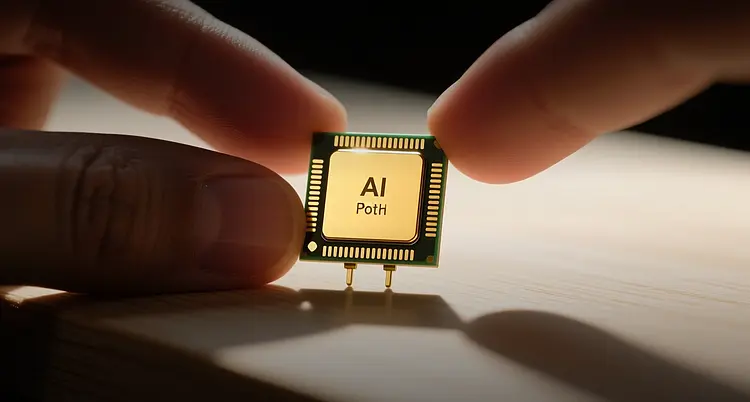
Astera Labs Inc. reported Q1 revenue of $308.4 million, up 93% from a year earlier, as its Scorpio fabric switches and Aries signal conditioners became essential plumbing inside AI data centers. The company expects Q2 revenue of $355 million to $365 million, implying 15% to 18% sequential growth.
"Scorpio quickly became our fastest-growing product line, and by the end of the year, I expect it will become our largest," Chief Financial Officer Desmond Lynch said at the Evercore Global TMT Conference on June 3.
PCIe Gen 6 signal conditioning products contributed more than one-third of Q1 sales, and the company has shipped millions of Gen 6 ports. Content per AI accelerator has climbed from $50 to $100 at the company's inception to more than $1,000 today, as Taurus active electrical cables and Scorpio fabric switches stacked onto the original Aries retimer. Senior Vice President of Finance Nicholas Aberle said the goal is to push that figure toward $10,000 per accelerator.
The stock closed at $417.07 on June 18, up 150.7% year to date and above every Wall Street price target. The mean analyst target is $244.97, meaning investors are paying roughly 70% more than the Street's assessment. At 104 times forward EBITDA, the valuation leaves no room for execution missteps.
The Scorpio Ramp Reshapes the Revenue Mix
The Scorpio Smart Fabric Switch family, which routes data between accelerators inside AI racks, represented about 15% of revenue last year. Lynch's projection that it will become the largest product line by year-end signals a structural shift in Astera's business model. The 320-lane Scorpio X enters volume production in the second half of 2026, targeting a scale-up market Lynch sized at $10 billion.
The expansion comes as hyperscalers pour capital into AI infrastructure. Astera's protocol-neutral approach — its chips work with any accelerator architecture — has made it a preferred connectivity layer for cloud giants building heterogeneous AI clusters. Marvell Technology recently introduced the Teralynx T100, a 102.4 terabit-per-second AI-optimized switch, while Credo Technology completed its acquisition of DustPhotonics in May to strengthen its optical interconnect portfolio across 800-gigabit, 1.6-terabit and 3.2-terabit solutions.
The Valuation Debate Intensifies
At 39 times forward sales, Astera trades at more than 10 times the semiconductor industry median. Nvidia trades at 17 times forward EBITDA, Broadcom at 21 times, and Marvell at 54 times. The premium reflects the market's bet that AI connectivity demand compounds for years, but it also creates asymmetry: any growth deceleration could trigger multiple compression toward the peer mean.
Insider selling adds another layer of scrutiny. Executives and directors sold roughly $155 million more stock than they bought over the past year, according to SEC filings compiled by Simply Wall St. Chief Executive Officer Jitendra Mohan's trust sold about $57.9 million in April, and President and Chief Operating Officer Sanjay Gajendra sold about $21.5 million in May. Most transactions ran through pre-arranged 10b5-1 plans, but the scale of selling has drawn attention.
A near-term catalyst arrives June 22, when Astera joins the Nasdaq-100 Index alongside CoreWeave, Nebius, Rocket Lab and Teradyne. Every fund tracking the index must own the stock in proportion, creating forced buying. The more consequential test comes August 4, when the company reports Q2 results. Management guided non-GAAP gross margin to approximately 73%, down from 76.4% in Q1, with about 200 basis points tied to a non-cash customer warrant. A print at or above 73% would confirm the dip is the accounting effect management described; a miss would signal pricing pressure.
For investors, the question is whether the fundamentals can grow into a valuation that already assumes years of perfect execution. The Scorpio ramp and rising content per accelerator provide a credible path. But at 104 times EBITDA, the stock has no room for error.
This article is for informational purposes only and does not constitute investment advice.
