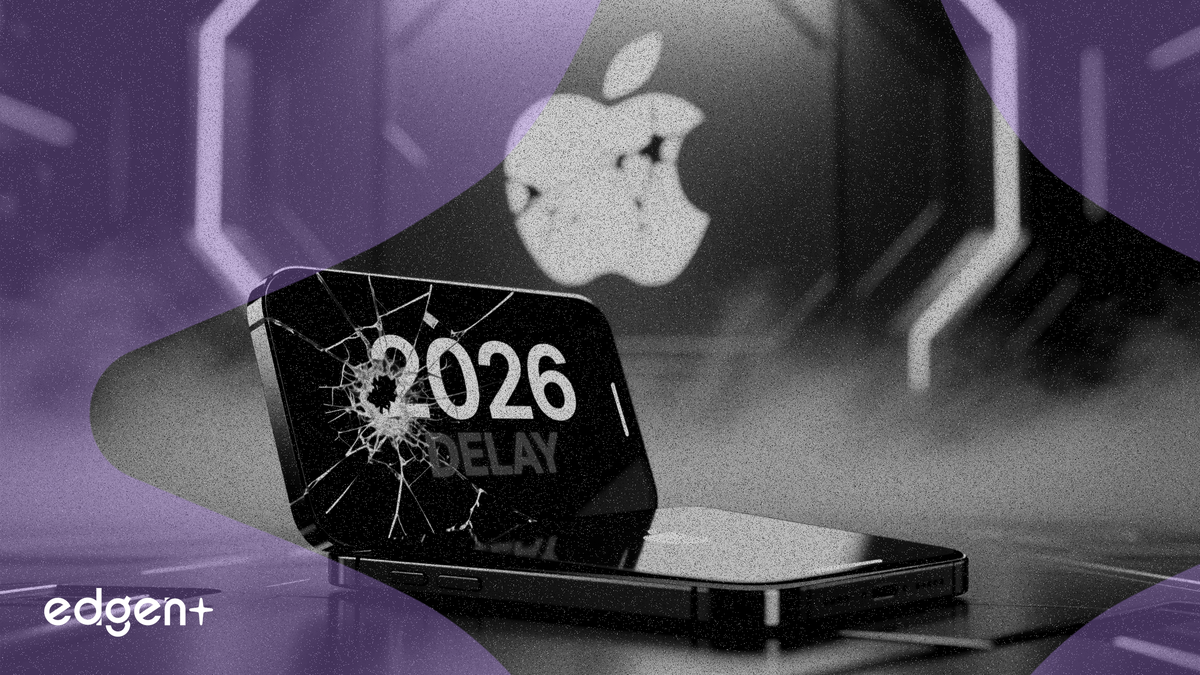
Apple's much-anticipated foldable iPhone is facing significant engineering challenges, threatening to postpone a launch that suppliers and investors have banked on to reinvigorate the premium smartphone market.
Apple Inc.'s planned 2026 entry into the foldable smartphone market is in jeopardy, as unexpected engineering problems risk a multi-month delay for its first foldable device. The challenges, rooted in the complexities of the folding mechanism and display, could push mass production past its target, ceding more ground to established rivals like Samsung and Huawei.
"Early trial production has revealed more complexities than anticipated, requiring more time for resolution and adjustment," a person familiar with the production schedule said. "The period from April to early May is now a critical window to see if these engineering challenges can be overcome without impacting the mass production timeline."
The company is targeting an initial build of 7 million to 8 million foldable units, a figure representing less than 10 percent of its planned 2026 high-end phone lineup. Rumors suggest the device will feature a 7.8-inch internal screen and an ultra-thin 4.5mm profile when open, a design that necessitates engineering trade-offs such as the removal of the telephoto camera and Face ID in favor of a side-mounted Touch ID sensor.
A significant delay would be a blow to Apple's strategy, which has prioritized the foldable and other high-end models for 2026, even reportedly pushing standard iPhone updates into 2027. For a supply chain already investing in new tooling, a delay stalls a crucial revenue stream, while competitors get an extended window to capture the premium market that IDC forecast would grow 30 percent in 2026, largely on the expectation of Apple's arrival.
Engineering Hurdles Over Supply Snags
Unlike the component shortages that have plagued the electronics industry, the current setback is purely a matter of engineering. Sources confirm that the issue lies in perfecting the device's core functionality—specifically, achieving a nearly invisible crease in the display and ensuring the hinge mechanism is reliable over tens of thousands of folds. Apple's late entry into the market reflects its typical strategy of waiting to perfect a technology rather than rushing a flawed product, but the current hurdles appear more stubborn than expected.
Competitive Landscape
While Apple works to meet its own exacting standards, the foldable market is maturing without it. Samsung, a key supplier for Apple's foldable screens, is already on its fifth generation of the Galaxy Z Fold series. It and other players like Huawei have already set consumer expectations for features and price points, which could start near $2,000 for Apple's entry. The lack of a telephoto lens or Face ID, while driven by the thin design, could be perceived as a step down from Apple's existing "Pro" iPhones and competing foldables.
The Bottom Line
The next two months are pivotal. If Apple's engineers can resolve the verification testing issues, a late 2026 launch, possibly in December, remains on the table. However, a failure to do so would likely postpone the debut into 2027, missing the critical holiday sales season and disrupting a product roadmap that has been years in the making. For investors, the delay introduces uncertainty into a key growth catalyst for Apple's hardware division.
This article is for informational purposes only and does not constitute investment advice.