
Anthropic's surging revenue signals a sustained boom for the specialized chips powering the AI industry, directly benefiting hardware leaders Nvidia and Google.
Anthropic's surging revenue signals a sustained boom for the specialized chips powering the AI industry, directly benefiting hardware leaders Nvidia and Google.
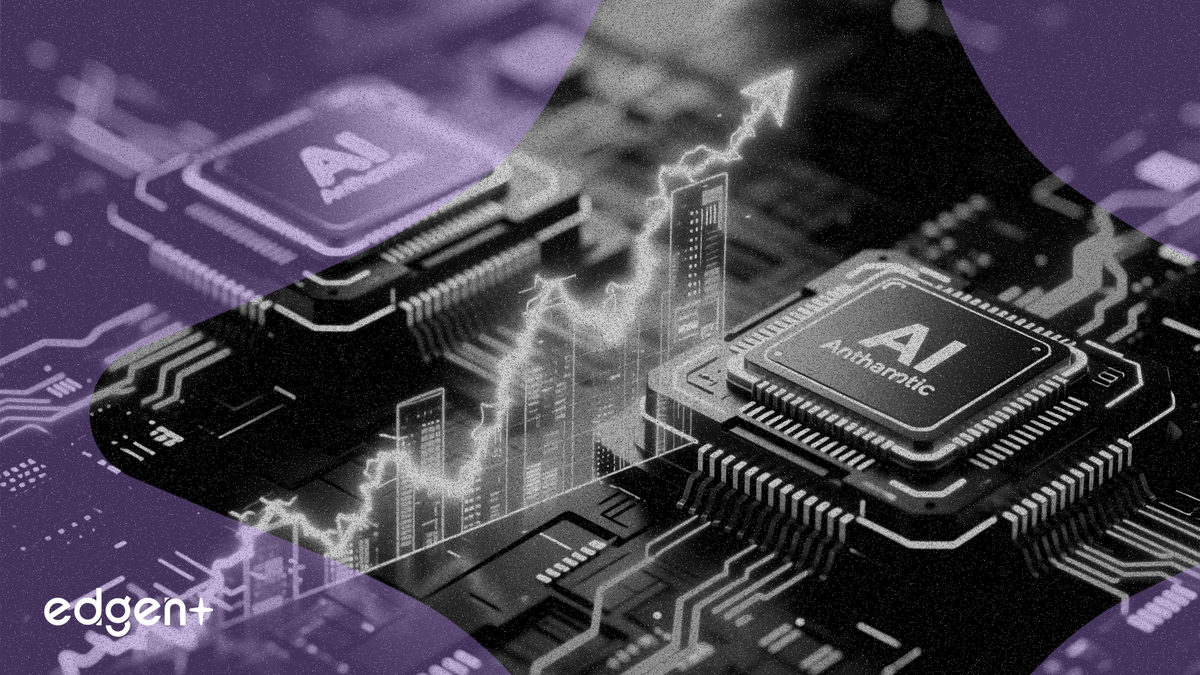
A reported spike in Anthropic's revenue run rate is intensifying demand for high-performance AI hardware, reinforcing the market dominance of Nvidia Corp. and Alphabet's Google.
The development, highlighted in a recent report, shows how the growth of leading AI labs directly translates into revenue for the underlying infrastructure providers. Anthropic uses a mix of Google's custom-built Tensor Processing Units (TPUs) and Nvidia's graphics processing units (GPUs) for the computationally intensive tasks of training its large language models and running inference applications.
For investors, this dynamic solidifies the thesis that providers of essential AI hardware are prime beneficiaries of the AI boom, suggesting strong, continued demand for Google's Cloud division and Nvidia's data center segment.
The AI industry's expansion is not just about the models themselves, but the vast ecosystem of hardware required to build and operate them. Companies like Anthropic are in a constant race for more computing power, creating a sustained and lucrative demand cycle for chipmakers. While specific revenue figures for Anthropic were not disclosed, the reported growth trajectory points to significant ongoing capital expenditure on compute resources.
This reliance on specialized hardware creates a formidable moat for established players. Nvidia's GPUs, such as the H100 and its successors, are the industry standard for AI training, while Google's TPUs offer a powerful, vertically integrated alternative within its own cloud ecosystem. The sustained demand from a major AI player like Anthropic could support upward revisions of revenue estimates for both tech giants, reinforcing their bullish outlook among investors in the semiconductor and cloud computing sectors.
This article is for informational purposes only and does not constitute investment advice.