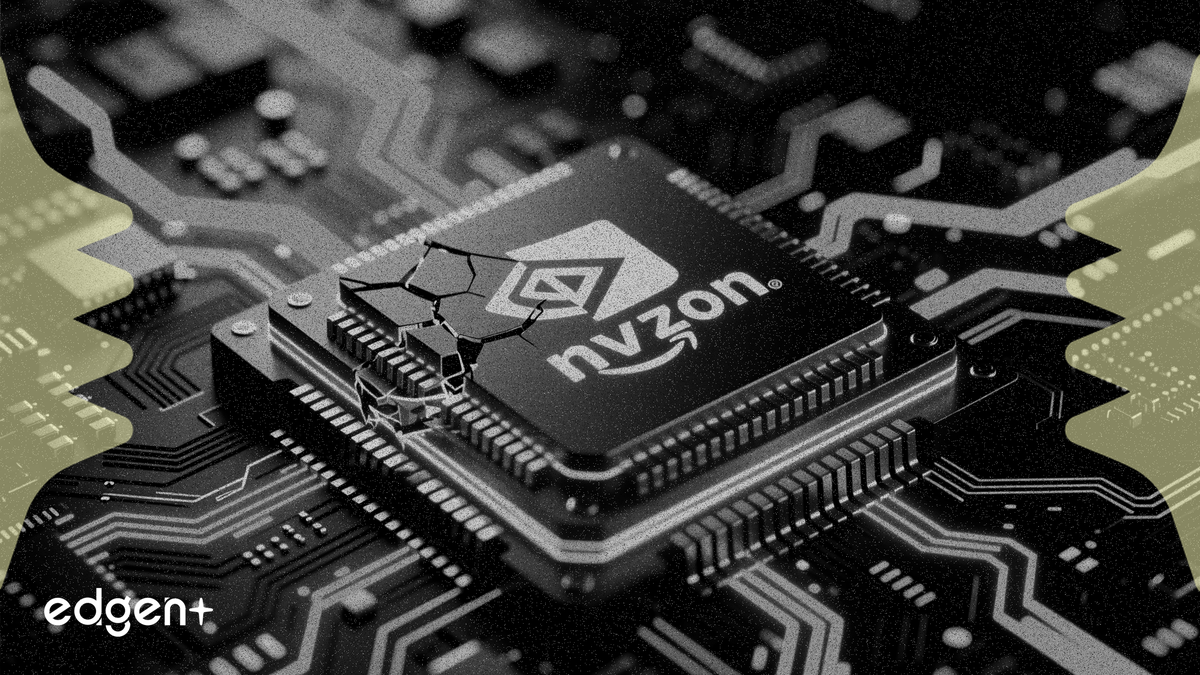
(P1) Amazon is poised to enter the AI chip market directly, with plans to sell its Trainium processors to external customers by 2026, a move that directly challenges Nvidia's stronghold on the sector. The company's disclosure of $225 billion in revenue commitments for the chips signals a significant new revenue stream and a major strategic shift for the tech giant.
(P2) "Amazon could start selling Trainium AI chips to external customers within two years," the company disclosed on April 29, 2026. This confirms the company's ambition to monetize its custom silicon beyond its own Amazon Web Services (AWS) cloud.
(P3) The decision to sell Trainium chips is backed by substantial customer interest, with Amazon revealing $225 billion in revenue commitments. While the company has not disclosed the specific process node or detailed performance specifications of the chips to be sold, the two-year timeline for external sales suggests a rapid scaling of its production capabilities.
(P4) Amazon's entry into the merchant AI chip market could disrupt the current duopoly of Nvidia and AMD, potentially leading to more competitive pricing and a broader range of options for companies developing AI applications. For investors, this development could impact the valuations of existing semiconductor leaders, with Nvidia's shares already reflecting the increased competitive pressure.
A New Contender in the AI Chip Arena
Amazon's decision to sell its Trainium AI chips marks a pivotal moment for the semiconductor industry. Until now, Amazon's custom chips were exclusively available through its AWS cloud platform, a strategy designed to optimize performance and cost for its own services. By offering these chips for direct sale, Amazon is leveraging its massive scale and deep expertise in AI workloads to compete head-on with established players like Nvidia and AMD.
The move is a logical extension of Amazon's vertical integration strategy. The company has been developing its own chips for years, seeking to reduce its reliance on third-party vendors and to create hardware tailored to its specific needs. The Trainium chips, designed for training AI models, and Inferentia chips, for running AI models, have already given AWS a competitive edge in the cloud market.
The Nvidia Factor
Nvidia currently dominates the AI chip market, with its GPUs commanding a significant majority of the market share. The company's CUDA software ecosystem has created a powerful moat, making it difficult for competitors to gain a foothold. However, Amazon's entry could change the calculus.
With $225 billion in revenue commitments, Amazon is not just testing the waters; it is making a clear statement of intent. This figure, while not directly comparable to Nvidia's revenues, indicates a substantial pipeline of demand. The key question for investors and customers will be how Trainium's performance and cost-effectiveness stack up against Nvidia's offerings. Amazon has claimed its latest Trainium chips offer significant performance-per-watt advantages, a critical metric for large-scale AI deployments.
Market Implications and Investor Takeaway
The potential for a new, well-funded competitor in the AI chip market has significant implications for investors. Nvidia's stock, which has seen a meteoric rise on the back of the AI boom, could face headwinds as the market prices in the new competitive threat. While Amazon's chip sales are still two years away, the announcement alone is likely to cause a re-evaluation of the long-term growth prospects for existing semiconductor companies.
For Amazon, the move into chip sales represents a multi-billion dollar opportunity. It diversifies the company's revenue streams and strengthens its position in the AI value chain. As noted in recent reports, the growth of AWS has been a key driver of Amazon's profitability, and the expansion into AI hardware sales could further bolster its financial performance. The market will be closely watching for more details on the performance, pricing, and availability of Trainium chips as the 2026 launch date approaches.
This article is for informational purposes only and does not constitute investment advice.