Tencent's first negative free cash flow and Alibaba's record placement mark the start of an AI financing wave in China's bond market.
Tencent's first negative free cash flow and Alibaba's record placement mark the start of an AI financing wave in China's bond market.
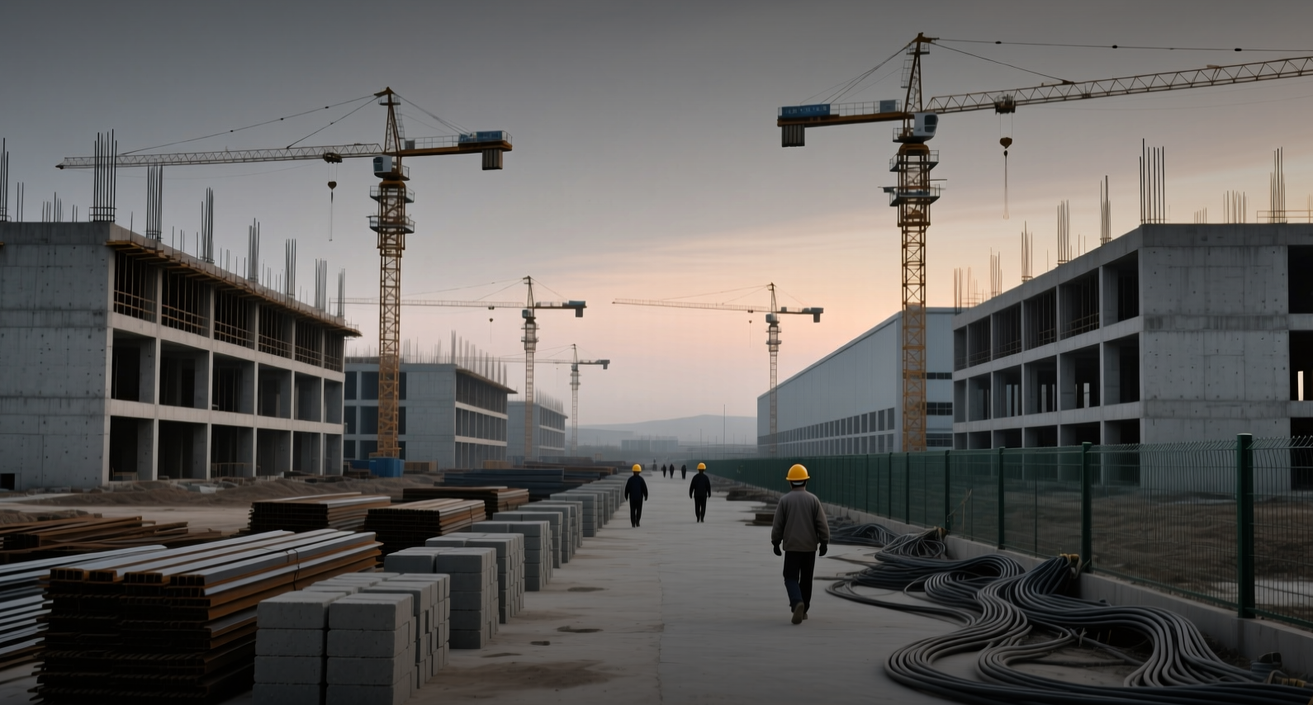
China's biggest tech companies are shifting from cash machines to capital machines, a transition that could add 183-522 billion yuan in annual domestic bond supply through 2030, according to Huatai Securities.
"The second quarter of 2026 has begun to show accelerating capital expenditure and rising external financing demand," Huatai Securities' fixed income team led by Zhang Jiqiang wrote in a report titled "AI Financing: From Cash Machine to Capital Machine."
Tencent's capital expenditure rose 176 percent year on year to 52.8 billion yuan in the June quarter, pushing free cash flow to negative 13.8 billion yuan — the first quarterly shortfall since the company began disclosing the metric in 2014. Alibaba's capex climbed 75 percent to 67.7 billion yuan, and on Aug. 23 it priced an HK$80 billion ($10.2 billion) placement of 710 million new shares at HK$112.70 apiece, an 8.4 percent discount to its Hong Kong close.
The report projects 2026-2030 cumulative AI financing demand of 1.27 trillion to 3.5 trillion yuan across three capex-growth scenarios, with domestic bond supply of 913 billion to 2.6 trillion yuan. Internet platforms would contribute 42-47 percent of that supply, making the shift a structural change for China's credit market.
The overseas playbook has already run its course. In the first stage (2022-2023), strategic equity and cloud-resource deals dominated, with Microsoft's investment in OpenAI and Google and Amazon's backing of Anthropic. The six largest U.S. hyperscalers — Microsoft, Alphabet, Amazon, Meta, Oracle and Nvidia — remained cash cows, with combined operating cash flow rising to about $368 billion in 2023 from $199.8 billion in 2019.
The second stage (2024-2025) saw capex swallow free cash flow. The six giants' capex-to-operating-cash-flow ratio climbed to about 60 percent in 2025 from 36 percent in 2019, and their investment-grade bond issuance topped $100 billion for the year — nearly three times the 2020-2024 average. The third stage, running since 2026, has mobilized the full capital stack: the six companies have issued about $220 billion in bonds this year through July, double the 2025 full-year total, while financing tools have extended to equity, hybrid instruments, GPU-backed assets, project finance and revolving credit. CoreWeave packaged GPU hardware and long-term customer contracts into a financing vehicle that won a Moody's A3 investment-grade rating on an $8.5 billion delayed-draw term loan, while Nvidia has provided about $250 billion in financing guarantees to OpenAI.
China's tech sector remains far earlier in the cycle. The eight largest internet platforms — including ByteDance, Alibaba and Tencent — spent about 455 billion yuan on capex in 2025, roughly one-sixth of the U.S. hyperscalers' outlay, with about 90 percent of that funded internally. Internet giants cover about half their spending with internal cash flow; their debt financing skews to offshore bonds (55 percent) and offshore syndicated loans (31 percent), with domestic bonds accounting for just 1 percent.
The report identifies two bottlenecks that could unlock domestic supply. First, advanced-chip localization: because high-end chip purchases are settled in dollars, Chinese firms face currency and cross-border risk if they fund those costs with yuan debt. If domestic GPU makers close the gap, the 470 billion to 1.2 trillion yuan of offshore financing demand from internet platforms could shift onshore. Second, issuance convenience: red-chip VIE structures create regulatory friction for domestic bond sales, and the buyer base for long-dated yuan credit remains thin.
The near-term effect is structural rather than systemic. Huatai points to four instruments that stand to benefit: sci-tech innovation bonds, which have already absorbed "compute infrastructure" and "token compute factory" labels since the bond market's tech board launched in May 2025; panda bonds, where foreign issuance in the first seven months of 2026 already exceeded all of 2025; multi-tier REITs for data-center exits; and offshore dim sum bonds, where Tencent's 30-year issue in June drew 47 percent of subscriptions from sovereign wealth funds and insurers. Alibaba shares, which fell as much as 10.5 percent in Hong Kong on Aug. 24 before paring losses, trade at a discount that reflects dilution concerns — but the financing shift itself marks China's AI buildout entering a debt-funded phase.
This article is for informational purposes only and does not constitute investment advice.
