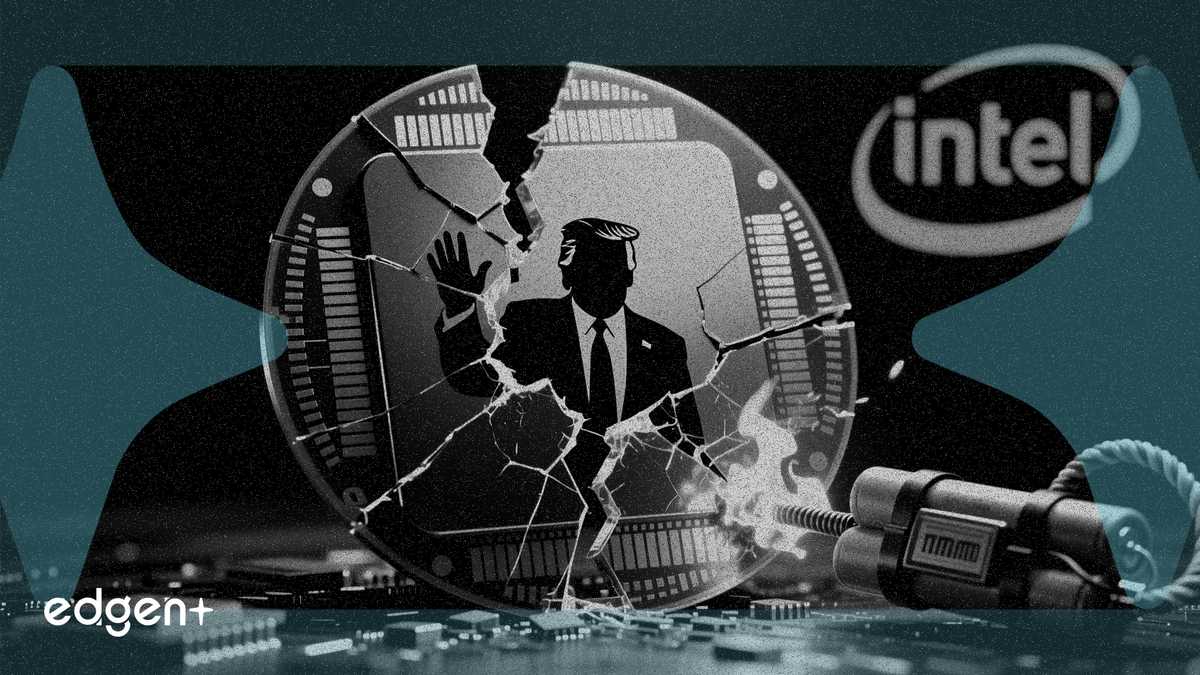
Le pivot de l'administration Trump, passant des subventions du CHIPS Act aux prises de participation, ouvre la voie à Micron Technology pour devenir la prochaine entreprise de semi-conducteurs à recevoir un investissement fédéral direct.
Les remarques chaleureuses du président Donald Trump à l'égard de Micron Technology lors d'un rassemblement à New York, combinées au virage de l'administration vers la prise de participations dans les fabricants de puces, positionnent le spécialiste de la mémoire comme le prochain candidat à un investissement fédéral au titre du CHIPS and Science Act.
« Le plan d'expansion nationale de 200 milliards de dollars de Micron s'aligne directement sur les objectifs de Washington de rapatrier la production avancée de semi-conducteurs », a déclaré une personne proche de la réflexion de l'administration, s'exprimant sous couvert d'anonymat car les discussions sont privées.
Micron a déjà obtenu 6,1 milliards de dollars de financement au titre du CHIPS Act depuis 2024, soutenant la construction de nouvelles usines de fabrication de puces mémoire en Idaho et dans l'État de New York, ainsi que la modernisation des installations existantes en Virginie. La société basée à Boise est l'un des trois seuls producteurs mondiaux de mémoire à large bande passante (HBM), aux côtés du sud-coréen SK Hynix et de Samsung, ce qui rend sa technologie essentielle pour les charges de travail d'IA. Ses puces HBM4E de nouvelle génération sont conçues pour alimenter les déploiements d'entraînement et d'inférence des grands modèles de langage.
Un investissement public en actions suivrait le modèle établi par Intel, qui a accepté en août de laisser la Maison-Blanche convertir près de 9 milliards de dollars de prêts et subventions du CHIPS Act en une participation d'environ 10 %. Pour Micron, un financement supplémentaire pourrait accélérer les délais de construction des usines et réduire le coût du capital pour la production de HBM, très capitalistique, créant potentiellement des avantages tarifaires par rapport aux concurrents asiatiques.
Le précédent Intel
La politique industrielle interventionniste de l'administration s'est concrétisée par une série d'échanges de financements contre des participations. Au-delà de la conversion de 9 milliards de dollars d'Intel, le département du Commerce a accordé en mai 2 milliards de dollars de subventions à neuf entreprises de technologie quantique, IBM captant la moitié de ce montant pour établir Anderon, une fonderie de semi-conducteurs quantiques à Albany, dans l'État de New York. Le secrétaire au Commerce, Howard Lutnick, a qualifié cette approche de mesure de protection visant à garantir la domination américaine dans les domaines de la sécurité nationale et de la recherche avancée.
La Maison-Blanche a également pris des participations dans MP Materials, le producteur de terres rares, et exploré des arrangements similaires avec Vulcan Materials, Lithium Americas et même Spirit Airlines. Chaque accord suit un schéma : des fonds fédéraux convertis en participation en échange de l'accélération de la capacité de production nationale dans des secteurs jugés essentiels à la sécurité nationale.
Pourquoi Micron, pourquoi maintenant
L'argument du timing repose sur l'accélération de la poussée de la Chine dans la mémoire avancée. L'entreprise chinoise ChangXin Memory Technologies (CXMT) investit agressivement dans la production de HBM3, bien que la production de masse ne soit pas attendue avant 2027. Le soutien public de Pékin à CXMT et au leader de la mémoire NAND YMTC vise à combler l'écart technologique avec Micron, Samsung et SK Hynix. Une montée en puissance significative de la Chine dans le HBM pourrait inonder certains segments de marché, faisant pression sur les prix et érodant l'avance américaine dans la mémoire pour l'IA.
Retarder un financement supplémentaire risquerait de perdre l'élan dans un secteur où les délais de construction s'étendent sur des années et où la demande des hyperscalers ne montre aucun signe de ralentissement. Les clients de Micron incluent les plus grands constructeurs de centres de données d'IA, ainsi que des entreprises de défense qui pourraient être incitées, par le biais de préférences d'approvisionnement, à s'approvisionner auprès de fournisseurs américains plutôt que de concurrents étrangers.
Pour les investisseurs, une participation publique dans Micron signalerait une continuité politique à long terme entre les administrations, ce qui pourrait réduire le coût du capital de l'entreprise et améliorer sa position concurrentielle face à SK Hynix et Samsung. Micron se négocie comme un pari pur sur la mémoire adossé au cycle d'infrastructure de l'IA, et un soutien fédéral pourrait réduire l'écart de valorisation avec ses pairs coréens tout en diminuant le risque géopolitique lié à son exposition à l'étranger.
Cet article est fourni à titre d'information uniquement et ne constitue pas un conseil en investissement.