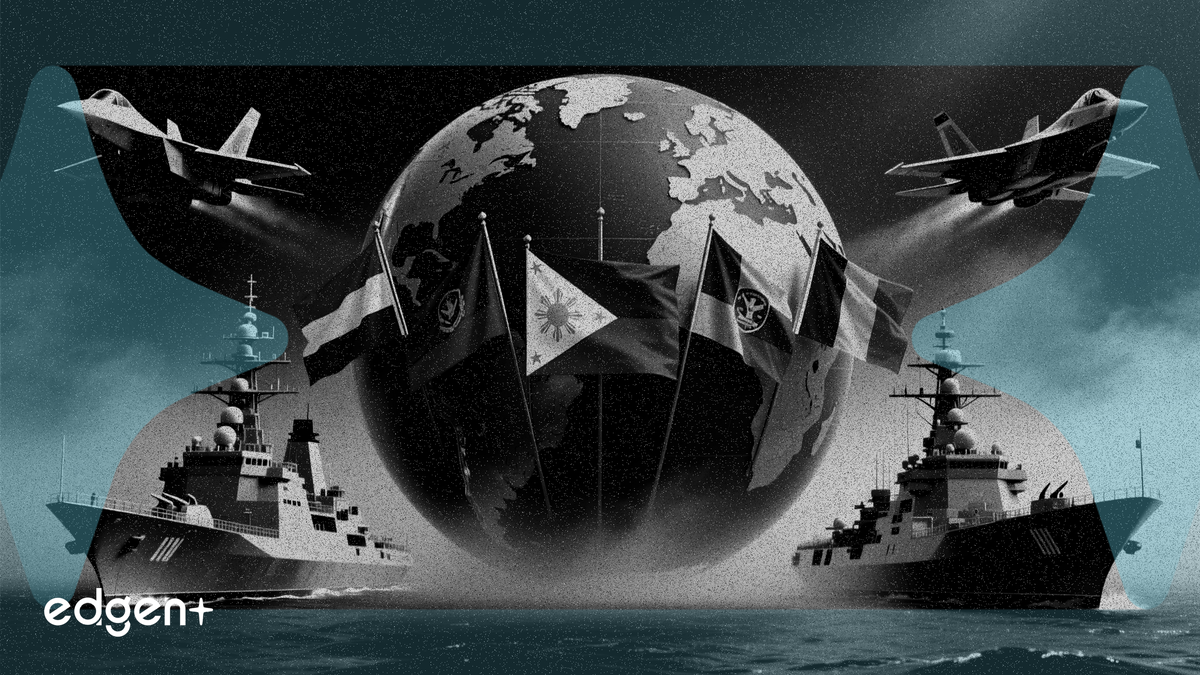
The largest-ever joint military exercise between the US and the Philippines has expanded to include 7 nations, signaling a united front against China's increasing assertiveness in the South China Sea.

The United States and the Philippines have launched their largest-ever "Balikatan" joint military drills, involving 17,000 troops from seven nations in a direct display of force intended to counter China's regional ambitions.
"This was an amazing show of firepower," U.S. Army Maj. Gen. James Bartholomees told troops after a counter-landing drill on Palawan island. "I’m incredibly impressed with what we saw today."
The exercises, running until May 8, include about 10,000 U.S. service members and mark the first-time participation of Japanese ground troops. As part of the drills, the U.S. fired a Tomahawk missile from its land-based Typhon system on Philippine soil for the first time, striking a target 390 miles away, according to exercise spokesperson Colonel Dennis Hernandez.
The expanded multilateral exercise raises the stakes in the South China Sea, a waterway crucial for global trade. The show of force increases geopolitical risk, which could introduce volatility into regional markets and supply chains, while potentially boosting defense-sector stocks for participating nations like the U.S. and Japan.
The inaugural test-firing of the Tomahawk cruise missile from the Philippines is a significant development. The Typhon system, which can also fire SM-6 missiles, places China's militarized islands in the South China Sea and parts of its eastern seaboard within range. Beijing has repeatedly denounced the deployment and demanded the system's removal.
China's Foreign Ministry labeled the drills a "groundless provocation" designed to "sow division and confrontation." In response, the Chinese military's Southern Theater Command deployed naval and air forces for patrols near Scarborough Shoal, a contested feature in the South China Sea. Arsenio Andolong, a spokesperson for the Philippines Department of National Defense, rejected Beijing’s criticism. “China’s always been saying that we’re the bad guys," he said. "But if that’s the case, why do so many other nations come to join us?"
This year's Balikatan, meaning "shoulder-to-shoulder," is notable for its expanded roster. Beyond the U.S. and the Philippines, it includes new active participants Canada and New Zealand, alongside Australian forces and a small French contingent. Japan's deployment of ground troops is a historic first, representing its first combat troop presence in the Philippines since World War II.
The growing cooperation is the result of a years-long U.S. effort to build a more integrated network of allies to counter China. Both Japan and the Philippines, key U.S. treaty allies, have expressed growing concern over a potential conflict over Taiwan. Philippine President Ferdinand Marcos Jr. has stated his country would inevitably be drawn in, while Japanese officials have warned a Chinese blockade of Taiwan could present a "survival-threatening situation" for Tokyo. The drills signal a deepening commitment among U.S. allies to present a credible, united deterrent to Beijing.
This article is for informational purposes only and does not constitute investment advice.