
The rule of law is being replaced by the law of rule, and two seemingly unrelated cases in Wisconsin and Washington D.C. reveal the alarming extent of the problem.
The rule of law is being replaced by the law of rule, and two seemingly unrelated cases in Wisconsin and Washington D.C. reveal the alarming extent of the problem.
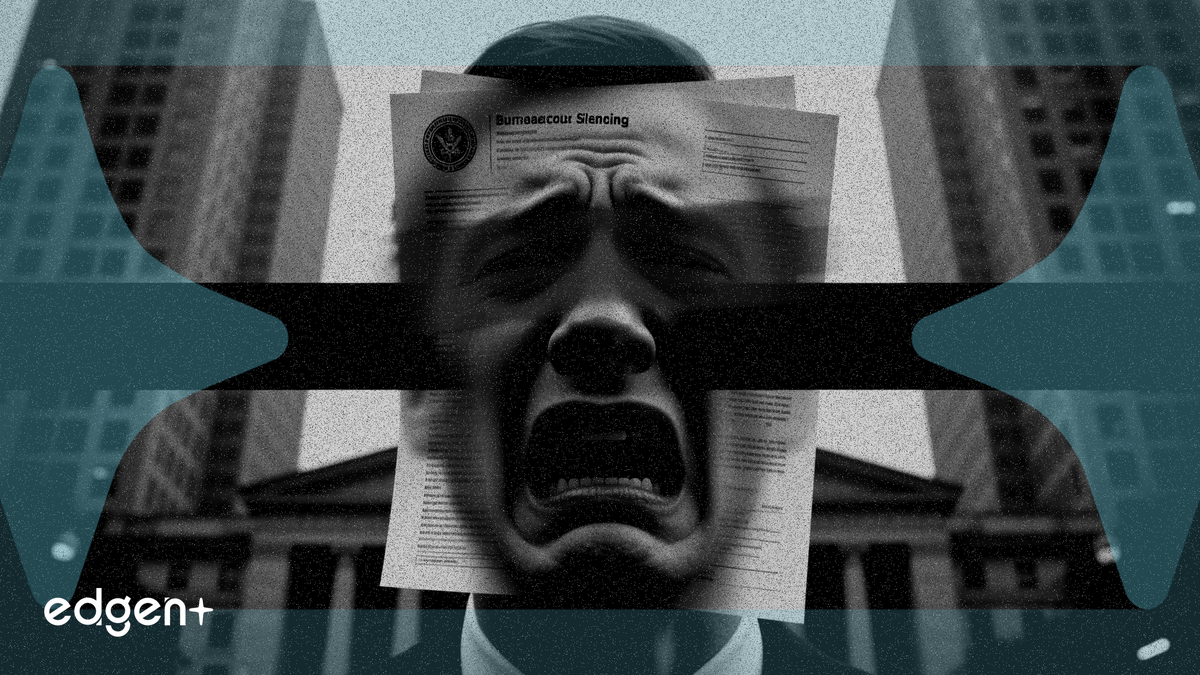
Two stark examples of government overreach—one imposing crippling fee hikes on farmers in Wisconsin and another silencing citizens for life at the hands of the Securities and Exchange Commission—are exposing the growing power of the administrative state. In both instances, rules with the force of law were created not by elected legislators, but by the very bureaucratic agencies that enforce them, raising a fundamental question now before the Supreme Court: who really governs America?
"What kind of government says, ‘We can bring ruinous charges against our citizens... but, if you want us off your back, the price of peace means you can never contest any allegation we made’?" Peggy Little, senior litigation counsel at the New Civil Liberties Alliance, which is challenging the SEC, said. "No government has a monopoly on the truth. And in America, the First Amendment forbids it."
The consequences of this unchecked power became clear in Wisconsin after a 2025 court ruling unshackled the Department of Agriculture, Trade and Consumer Protection (DATCP). The agency promptly proposed staggering fee increases, including a nearly 1,700 percent hike for an animal market license, from $420 to $7,430. Livestock trucker registration fees were set to jump 517 percent, from $60 to $370.
At stake is the core principle of democratic accountability. When elected officials make laws, they answer to voters. But when bureaucrats in state capitals or Washington D.C. can write, interpret, and enforce their own rules, citizens are left with no meaningful recourse. The decision does not belong to the people; it belongs to the agency.
In Wisconsin, the backlash to DATCP's proposed fee schedule was swift, forcing the agency to dial back the most extreme increases. Yet, the episode served as a chilling demonstration of bureaucratic power. State Senator Romaine Quinn (R-Birchwood) introduced a bill to reclaim that power, seeking to freeze the fees and require legislative approval for future increases.
Governor Tony Evers vetoed it. "I am also vetoing this bill because I believe the current process relating to rule promulgation and setting, increasing, or creating fees works, including ensuring adequate public input and accountability," Evers wrote in his veto message. He argued the legislature’s attempt to reclaim authority was "obstructing the People’s Work."
Quinn blasted the governor's logic. "I find it offensive that the governor would consider it the ‘people’s work’ to target those who work hard to survive in our ag industry," he said. The incident, Quinn argued, showed the "bureaucratic deep state is free to make these changes all on its own." Even after the fees were dialed back, the final decision was made by the same agency that proposed the initial 1,700 percent hike, not the public or their elected representatives.
If the Wisconsin case reveals the economic power of the administrative state, a case now before the U.S. Supreme Court, Powell v. SEC, shows its power to control something even more fundamental: speech. For 50 years, the SEC has enforced a "Gag Rule," a condition of settlement that forbids defendants from ever publicly denying the agency's allegations.
With the SEC winning an estimated 98 percent of cases that go to trial and legal fees running into the millions, nearly all defendants settle. Thomas J. Powell, a businessman accused by the SEC of misleading investors, had already spent over $4 million on legal fees when he settled for a $75,000 fine. The price of that settlement was his lifetime silence. He cannot deny the allegations or even create the impression of a denial.
The New Civil Liberties Alliance argues this is an unconstitutional prior restraint on speech and a violation of the First Amendment. "The SEC has a public duty to be embarrassed where appropriate—its recourse under the First Amendment is to not bring embarrassing cases or to explain for themselves why their cases are justified," the Liberty Justice Center wrote in an amicus brief. The rule, critics say, protects the SEC from scrutiny and accountability.
These two cases, one concerning state-level agricultural fees and the other a federal agency's power to censor, are not isolated incidents. They are symptoms of the same underlying disease: the replacement of the rule of law with the law of rule. In Wisconsin, lawmakers tried to restore democratic control and were vetoed. In Washington, citizens are now asking the Supreme Court to do the same. The question before the justices is not just about livestock fees or a single gag order; it is about whether the unelected fourth branch of government can continue to write its own laws, insulated from the people it is supposed to serve.
This article is for informational purposes only and does not constitute investment advice.