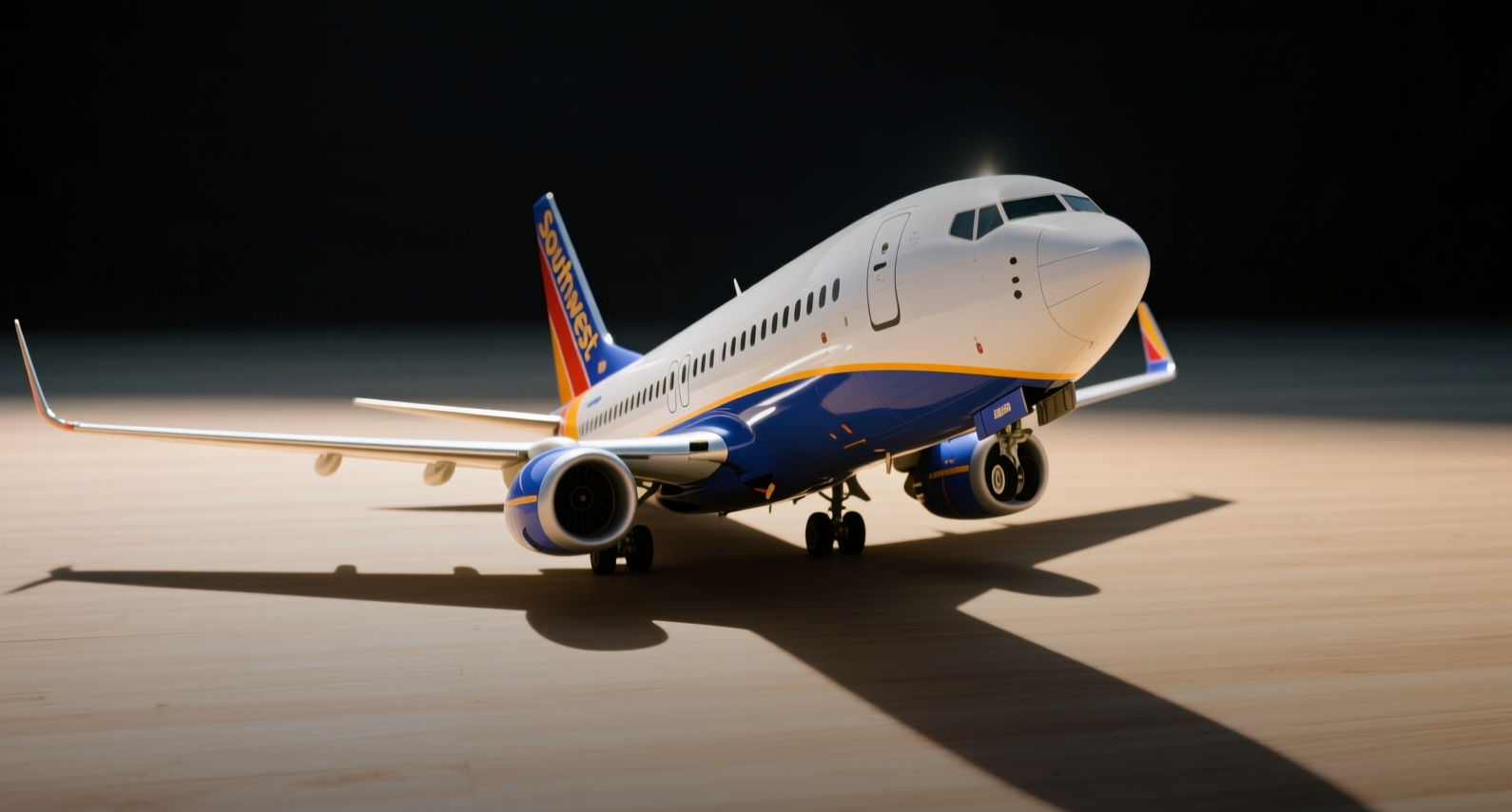
Southwest Airlines shares climbed 44.5 percent to $44.38 as assigned seating and new fees win over Wall Street.
"The airline is getting on with the times," said a fund manager who has been adding to Southwest positions, as the carrier's business model overhaul draws institutional support.
The transformation is showing up in the numbers. Q2 2026 revenue rose 16 percent to $8.43 billion, with net income up 9.4 percent to $233 million. EPS of $0.48 missed analyst estimates by 6.6 percent, while revenue fell 1.8 percent short of consensus. The 2026 EPS forecast was lifted 11 percent to $3.22, and the consensus price target rose to $52.36 from $48.25. The company guided Q2 RASM up 16.5 percent to 18.5 percent year-over-year, while FY 2025 passenger load factor came in at 77.4 percent, down from 80.4 percent a year earlier.
The stock's 44.5 percent gain over the past year has outpaced the US Airlines industry's 29.3 percent return and the broader market's 16 percent. With a market cap of $22.7 billion and a forward P/E of 25.9x, the carrier trades at a premium to the industry average of 7x, reflecting investor confidence in the transformation's earnings potential.
The overhaul includes assigned seating that began January 27, new fare bundles with premium options, checked bag fees, and a cloud migration with Amazon Web Services. The carrier also launched interline partnerships with Singapore Airlines and EVA Air, expanded to new destinations including St. Thomas, Knoxville, St. Maarten, and Anchorage, and introduced Getaways by Southwest vacation packages.
JPMorgan is bullish on the carrier, citing above-consensus earnings estimates through 2026-2027 and expectations of outsized industry profit consolidation among stronger carriers. The bank's view contrasts with more cautious voices: a Seeking Alpha analyst rates LUV 'Hold' with a $44 price target, citing fuel price volatility and execution risks. Management's $4 per share 2026 EPS guidance appears optimistic to that analyst, whose revised estimate is $2.90.
Fuel costs remain the key swing factor. Southwest chartered a ship this spring to move 12.6 million gallons of jet fuel from Houston through the Panama Canal to Los Angeles after securing a Jones Act waiver, highlighting the carrier's willingness to use atypical logistics to manage regional supply risk. The company has also ended its fuel hedging program, exposing earnings to crude price swings.
The carrier's dividend of $0.18 per share quarterly yields 1.6 percent, with a payout ratio of 44 percent. However, the company is not cash flow positive, meaning the dividend may be funded from cash reserves or debt.
Southwest's transformation comes as the airline industry consolidates. United Airlines Holdings, with a $40.2 billion market cap, and Delta Air Lines at $58.5 billion, have both outperformed the sector. Southwest's 73,456 employees serve 122 airports across the United States and internationally.
The next catalyst is the Q3 2026 earnings report on October 22. Analysts expect the transformation's revenue initiatives to continue driving growth, with revenue forecast to grow 4.2 percent annually over the next three years, compared to 7.4 percent for the US Airlines industry. The stock's recent pullback of 6.9 percent over the past week suggests some investors are taking profits after the strong run, but the consensus price target of $52.36 implies roughly 18 percent upside from current levels.
This article is for informational purposes only and does not constitute investment advice.