
A Trump signal to revalue US gold reserves could reprice the dollar and upend a bullion market already under pressure from Fed rate-hike bets.
A Trump signal to revalue US gold reserves could reprice the dollar and upend a bullion market already under pressure from Fed rate-hike bets.
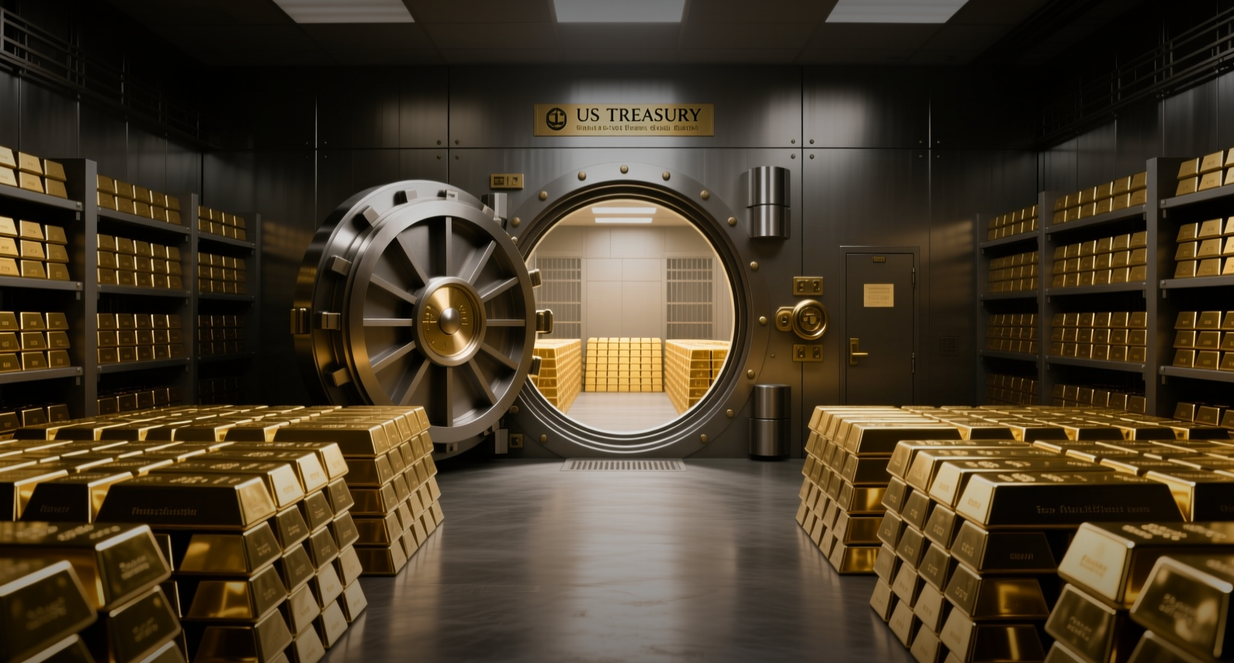
Trump flagged a potential revaluation of US gold reserves on Aug. 31, a move that could lift bullion and weaken the dollar as Fed rate-hike bets push COMEX gold down 1.23 percent to $4,474.30.
"The Fed chairman's speech could channel funds toward fixed-income assets in the US," said Nilanjan De, director at Wishlist Capital Services, describing the pressure on non-yielding assets like gold.
The revaluation signal lands as gold already faces headwinds from higher-for-longer rates. US Treasury yields have climbed toward 4.7 percent, and the dollar's strength makes bullion costlier for overseas buyers. Silver fell 1.71 percent to $65.85 an ounce on COMEX, while Indian gold and silver ETFs dropped as much as 4 percent. On the Multi Commodity Exchange, October gold settled 1.41 percent lower at Rs 1,55,999 per 10 grams, and September silver slipped 1.66 percent to Rs 2,36,651 a kilogram.
A revaluation of US gold reserves — the Treasury holds roughly 8,133 tonnes — would mark a shift in reserve-asset strategy with implications for sovereign wealth funds, central bank policies, and global commodity markets. If Trump follows through, gold could rally and the dollar weaken; if the signal fades, bullion stays hostage to the Fed's September decision, with markets pricing about a 57 percent chance of a hike at the Sept. 15-16 FOMC meeting.
The last time Washington revalued its gold holdings was in 1971, when President Richard Nixon ended dollar convertibility to gold, a decision that freed bullion to trade at market prices and reshaped the global monetary system. A modern revaluation would differ — Washington would not abandon the dollar but would mark up the book value of its reserves, a move that could strengthen the Treasury's balance sheet while pointing to a softer stance on the currency.
The signal comes at a delicate moment for bullion. Fed Chair Kevin Warsh told the Jackson Hole symposium that inflation remains a challenge and that the central bank may need to keep rates higher for longer, pushing the probability of a September hike to about 57 percent from 35.4 percent a day earlier, according to CME's FedWatch tool. Higher rates raise the opportunity cost of holding non-yielding gold, and the stronger dollar that follows makes the metal pricier for buyers using other currencies.
For investors, the two forces pull in opposite directions. A gold revaluation is structurally bullish — it would reprice the metal higher and could weaken the dollar as reserve managers diversify. But the immediate macro backdrop is bearish, with Treasury yields near 4.7 percent drawing capital out of bullion and into interest-bearing assets. The tension leaves gold vulnerable to sharp swings until the Fed's Sept. 15-16 meeting and any formal policy announcement from the Trump camp.
Geopolitical risk adds another layer. Middle East tensions have lifted energy costs, and while higher oil prices can support gold as a safe haven, the dominant driver this week has been monetary policy and dollar strength. Indian equity indices also slipped as investors weighed the Fed's hawkish tone, with analysts advising selective positioning in the broader market.
The stakes are high. A revaluation would be the first major change to US gold accounting in decades, potentially affecting how central banks value their own reserves and how sovereign funds allocate to bullion. If the signal translates into policy, gold could break higher; if it remains rhetoric, prices stay tied to the Fed's next move.
This article is for informational purposes only and does not constitute investment advice.
