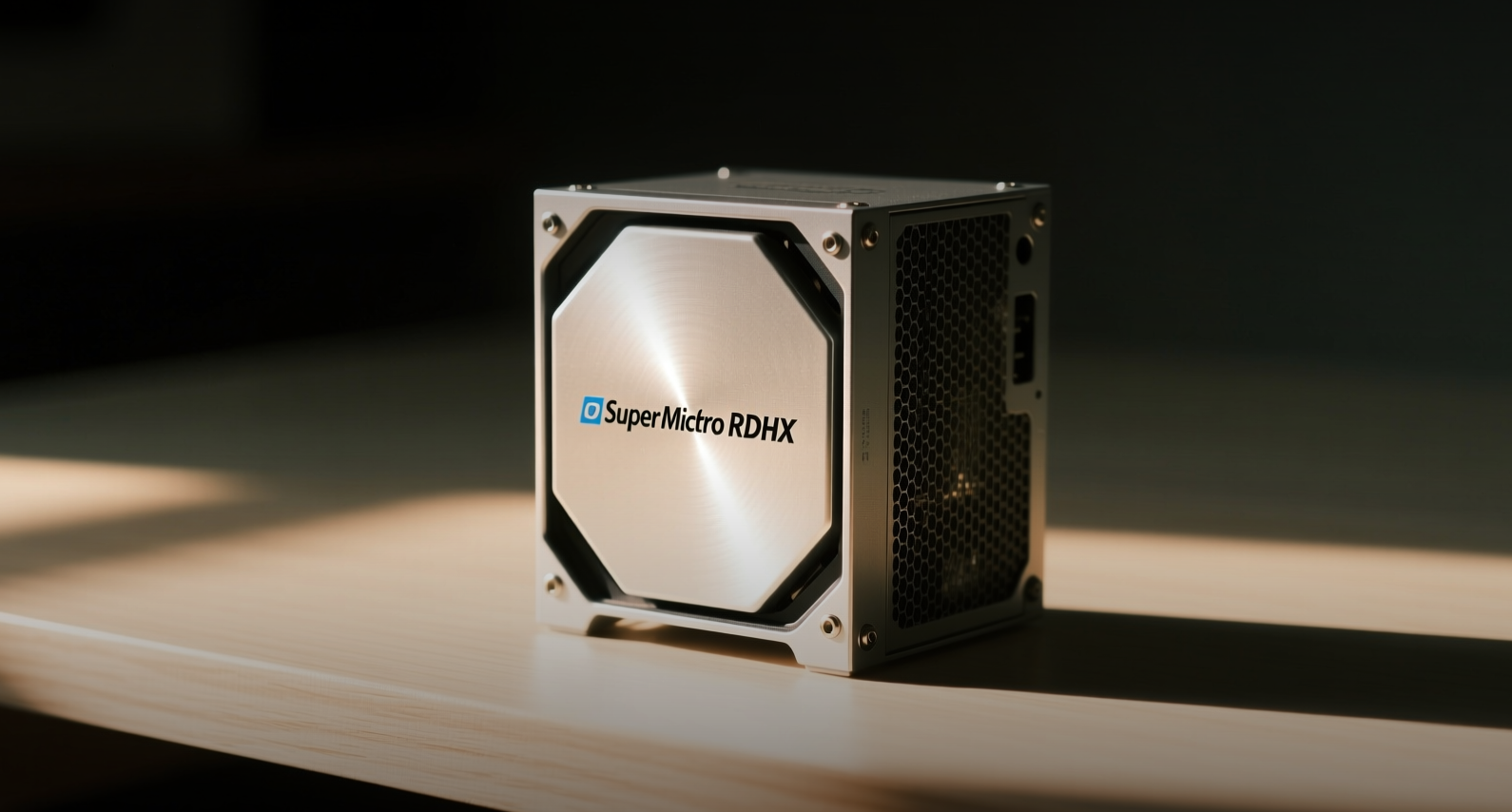
Super Micro's new liquid cooling lineup targets the rising heat density of AI factories, where Nvidia's latest GPUs can push rack power past 100kW.
Super Micro Computer Inc. on July 15 expanded its Rear Door Heat Exchanger portfolio with 10 new models, adding cooling capacities from 10 kilowatts to 120 kilowatts for systems-level to rack-scale AI deployments. The San Jose, California-based company's DCBBS liquid cooling line now covers the full thermal range of modern AI infrastructure, from single-server configurations to entire data center rows.
"AI workloads are driving power densities that air cooling can no longer handle, and our expanded RDHx portfolio gives operators a drop-in solution that scales from 10kW to 120kW without redesigning their facility," Charles Liang, chief executive officer of Super Micro, said.
The new models attach directly to server rack rear doors, using chilled water loops to absorb heat at the exhaust point before it enters the data center aisle. Super Micro claims the design simplifies deployment compared to traditional liquid cooling systems that require facility-wide plumbing changes — a key selling point as hyperscalers race to stand up AI capacity. The portfolio supports cooling for Nvidia's H100 and upcoming B200 GPU clusters, which can draw 700W to 1,000W per accelerator and generate heat loads that overwhelm conventional computer room air conditioning.
The expansion arrives as AI data center operators confront a thermal bottleneck. A single rack of Nvidia DGX systems can exceed 40kW, and next-generation configurations are projected to push past 100kW per rack — levels where air cooling becomes physically impractical. Super Micro's 120kW-rated RDHx model targets exactly those deployments, offering a path to cool high-density AI factories without transitioning to more complex direct-to-chip or immersion cooling architectures.
For Super Micro, the liquid cooling push represents a competitive differentiator against server rivals Dell Technologies and Hewlett Packard Enterprise, as well as cooling specialists like Vertiv Holdings. The company has positioned liquid cooling as a core growth driver, with management previously noting that liquid-cooled data center deployments could account for an increasing share of its revenue as AI workloads scale. Super Micro shares trade at roughly 22 times forward earnings, reflecting investor expectations that the AI infrastructure buildout will sustain demand for its integrated server and cooling solutions.
This article is for informational purposes only and does not constitute investment advice.