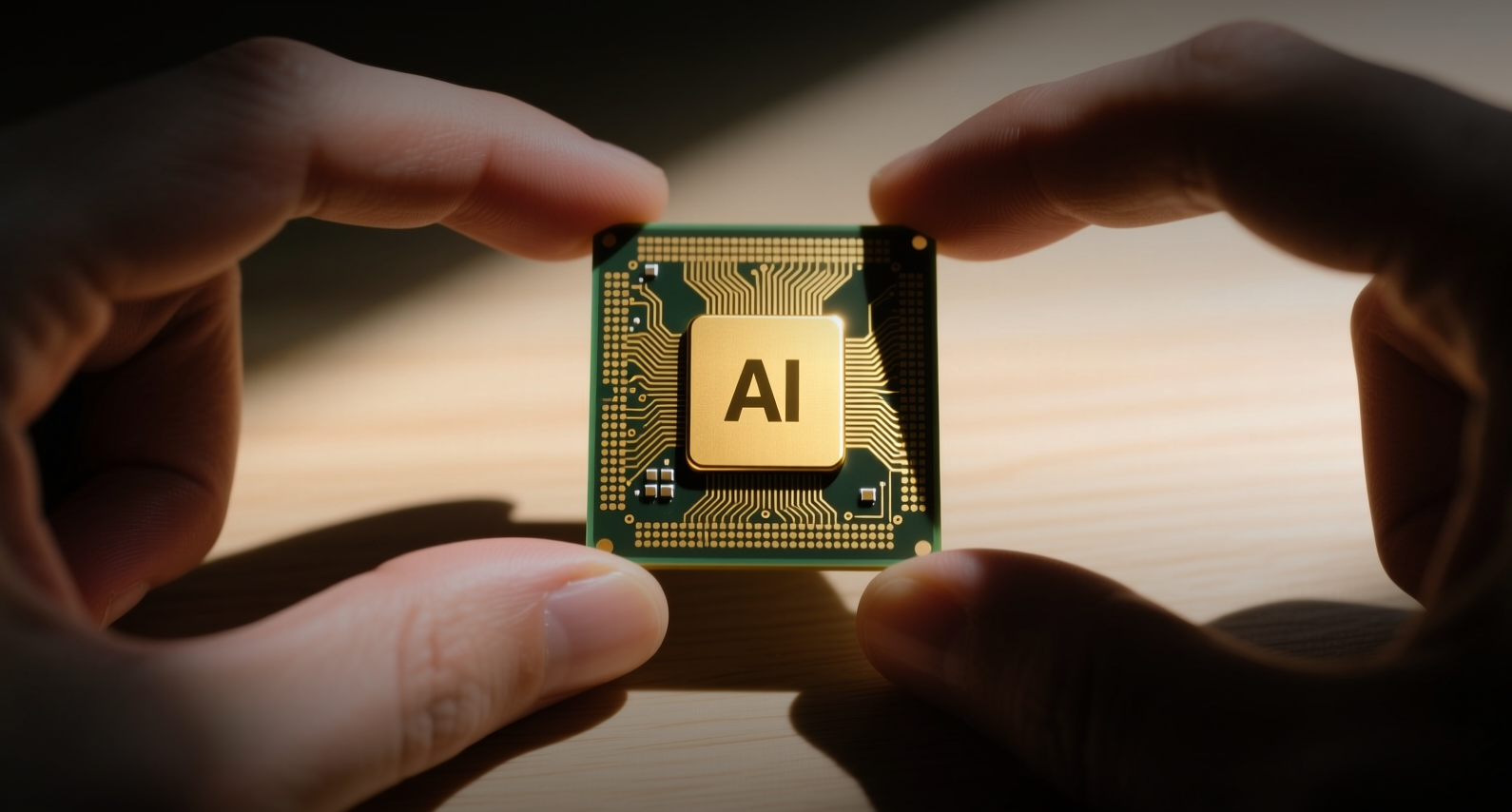
Nvidia's new Ethernet switch doubles fabric capacity to 102.4Tbps, locking hyperscaler customers into its Vera Rubin platform.
Nvidia's Spectrum-6 Ethernet switch offers 102.4Tbps per port — double the prior generation — giving AI factory builders a networking fabric that can link hundreds of thousands of GPUs without the congestion bottlenecks that plague standard Ethernet.
"Spectrum-6 is purpose-built for the scale of Vera Rubin clusters, where a single job can span 100,000 accelerators," said Gilad Shainer, senior vice president of networking at Nvidia. "Standard Ethernet drops packets under that load. Spectrum-6 doesn't."
The switch supports 102.4Tbps of aggregate switching capacity, twice the 51.2Tbps of the prior Spectrum-4 generation. It integrates Nvidia's adaptive routing and congestion-control algorithms, which the company says eliminate the packet-loss problems that cause GPU idle time in large-scale training runs. CoreWeave, Microsoft, Nebius, SpaceXAI and Tesla are among the first customers.
Nvidia shares, which trade at 24 times forward earnings after a 16.9% gain over the past year, have pulled back 14.5% from their May all-time high of $236.54. The Spectrum-6 launch reinforces the thesis that Nvidia's competitive moat extends beyond GPUs into the networking layer — a market where Broadcom and Arista Networks have long dominated.
Why Networking Matters for AI Margins
In large-scale AI training, the network is often the hidden bottleneck. When a cluster runs a model with trillions of parameters across tens of thousands of GPUs, any packet loss forces all accelerators to wait for the slowest node to resync. Nvidia says Spectrum-6's lossless fabric can cut that idle time by as much as 40% compared with standard Ethernet, directly improving utilization rates — and therefore the economics — of AI factories.
The switch is the core component of Nvidia's Spectrum-X Ethernet platform, which the company positions as an alternative to InfiniBand for AI workloads. InfiniBand, long the standard for high-performance computing, has been Nvidia's own preferred interconnect since its acquisition of Mellanox in 2020. But Ethernet's lower cost and broader installed base have pushed hyperscalers to demand Ethernet-based AI fabrics. Spectrum-6 is Nvidia's answer: an Ethernet switch that matches InfiniBand's reliability while using a more widely deployed protocol.
A $5 Trillion Company's Next Growth Layer
Nvidia's data center revenue reached $75.2 billion in the fiscal first quarter, up 92% from a year earlier, driven by demand for its Blackwell and upcoming Vera Rubin GPU platforms. The Spectrum-6 launch extends that revenue stream into networking hardware and software, where each GPU cluster requires switches, cables and management software that can add 15% to 20% to the total system cost.
The Japan AI factory being built with Noetra Corp. — housing 13,750 Vera CPUs and 27,500 Rubin GPUs on Spectrum-X Ethernet — offers a template. That single facility, backed by the government's FRONTia physical AI project, consumes 140 megawatts of data center capacity and represents the kind of sovereign AI investment that Oppenheimer analyst Rick Schafer estimates at a $1.5 trillion total addressable market.
For investors, the question is whether Nvidia can sustain its dominance as hyperscalers develop in-house alternatives. Amazon's Trainium and Google's TPU have already reduced those companies' reliance on Nvidia GPUs for inference. But networking is a different game: building a switch that matches Spectrum-6's scale requires years of ASIC development and software optimization. Broadcom's Tomahawk 5, the closest competitor, delivers 51.2Tbps — half the capacity of Spectrum-6 — and lacks Nvidia's adaptive routing software.
Nvidia's networking business, which the company does not break out separately, is estimated by analysts to generate roughly $13 billion to $15 billion in annual revenue. If Spectrum-6 captures even a third of the Ethernet switch market for AI data centers — a market that Dell'Oro Group projects will reach $30 billion by 2028 — it would add $10 billion in incremental revenue, or roughly 3% to 4% above current consensus estimates for fiscal 2028.
This article is for informational purposes only and does not constitute investment advice.