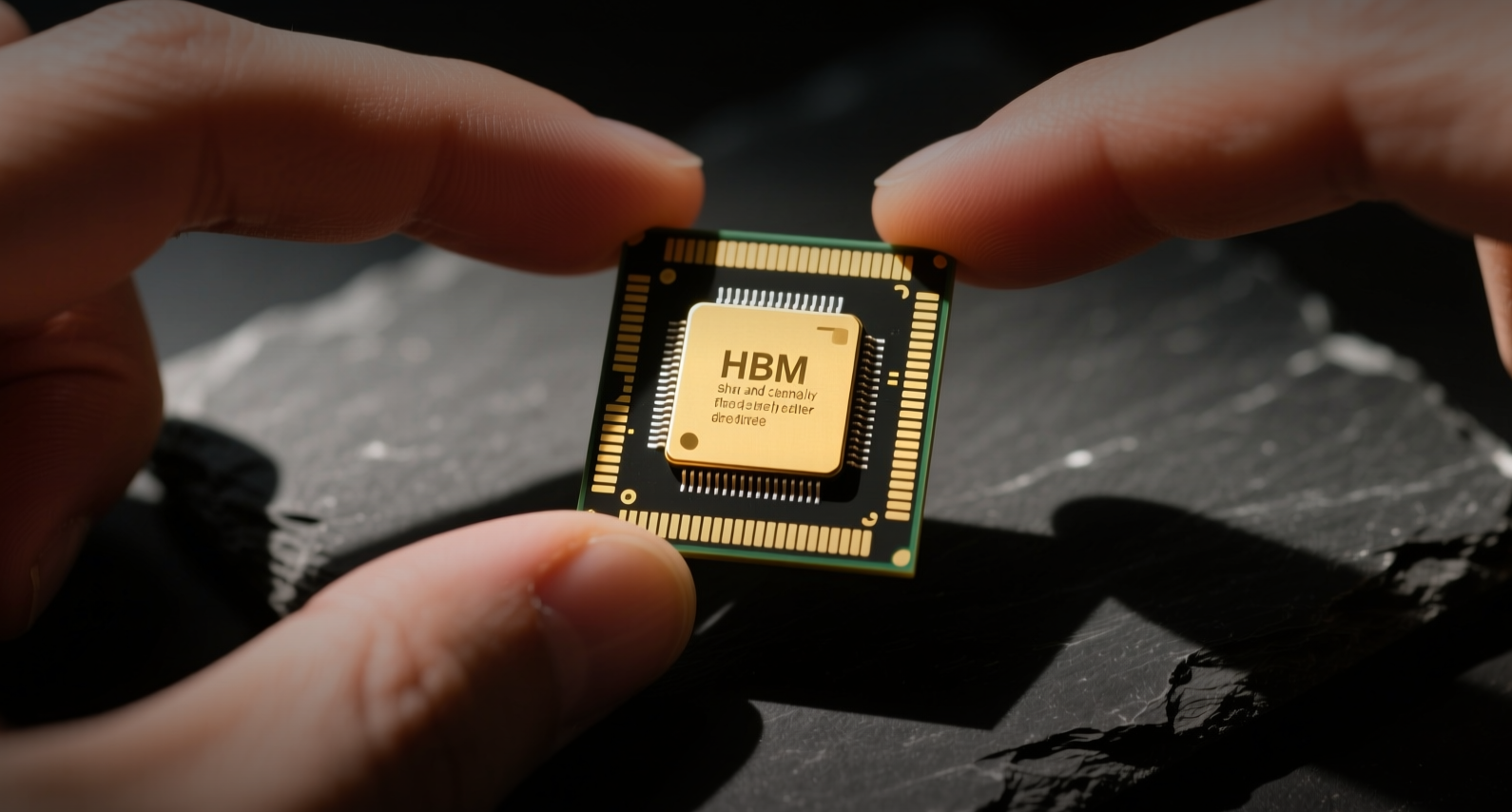
Micron's memory supercycle is compounding at a pace Intel's foundry turnaround cannot match, and the valuation gap shows it.
Micron Technology's memory business is compounding faster than Intel's foundry turnaround can offset, with fiscal third-quarter revenue of $41.5 billion up 345.8 percent year over year and adjusted earnings of $25.11 a share beating consensus by $3.72.
"We expect tight conditions to persist beyond calendar 2027 as a result of AI-driven demand across all segments coupled with structural supply constraints," Micron CEO Sanjay Mehrotra said on the earnings call.
The quarter produced $28.2 billion in net profit, up from $1.91 a share a year earlier, on record demand for high-bandwidth memory and DRAM. Intel also closed a strong quarter, but its foundry business continues to absorb losses as it chases TSMC's manufacturing lead on advanced nodes.
The divergence shows in valuation. Micron trades at roughly 5 times forward earnings with a market cap near $1 trillion, while Intel's recovery depends on foundry economics that have yet to prove profitable at scale. Analysts see more upside in memory: the consensus price target on Micron is $1,260.31, about 44 percent above Friday's open of $877.57.
Micron's growth is anchored in multi-year customer commitments. The company disclosed 16 strategic agreements extending through 2030, several with pricing floors or bands that provide revenue visibility unusual for a historically cyclical memory maker. Amazon raised its 2026 capital expenditure forecast from $200 billion to $220 billion, citing rising memory costs, and cloud demand is reserved through 2028.
The supply question
The bull case rests on supply staying tight. Micron has raised planned U.S. manufacturing investment to more than $250 billion and is ahead of schedule on a New York fab, the largest semiconductor manufacturing site in U.S. history. But competitors are adding capacity too. SK Hynix approved roughly $38 billion for two new South Korean memory fabs, and China's ChangXin Memory Technologies completed an IPO in July that could introduce lower-cost supply into the market.
What could break the cycle
Bears point to two risks. Nvidia is reportedly weighing lower-memory versions of its future Rubin Ultra GPUs, which could reduce high-bandwidth memory content per system and limit long-term HBM growth. And weaker-than-expected outlooks from SanDisk and Western Digital triggered a broader memory selloff, with Citi cutting its Micron price target to $1,150 from $1,400 while keeping a Buy rating.
Micron shares, down from a June high of $1,255, opened at $877.57 on Friday with a market cap of $991.12 billion. Raymond James, Bank of America and Royal Bank of Canada all set $1,500 targets after earnings, while Mizuho and Wedbush landed at $1,375 and $1,400. The stock's 5 times forward earnings multiple prices in a sharp cyclical downturn that the company's contract structure may not deliver.
This article is for informational purposes only and does not constitute investment advice.