
Iran's state television ordered tankers to evacuate waters near Kuwait and Bahrain, the latest escalation threatening the Strait of Hormuz chokepoint through which roughly 20 percent of global oil flows.
Iran's state television ordered tankers to evacuate waters near Kuwait and Bahrain, the latest escalation threatening the Strait of Hormuz chokepoint through which roughly 20 percent of global oil flows.
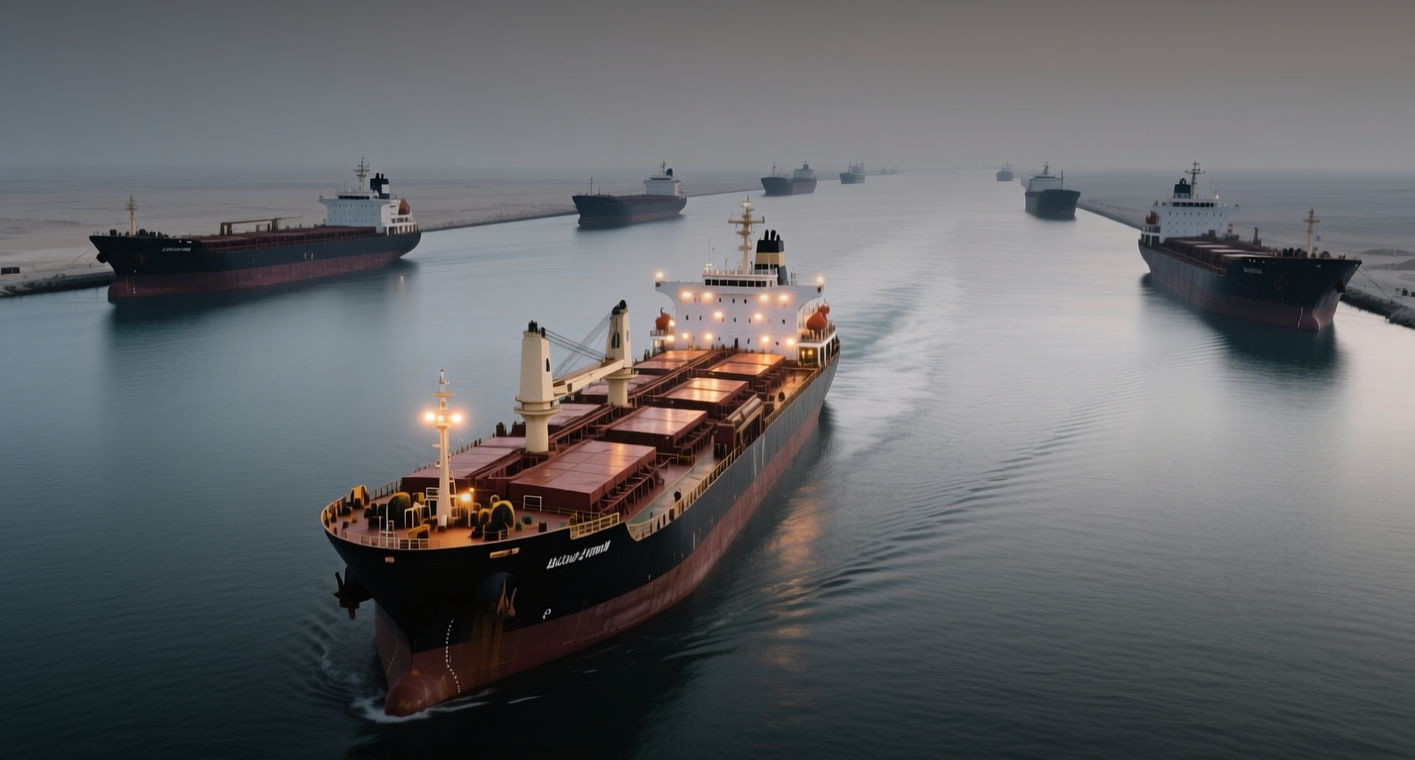
A broadcast warning from Tehran's state media ordering oil tankers to clear waters off Kuwait and Bahrain has pushed the Persian Gulf conflict to a new threshold, with Brent crude breaking above $100 a barrel for the first time in two months as the Strait of Hormuz shipping chokepoint faces further disruption.
"Owners and operators — and crews, predominately — are really not feeling the safety they would need in order to have their vessels transit," said Dimitris Maniatis, CEO of Greek maritime risk management firm Marisks, describing conditions in the strait.
The evacuation order follows 13 consecutive nights of U.S. strikes on Iranian targets and Iranian retaliation against American bases in Bahrain, Jordan and Kuwait. Iran's Revolutionary Guard said it stopped three oil tankers attempting to transit the strait, claiming one "exploded and caught fire" before the others turned back. Commercial traffic through the waterway has fallen to a three-week low, with analytics firm Kpler tracking just three commercial vessels transiting on a recent day. Brent crude has risen about $20 a barrel since fighting resumed on July 7, briefly topping $100 before settling near $99.48. West Texas Intermediate jumped 4.5 percent to $90.74, while U.S. gasoline prices climbed to a $4.09 national average, up from $3.94 a week earlier, according to AAA data.
The Strait of Hormuz carries roughly 20 percent of global oil consumption — about 15 million barrels per day before the conflict. Iran has attacked more than 30 commercial vessels over the past three months, according to U.S. Central Command, and the IRGC Navy said the strait "is under our control." Iran's parliament speaker Mohammad Bagher Ghalibaf warned that "no infrastructure will be safe" in the Middle East if the U.S. targets Iranian energy facilities, while President Trump has threatened to "bomb and destroy" one bridge or power plant for each new Iranian attack on a ship in the strait.
The evacuation warning near Kuwait and Bahrain — both hosting U.S. military bases — suggests Tehran is preparing strikes that could extend disruption beyond the strait into the broader Persian Gulf. Iran has already targeted a fully laden Kuwaiti oil tanker anchored off Dubai, and the IRGC Navy said it is completing preparations for a "new Gulf order" in which conditions in the strait "will never return to their former status."
The economic stakes are mounting across the region. Iraq, an OPEC founding member that exported about 3.5 million barrels per day before the war, has lost more than $40 billion in revenue as its oil fields filled up and exports collapsed, according to a government official. The U.S. blockade has redirected 12 vessels since it was reinstated nine days ago, and war risk insurance has been widely withdrawn from the region.
"Investors are in a wary mood as fresh jitters of worry about the ongoing energy crunch hit sentiment," said Susannah Streeter, chief investment strategist at Wealth Club. "With both the Strait of Hormuz and the Red Sea now under increasing pressure, markets are bracing for the possibility that the conflict could disrupt key energy routes and keep oil prices elevated."
European equities fell in midday trading, with London, Paris and Frankfurt all lower, while the dollar firmed against its main rivals. The March surge in Brent — up roughly 63 percent, the largest single-month gain since 1988 — showed how quickly the conflict can move energy markets. The International Energy Agency has described the Hormuz disruption as the largest oil supply shock in history, with estimates of up to 10 million barrels per day of additional losses if the strait remains closed.
Shipping analysts assess that routine Hormuz transit is unlikely to resume for the remainder of 2026 even under a ceasefire scenario, given Iran's stated intent to formalize tolls on vessels using the waterway. If the evacuation order precedes strikes on tanker routes near Kuwait and Bahrain, the disruption could push Brent higher, compounding inflationary pressure on an already stretched global economy.
This article is for informational purposes only and does not constitute investment advice.
