
Iran's security chief denied any plot against Trump's son, blaming Netanyahu, while threatening to halt oil flows through the Strait of Hormuz.
Iran's security chief denied any plot against Trump's son, blaming Netanyahu, while threatening to halt oil flows through the Strait of Hormuz.
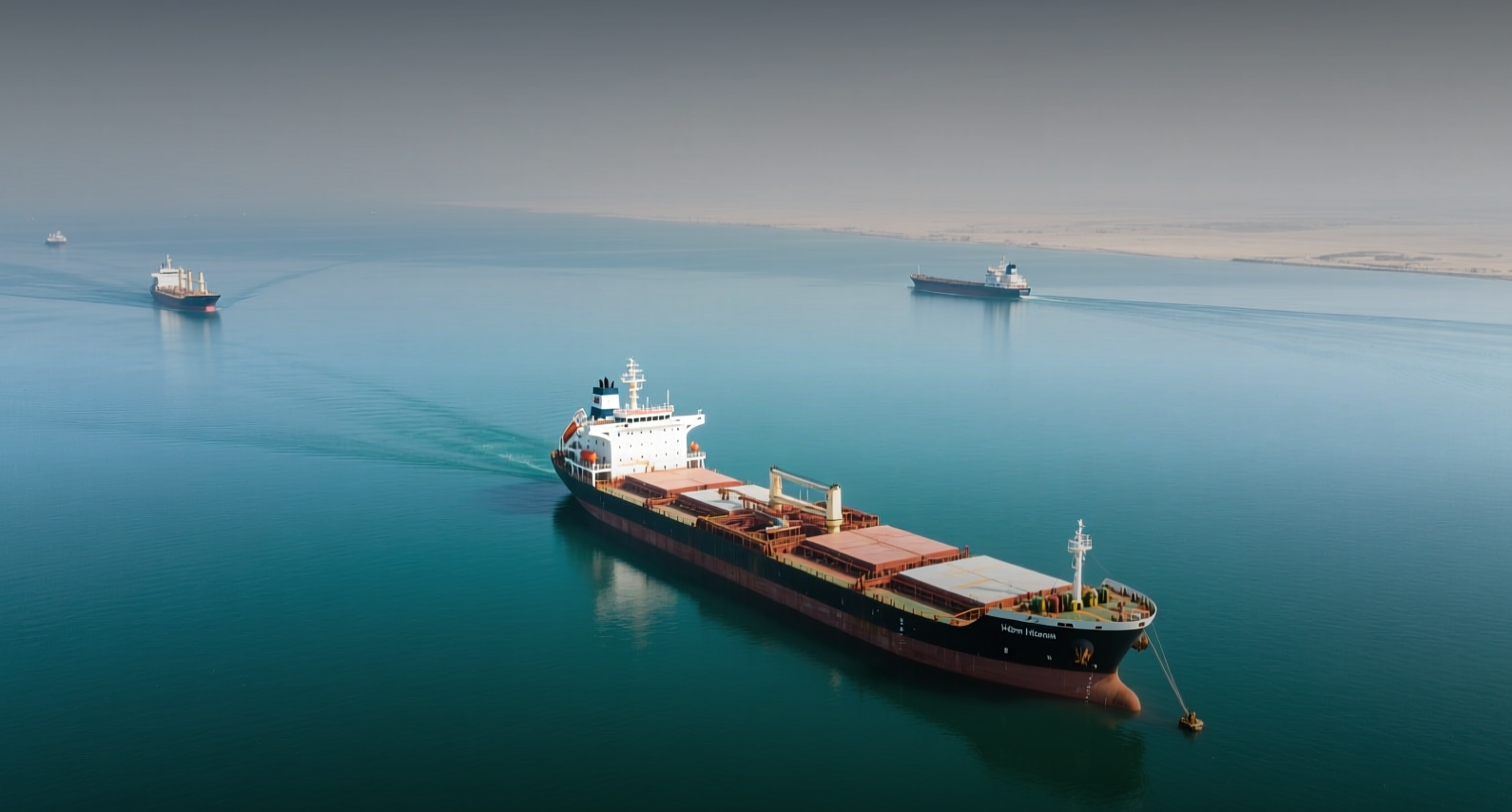
Iran's top security official denied any plot to assassinate Donald Trump's son, calling the allegation a fabrication by Benjamin Netanyahu, while reiterating a threat to halt oil shipments through the Strait of Hormuz, the chokepoint that carries 21 percent of global crude.
"The claims of a conspiracy against Trump's son are a complete fabrication by Netanyahu, aimed at deceiving and intimidating the US president," Mohsen Rezaei, secretary of Iran's Supreme National Security Council, said. "If we decide to act, nothing can stop us."
The denial lands as Washington escalates its economic campaign against Tehran. Treasury Secretary Scott Bessent this week launched "Operation Economic Outcast," naming nearly 60 entities tied to oil trading, military procurement and cyber operations, while the rial slid to a record 2,050,000 per dollar, roughly 7 percent weaker in days.
The standoff carries direct market risk. Any disruption to the Strait of Hormuz would hit the 21 percent of global oil trade that transits the waterway, and Rezaei's comments have reopened debate in Tehran over who holds authority to signal how far Iran will go — including on its nuclear doctrine.
Rezaei's denial follows Netanyahu's disclosure during an interview with Israel's Channel 14 that Iran had targeted one of his sons. Israeli intelligence learned of the alleged plot in December and alerted US authorities, according to Newsmax, which cited a US law enforcement source. Yair Netanyahu, 35, who lived in Hallandale Beach, Florida, was instructed to leave immediately and returned to Israel.
The allegation fits a pattern of US accusations that Iran has pursued assassination operations abroad since the killing of Quds Force commander Qassem Soleimani in January 2020. US prosecutors charged Farhad Shakeri in 2024 over an IRGC-directed plan to assassinate Trump, and in 2022 the Justice Department charged IRGC member Shahram Poursafi with offering $300,000 to arrange the killing of former national security adviser John Bolton. Iranian state television recently broadcast a video threatening Trump's son Barron.
Rezaei's remarks have triggered a dispute inside Iran over his authority. As secretary of the SNSC and the Supreme Leader's representative on the body, he said Sunday that any country joining the US economic campaign would be committing an act of war. "If the economic war continues, not a single drop of oil will be exported, neither through the Strait of Hormuz nor from anywhere in the Persian Gulf," he wrote on X.
The confrontational tone contrasts with President Masoud Pezeshkian, who said Friday it would be better to end the war while Iran remains in a position of "power and dignity," and Parliament Speaker Mohammad-Bagher Ghalibaf, who warned that "no matter how much military power we have, we won't survive if people are hungry." Reformists have questioned whether the SNSC secretary can articulate such policy without a formal council decision, while hardliners have praised Rezaei for offering an alternative to what the Hamshahri newspaper called the language of "weakness and surrender."
Rezaei has gone beyond the immediate confrontation to raise the possibility of reconsidering Iran's rejection of nuclear weapons. In an interview broadcast on state television, he argued that US attacks showed neither membership in the Non-Proliferation Treaty nor cooperation with international inspectors could protect a country from attack. "When America is waging such a war, people naturally ask: Why shouldn't we pursue nuclear weapons ourselves?" he said, adding that a nuclear weapon could be "cheaper and more effective than having hundreds of F-35s."
The economic backdrop sharpens the stakes. The rial's slide has rewritten household arithmetic: Iran's minimum wage of about 166 million rials a month is now worth around $81, with food inflation at 128 percent year-on-year against general inflation of 88 percent. The central bank proposed raising the monthly food coupon to 12.3 million rials, worth about $6.00 at Tuesday's rate — it lost 7 percent of its value before anyone could spend it.
The last time Washington pursued maximum pressure, after Trump's 2018 withdrawal from the nuclear deal, it pushed Iranian banks out of the international messaging system that moves money between institutions and pressed oil customers to cut purchases. Bessent has framed the current campaign as a choice between "complete global isolation and a subsistence economy" or "a path back to normalcy." Whether this round differs from the past 47 years of sanctions will depend on Washington's willingness to enforce against targets that can hurt it back — the step every administration has drawn short of, including sanctioning one of China's major banks.
This article is for informational purposes only and does not constitute investment advice.
