
The US Navy's clearance of mines from the Strait of Hormuz strips Tehran of its primary lever over global oil flows, sending crude prices lower as de-escalation hopes build.
The US Navy's clearance of mines from the Strait of Hormuz strips Tehran of its primary lever over global oil flows, sending crude prices lower as de-escalation hopes build.
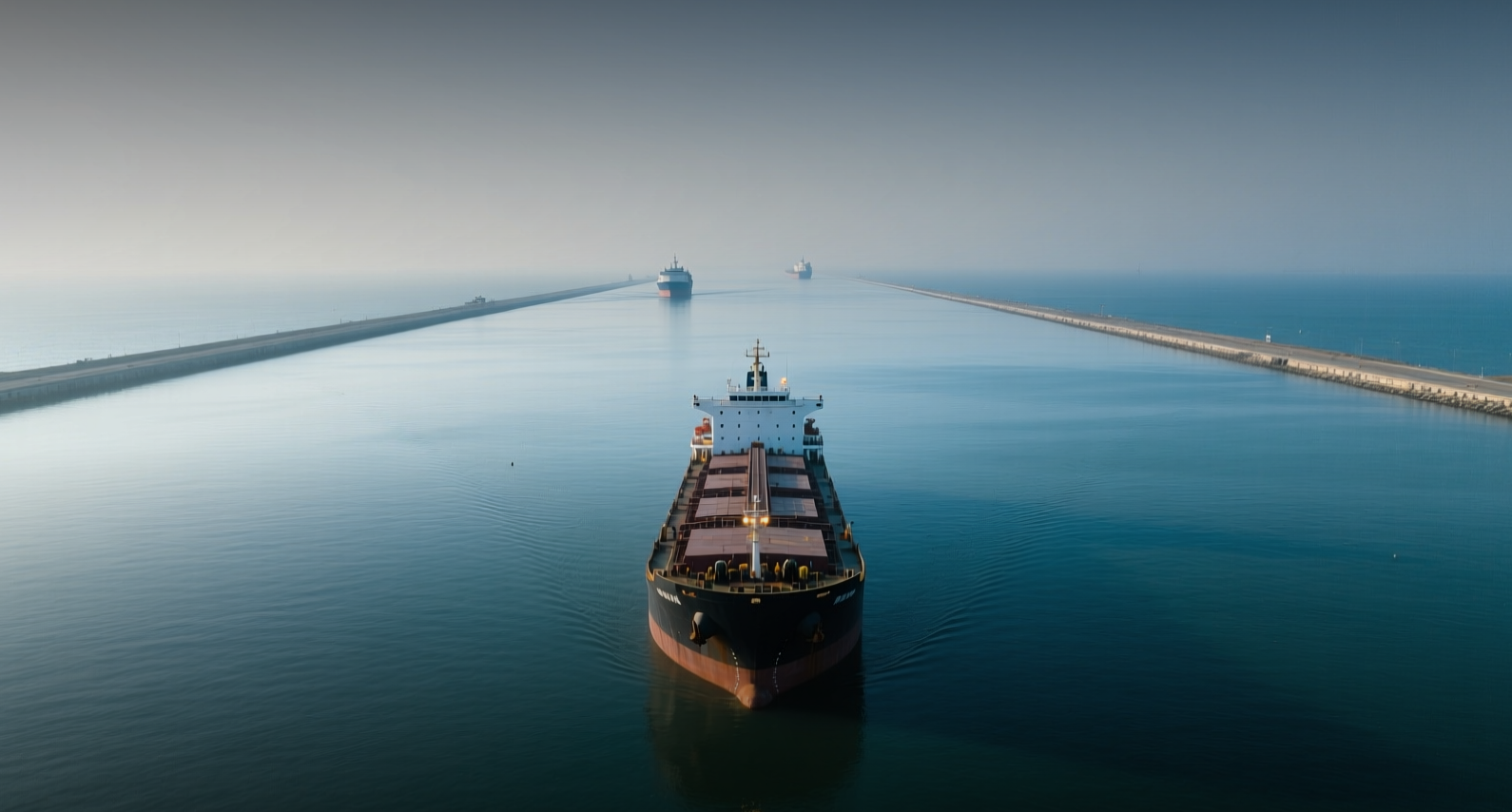
The US Navy removed or detonated all mines from international waters of the Strait of Hormuz, President Trump said Tuesday, cutting Iran's leverage over the waterway carrying 20 percent of global oil.
"Iran has been notified that any ship or boat placing new mines will be immediately and systematically destroyed," Trump wrote on Truth Social, adding that Space Force surveillance covers "every square inch of the Strait" under a "Zero Tolerance policy."
US West Texas Intermediate crude fell $1.37, or 1.7 percent, to $80.99 in early trade, extending the previous session's losses as traders priced in reduced supply disruption risk. Oil movements through Hormuz stood at about 5 million barrels per day Monday, down from more than 20 million before the conflict began in February, according to provisional Vortexa data cited by Reuters.
The mine clearance marks a turning point in the months-long confrontation, weakening Iran's ability to restrict shipping through the chokepoint. But the security environment remains volatile — an oil tanker was disabled Tuesday after being struck by a projectile near Oman, and Tehran has not confirmed the US claim of a fully clear waterway.
The announcement follows a similar declaration on Aug. 18, when Trump said the strait was open and mines had been removed. Tuesday's statement goes further, establishing an explicit threat against any vessel attempting to redeploy mines. The last time the US Navy conducted a major mine-clearance operation in the region was during the 1987-88 Tanker War, when reflagged Kuwaiti tankers transited under US escort after Iranian mining damaged commercial shipping.
Pakistan's army chief, Field Marshal Asim Munir, visited Tehran on Monday for talks with President Masoud Pezeshkian and other senior officials, with discussions focused on preventing further escalation and reopening the strait. Pakistani Interior Minister Mohsin Naqvi said "significant progress" had been made, though no complete agreement has been announced. Iran and Oman have also discussed a phased framework for a joint temporary maritime corridor and a mine-clearing project, according to a joint statement from Iran's foreign ministry.
The White House said no talks are currently underway with Iran, and the naval blockade remains in place. Secretary of State Marco Rubio has told allied foreign ministers that the US does not expect to launch new strikes on Iran for now, instead focusing on sanctions and other pressure tactics, according to Axios. The administration this week announced a fresh round of sanctions under "Operation Economic Outcast," targeting Iranian oil, weapons, and revenue-producing networks.
For energy markets, the mine clearance reduces the risk premium embedded in crude prices. WTI settled at its lowest since Aug. 13 on Tuesday, and Japan's Nikkei reported that Tokyo plans to support alternative Middle East pipelines that bypass the strait, reflecting broader concerns about the waterway's long-term reliability. Iran's parliament speaker Mohammad Bagher Ghalibaf said the US "will also be defeated in the economic war," while a senior Iranian lawmaker insisted the strait remains under Tehran's control.
The stakes extend beyond oil. A prolonged disruption of Hormuz traffic would ripple through LNG shipments, shipping insurance rates, and consumer fuel prices globally. With oil flows through the strait still at roughly a quarter of pre-conflict levels, the physical clearance of mines is a necessary but insufficient step toward restoring normal commercial traffic — the diplomatic track between Washington, Tehran, and regional mediators will determine whether the waterway stays open.
This article is for informational purposes only and does not constitute investment advice.
