

Horizon Robotics founder Yu Kai said the company aims to overtake NVIDIA as China's high-end autonomous driving chip leader next year, building on a 31.94 percent domestic-brand market share and 15 million Journey chips in mass production.
Horizon Robotics founder Yu Kai said the company aims to overtake NVIDIA as China's high-end autonomous driving chip leader next year, building on a 31.94 percent domestic-brand market share and 15 million Journey chips in mass production.
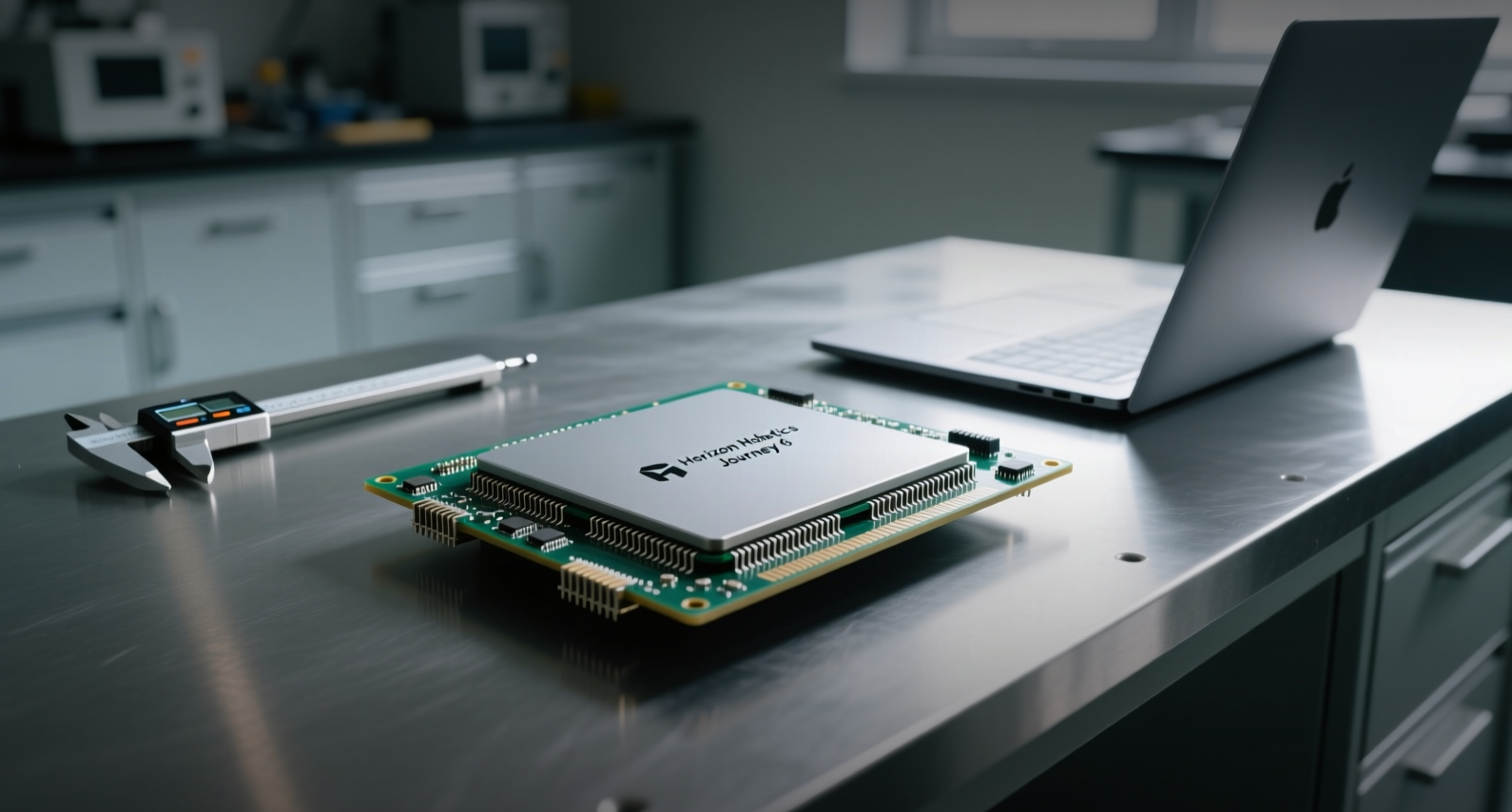
Horizon Robotics, which holds 31.94 percent of China's domestic-brand passenger vehicle intelligent driving chip market versus NVIDIA's 29.38 percent, aims to overtake the US company in the high-end segment next year as Beijing pushes for domestic semiconductor self-sufficiency.
"Technological innovation is endless, and the logic of the intelligent driving chip industry is starkly different from that of the luxury goods industry. There is no permanent technological advantage, and continuous iteration is required to move forward," Yu Kai, founder and chief executive officer of Horizon Robotics, said at the Yabuli Entrepreneurs Forum summer annual meeting in Chengdu.
The Beijing-based company's Journey intelligent driving chips have surpassed 15 million units in mass production, empowering 8 million vehicle owners across more than 40 automotive brands, according to company data. In the higher-tier urban NOA chip segment, Horizon Robotics expanded its share to 22.82 percent, up nearly 5 percentage points from 2025, though it still trails NVIDIA for the top ranking. Horizon launched a high-compute chip with up to 560 TOPS in 2025, a measure of trillion operations per second that roughly doubles the compute of its prior flagship.
The ambition lands against a mixed backdrop for the stock. China Merchants Bank International cut its target price on HORIZONROBOT-W (09660.HK) to HKD7 while keeping a Buy rating, and short selling reached $274.72 million, a 25.919 percent ratio, as of Sept. 4. The shares rose 1.033 percent in the latest session.
Yu Kai's understated reaction to the mass-production milestone framed the company's longer game. "I was happy for about two seconds, then it passed and I turned the page. We're always on the road — if there are 15 million, there will be 20 million," he said. Horizon Robotics already claimed the top position in China's intelligent assisted driving chip market in 2024, but the shift toward fully autonomous and driverless systems brings NVIDIA into direct competition.
"Where we stand today, we are number two in the industry, second only to NVIDIA" in high-compute chips, Yu Kai said, adding that the company's goal next year is to surpass the US giant in China's high-end autonomous driving chip market. The company plans to keep raising investment in autonomous driving chip research and development, seeking dominance through product iteration rather than a single breakthrough.
Beyond vehicles, Horizon Robotics is incubating D-Gua Robotics, a robot computing venture whose latest funding round pushed its valuation past $3 billion. The unit's computing business spans robot vacuums, lawn mowers, pool robots and humanoid robots, according to Yu Kai. NVIDIA again looms as the competitor in that emerging field, since the underlying computing architectures for automobiles and robots are converging.
The competitive stakes are measurable. NVIDIA's data center dominance has made it the reference point for every autonomous driving chip aspirant, and Horizon's 560 TOPS part is aimed squarely at the performance band where NVIDIA's automotive-grade silicon competes. Horizon did not disclose independent benchmark conditions for its comparison against NVIDIA's high-compute products.
For investors, the question is whether the market has priced in the ambition. HORIZONROBOT-W trades against a CMBI target of HKD7 with a Buy rating, yet the elevated short ratio of 25.919 percent signals a sizable bearish camp betting the company cannot close the gap with NVIDIA on the timeline Yu Kai has set. The stock's 1.033 percent gain in the latest session suggests the market is treating the statement as incremental rather than decisive, leaving the next year of product launches as the real test of whether Horizon can convert its domestic-brand lead into high-end supremacy.
This article is for informational purposes only and does not constitute investment advice.
