
A glacier collapse at roughly 16,000 feet triggered a debris-laden flood that killed at least 157 people in Nepal and left hundreds missing, including nearly 50 American tourists.
A glacier collapse at roughly 16,000 feet triggered a debris-laden flood that killed at least 157 people in Nepal and left hundreds missing, including nearly 50 American tourists.
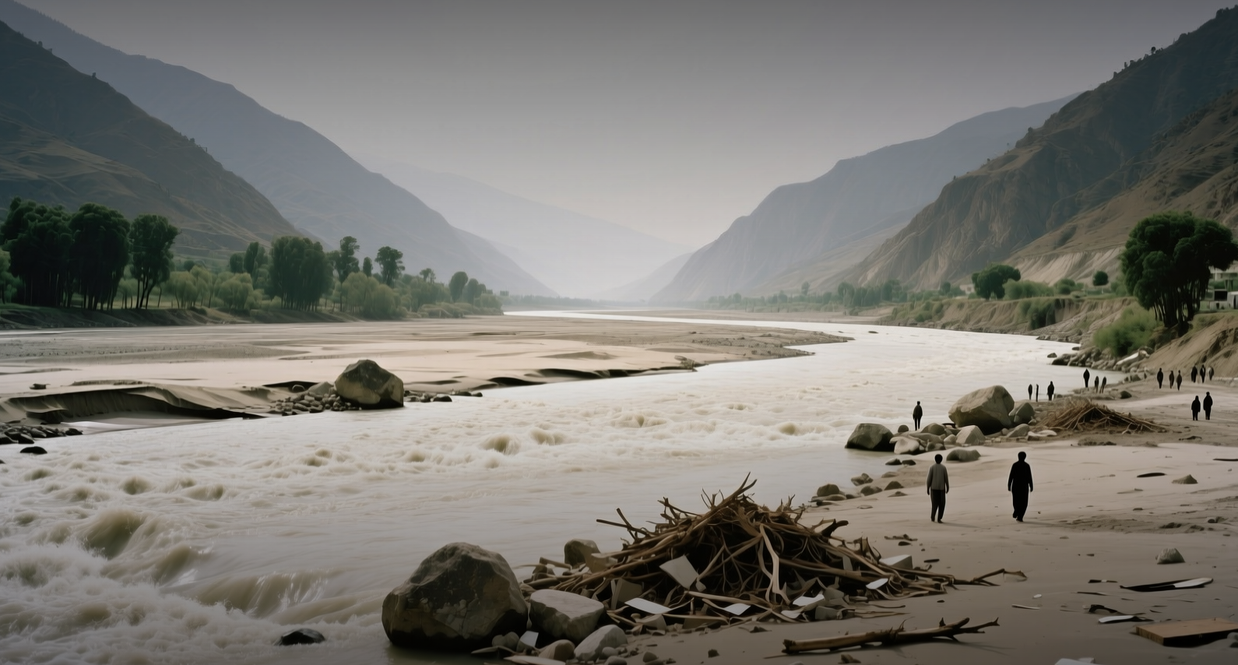
A glacier collapse in the Himalayas killed at least 157 people in Nepal and left hundreds missing, including nearly 50 Americans, as floodwaters swept through border towns popular with Hindu and Buddhist pilgrims.
"The settlements next to the river have been completely swept away. Five of my own relatives are missing," Tula Bahadur BK, a health worker in Rasuwa, told Reuters.
Nepal's tourism ministry said 384 travelers were unaccounted for, including 105 Indians, 93 Nepalis, 12 British nationals and three US citizens. South Korea separately reported eight nationals missing from a hydropower project. The flood knocked out 430 MW of electricity supply, more than 12 percent of Nepal's total hydropower capacity of 3.2 GW.
With a blockage still lodged upstream on the Nepal-China border river, authorities warned a second flood could occur. Rescue helicopters could not land in the affected areas of Syapru Besi and Timure in Rasuwa district, home to about 50,000 people, as the river ran above its normal course.
Scientists are converging on a leading hypothesis: a large piece of a glacier at roughly 16,000 feet broke off and tumbled hundreds of feet into the valley below, where the ice was pulverized into water by the velocity of the fall and met downstream rivers. The US Geological Survey initially recorded a 4.4 magnitude earthquake in the area but later corrected the reading to a landslide-generated seismic signal. Satellite imagery from Planet Labs showed a wide swathe of destruction on either side of the usual river course in the Lhende Khola, about 20 km northeast of the Rasuwagadhi border crossing.
"There's a relatively small bit of glacier that broke off... And yet the scale of the flood seems to have been absolutely cataclysmic," said Simon Cook, a geoscientist at the University of Dundee. "Is it physically feasible that this piece of glacier could have been pulverized into water to create a flood of that size?"
The disaster struck at a critical junction for Nepal's energy and trade infrastructure. The 430 MW of affected electricity supply represents more than 12 percent of the country's total hydropower capacity, with most losses concentrated in hydroelectric projects along the Bhote Koshi and Trishuli river corridors. China deployed 601 personnel and 113 vehicles to the Gyirong port area in Tibet, where roads, communications and power links were severed. A rescuer told CCTV that all roads leading to the border crossing had been "completely destroyed" after a preliminary drone inspection.
The economic toll extends beyond energy. The affected villages serve as vital gateways to Nepal's Langtang Valley and Tamang Heritage trails, and as transit hubs for Hindu and Buddhist pilgrims traveling to sacred mountain lakes including Gosaikunda in Nepal and Kailash Mansarovar in Tibet. Nurbu Tamang, 67, who runs a homestay for pilgrims in Rasuwa district, said one of his houses in Syapru Besi was swept away despite being about 500 meters above the river gorge.
India issued flood alerts in the populous northern states of Uttar Pradesh and Bihar, where several rivers flow down from the Himalayas into the plains. Authorities in Bihar said they had evacuated about 5,000 people from six districts and planned to evacuate 10,000 to 12,000 total. Indian Prime Minister Narendra Modi said New Delhi was ready to provide all possible humanitarian assistance.
The disaster echoes a pattern of glacial destabilization across the region. Last year's Bhote Koshi flood killed nine people and washed away a "Friendship Bridge" linking Nepal and China, disrupting trade and transport for months. In 2023, a glacial lake burst in India's northeastern state of Sikkim destroyed a hydropower dam and left scores dead. Scientists warn that warmer temperatures are destabilizing glaciers across the Himalayas and other mountain ranges in Asia, increasing the frequency of floods unconnected to rainfall.
Qianggong Zhang, head of climate and environmental risks at the Kathmandu-based International Centre for Integrated Mountain Development, said the cause of the ice-rock avalanche into the Lhende Khola river was yet to be confirmed, but warned that with a blockage still lodged upstream, a second flood could occur. Nepal's Prime Minister Balendra Shah, who came to power in March on a wave of Gen Z discontent over corruption and unemployment, has deployed the army, police and paramilitary forces in what is his first major crisis since taking office.
This article is for informational purposes only and does not constitute investment advice.
