

A US federal antitrust lawsuit against Samsung, SK Hynix, and Micron alleges the three memory giants used the AI shift to High-Bandwidth Memory as cover to coordinate a 700% surge in consumer DRAM prices over four years.
A US federal antitrust lawsuit against Samsung, SK Hynix, and Micron alleges the three memory giants used the AI shift to High-Bandwidth Memory as cover to coordinate a 700% surge in consumer DRAM prices over four years.
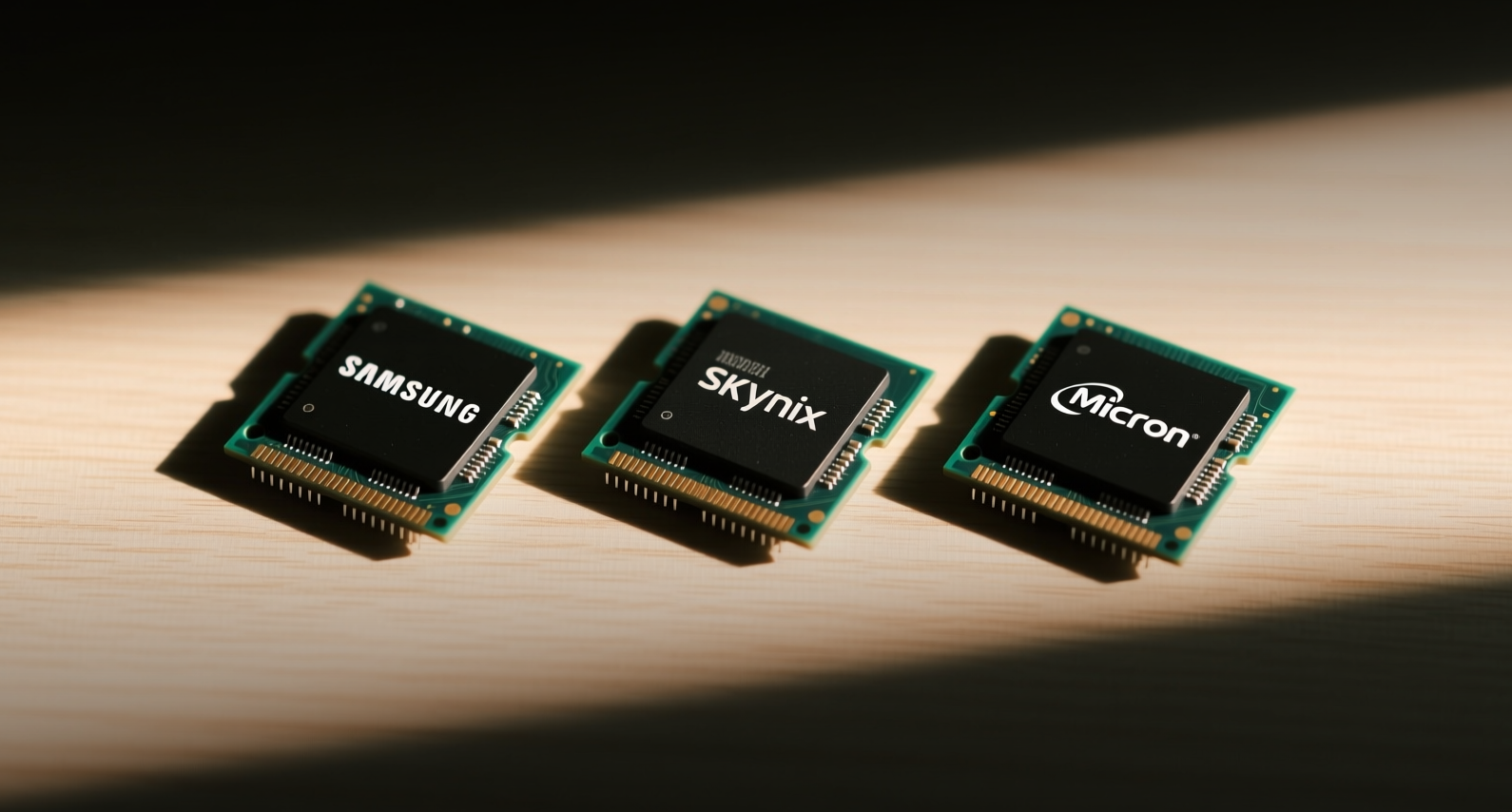
A US federal antitrust lawsuit against Samsung, SK Hynix, and Micron alleges the three memory giants used the AI shift to High-Bandwidth Memory as cover to coordinate a 700% surge in consumer DRAM prices over four years.
The June 25 class action in California federal court — the first end-user legal challenge to the AI memory supercycle — claims the three companies, which control roughly 90% of global DRAM revenue, systematically diverted advanced manufacturing capacity to HBM for AI accelerators while restricting supply of conventional DDR3 and DDR4 memory.
"Defendants used the AI boom as a pretext to restrict output of general-purpose memory, forcing consumers and small businesses to pay prices that have quadrupled in three quarters," the complaint alleges, citing the companies' coordinated shift of 70% to 90% of advanced wafer capacity to HBM production. The case is Garciaguirre v. Samsung Electronics, No. 5:26-cv-06345, assigned to Judge Noel Wise in the US District Court for the Northern District of California.
The 17 plaintiffs — 14 individual consumers and three small PC businesses — filed the suit on June 25. The complaint invokes a documented industry pattern: Samsung and Hynix Semiconductor each pleaded guilty to US Department of Justice price-fixing charges for conduct between 1999 and 2002, paying $300 million and $185 million respectively, with several executives serving prison time. A similar 2018 class action making comparable claims about the 2016-2017 upcycle was dismissed in 2020 and affirmed on appeal in 2022, with the Ninth Circuit ruling the conduct was more consistent with lawful independent business judgment than with an unlawful agreement.
The lawsuit introduces a legal variable into the memory industry's AI-driven pricing narrative. If the case survives initial motions and enters discovery, internal documents on capacity allocation decisions — including how much production was shifted to HBM and when — would face judicial scrutiny. That prospect alone could pressure the structural supply constraints that have driven memory stocks to record levels.
The numbers underlying the complaint are stark. SK Hynix reported Q1 2026 operating profit of 37.6 trillion won ($27.8 billion) on revenue of 52.6 trillion won ($35.5 billion), an operating margin of approximately 71.5%. Micron's latest quarterly gross margin reached 84.9%, surpassing Nvidia. Samsung's second-quarter operating profit rose roughly 19-fold from a year earlier.
The profitability stems from a structural shift in how memory is manufactured. Every gigabyte of HBM requires approximately three times the wafer capacity of standard DDR5 DRAM to produce, because the stacking, through-silicon via formation, and CoWoS co-packaging add complex process steps. With SK Hynix allocating 80% to 90% of advanced capacity to HBM, Samsung a similar proportion, and Micron roughly 70% to HBM and high-end DDR5, the supply of general-purpose memory has been systematically compressed. The three companies' combined 2026 capital expenditure is projected at $53.5 billion, with nearly all new capacity locked into premium product lines.
The result: DDR5 contract prices rose 58% to 63% quarter-over-quarter in Q2, while NAND flash contract prices climbed 70% to 75%, according to TrendForce. Inventory across the three manufacturers stands at roughly four weeks, well below the eight-to-12-week healthy range.
The price surge has already penetrated the broader technology supply chain. Apple and Dell each announced price increases citing rising memory costs, with both companies' stocks falling more than 5 percent in a single trading session. Micron has signed 16 non-cancellable strategic customer agreements covering 20% of its DRAM capacity and one-third of its NAND capacity, securing approximately $100 billion in minimum revenue and collecting $22 billion in customer cash deposits — effectively locking in high prices through contractual commitments.
For small PC businesses lacking the pricing power of Apple or Dell, the memory cost increases have been existential. The three plaintiffs operating small PC businesses represent a broader cohort of downstream companies that cannot pass through cost increases and have no alternative supply sources in a market where 90% of DRAM is controlled by three firms.
The case arrives as SK Hynix completed the largest US listing by a foreign company in history — a $26.5 billion Nasdaq IPO that closed 13% above its offer price on Friday, valuing the company at roughly $1.27 trillion. Chairman Chey Tae-won told CNBC that customer demand for more memory capacity is insatiable, with AI agents and physical AI robots driving structural rather than cyclical demand.
Yet the legal risk is material. US antitrust class actions carry the threat of treble damages, and the memory industry's prior criminal convictions provide plaintiffs with a documented pattern of conduct that judges and juries may weigh. Samsung is the first named defendant, but the complaint targets all three manufacturers. A ruling that the capacity shift constituted coordinated conduct rather than independent business judgment could reshape how memory companies allocate production between AI and general-purpose markets.
The next procedural milestone will be the companies' motion to dismiss, expected within 60 days of the June 25 filing. Until then, the lawsuit remains a tail risk — but one that the memory industry's record margins and stock prices have not yet priced in.
This article is for informational purposes only and does not constitute investment advice.
