

A torrent of investment into artificial intelligence infrastructure is set to dramatically reshape the economic fortunes of Asia's key technology exporters, according to a new report.
A torrent of investment into artificial intelligence infrastructure is set to dramatically reshape the economic fortunes of Asia's key technology exporters, according to a new report.
Goldman Sachs forecasts that capital expenditure by the five largest US hyperscale cloud providers will surge 80% year-over-year to $750 billion in 2026, with the spillover effects disproportionately benefiting the economies of Taiwan and South Korea.
"The AI boom is immensely juicing economic growth in Asia's technology-exporting economies," Goldman Sachs said in its report, highlighting the concentrated impact of the global AI arms race on a few key regions.
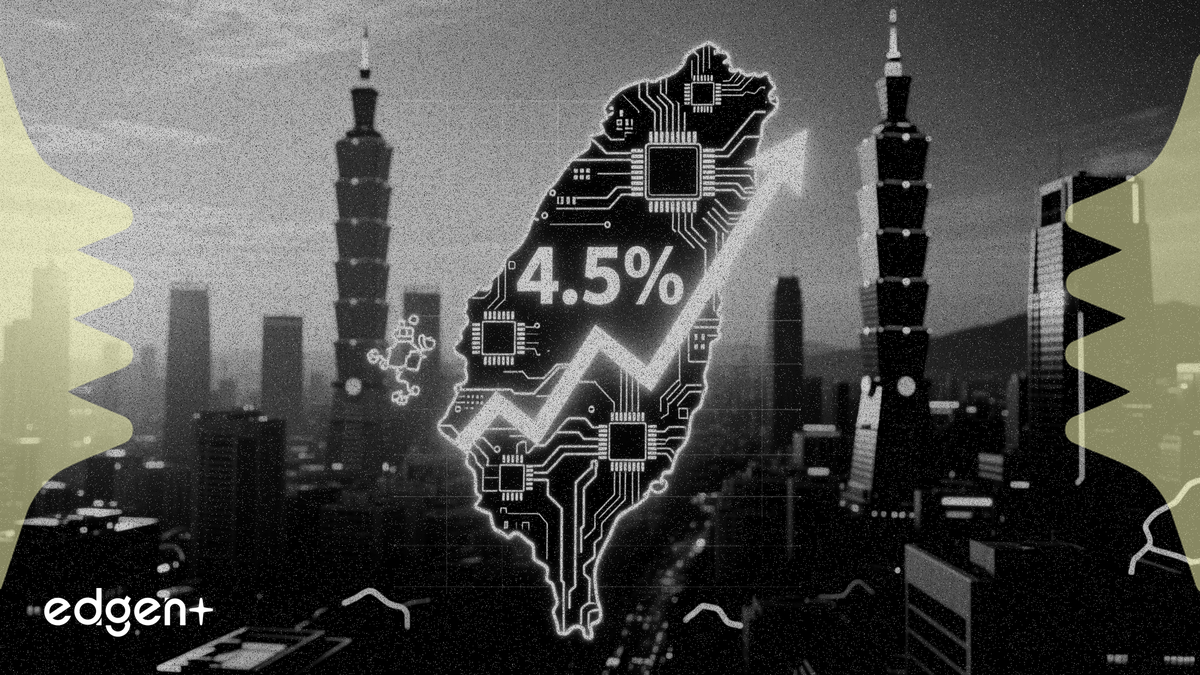
The investment bank projects that technology exports will add a staggering 4.5 percentage points to Taiwan's real GDP growth in 2026. South Korea, a critical supplier of advanced memory for AI systems, is expected to see a 1 percentage point boost to its growth from the same trend.
This massive capital injection, which the report suggests could reach $1.5 trillion globally, signals a significant opportunity for investors in the semiconductor supply chain. The direct beneficiaries include logic chip foundries like TSMC and memory producers such as Samsung and SK Hynix, even as the boom helps these export-driven economies offset headwinds from elevated energy prices.
The report centers on a massive wave of spending by the world's largest cloud companies, including Microsoft, Google, and Amazon Web Services. This $750 billion in US-based capital expenditure for 2026 is earmarked for building and equipping vast data centers with the specialized servers and processors required to train and operate advanced AI models. Goldman Sachs estimates the global investment could be double this amount, creating a $1.5 trillion market. This spending is not just on servers, but on the entire ecosystem of power, cooling, and networking infrastructure needed to support them.
The analysis identifies Taiwan and South Korea as the undisputed winners of this spending spree due to their dominance in critical segments of the semiconductor supply chain. Taiwan, home to world-leading foundry TSMC, holds a near-monopoly on the production of the advanced logic chips that power AI accelerators. The island also has a strong ecosystem of AI server manufacturers, including companies like Foxconn and Quanta Computer.
South Korea's role is centered on advanced memory, particularly High-Bandwidth Memory (HBM), which is essential for AI processors to function efficiently. Companies like Samsung Electronics and SK Hynix are the leading producers of HBM, and the surge in AI-related demand is a primary driver of the memory market's recovery. The report effectively highlights a duopoly on the highest-value components of the AI hardware stack.
The projected GDP contributions are substantial enough to act as a shield against global macroeconomic shocks. For Taiwan, adding 4.5 percentage points to GDP from a single sector provides a powerful buffer against challenges like elevated energy prices and slower global demand in other areas. The same logic applies to South Korea's 1-point boost. This influx of export revenue is also expected to improve the current account positions of both economies.
For investors, the Goldman Sachs report reinforces the long-term structural growth narrative for companies at the heart of the AI supply chain. The forecast is likely to drive further capital into Taiwanese and South Korean technology stocks, potentially leading to upward revisions of earnings forecasts and stock price appreciation for key players in logic chip manufacturing, AI server assembly, and advanced memory production.
This article is for informational purposes only and does not constitute investment advice.
