

The AI industry's growth is constrained not by demand but by a shortage of chips, data centers, energy and skilled workers that Arm CEO Rene Haas expects to persist for two to three years.
The AI industry's growth is constrained not by demand but by a shortage of chips, data centers, energy and skilled workers that Arm CEO Rene Haas expects to persist for two to three years.
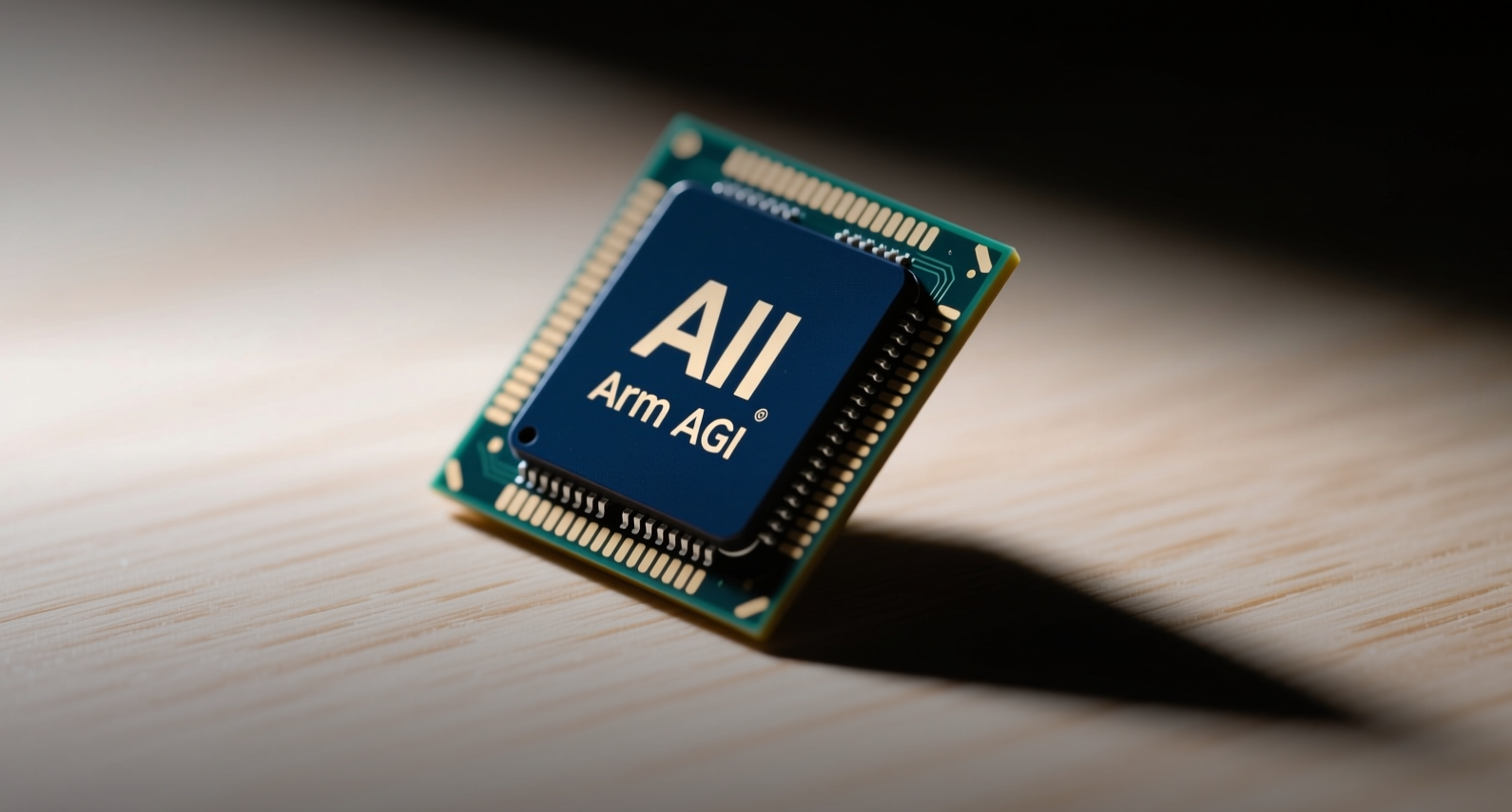
The artificial intelligence boom is being held back by what the industry cannot build rather than what customers will not buy, with supply constraints on chips, data centers, energy and workers expected to persist for two to three years.
"Demand for AI infrastructure remains strong, with chips, data centers, energy and workers all limiting supply," Rene Haas, chief executive of Arm Holdings, told CNBC's Morgan Brennan in an exclusive interview at the Pennsylvania Defense and Innovation Summit on Wednesday.
The chip designer has doubled its demand outlook for its AGI CPU to $2 billion across fiscal 2027 and 2028, with Haas projecting the product could generate $15 billion in annual revenue within about five years. Arm is working with Taiwan Semiconductor Manufacturing Co., Socionext, and customers including Oracle Corp. and Microsoft Corp. to secure wafer, packaging and memory supplies for the chip. Arm's data center business is poised to become its largest segment "very soon," Haas said.
The bottleneck threatens to slow the pace of AI deployment at a time when companies are racing to build out inference and training infrastructure. If supply constraints persist as Haas projects, it could push up costs for hyperscalers and delay the monetization timeline for the billions of dollars already committed to AI capital expenditure.
Supply Chain Squeeze Hits Every Layer
The constraints span the full stack of AI infrastructure. On the chip side, advanced packaging capacity at TSMC — particularly its CoWoS (chip-on-wafer-on-substrate) technology, which stacks memory and logic dies together — remains a bottleneck despite the foundry's aggressive expansion. Beyond silicon, data center construction faces transformer lead times stretching 12 to 18 months, while grid interconnection queues in the US and Europe can take four to seven years for new high-voltage connections.
Energy availability has emerged as a binding constraint in regions with aggressive AI buildout plans. Northern Virginia, the world's largest data center market, has seen utilities pause new connections because of grid capacity limits. Haas's two-to-three-year timeline aligns with projections from grid operators and independent power producers, who estimate new gas-fired and renewable capacity will take until 2028 to 2029 to come online at scale.
The labor shortage compounds the problem. Semiconductor engineers, data center technicians and power systems specialists are in short supply globally, with the Semiconductor Industry Association projecting a shortfall of 67,000 workers in the US alone by 2030.
Geopolitical Crosscurrents Add Uncertainty
Haas also told Reuters on June 2 that the US would struggle to ban exports of AI-capable CPUs to China because the chips serve a broad range of computing workloads and lack the clear performance thresholds used to regulate AI GPUs. "They would have to limit everything," Haas said, noting that CPUs are harder to restrict than dedicated AI accelerators. The comments come as both the Biden and Trump administrations tightened export controls on advanced semiconductors, though those rules have focused primarily on GPU-class chips from Nvidia Corp. and Advanced Micro Devices Inc.
ByteDance and Oracle have already started using Arm's AGI CPU for AI inference workloads, Haas said, showing the chip is gaining traction in both Chinese and US markets despite trade tensions.
What This Means for Investors
Arm's stock, which has more than doubled since its September 2023 IPO, trades at elevated multiples reflecting the AI premium baked into semiconductor names. The supply constraint narrative cuts both ways: it validates the structural demand thesis that underpins Arm's long-term revenue targets, but it also introduces execution risk if capacity additions fall behind Haas's timeline. Nvidia, which relies on TSMC's CoWoS packaging for its H100 and B200 GPUs, faces similar supply headwinds, though its scale gives it priority allocation.
For hyperscalers like Microsoft, Amazon and Google, the bottleneck means their massive AI capital expenditure budgets may not translate into proportional compute capacity growth over the next two to three years, potentially delaying the revenue inflection points investors are pricing in.
This article is for informational purposes only and does not constitute investment advice.
