
Z.ai's GLM-5.3-Flash, running entirely on Chinese-made chips, drove an 8% share surge and marked a milestone in China's homegrown AI push.
Z.ai's GLM-5.3-Flash, running entirely on Chinese-made chips, drove an 8% share surge and marked a milestone in China's homegrown AI push.
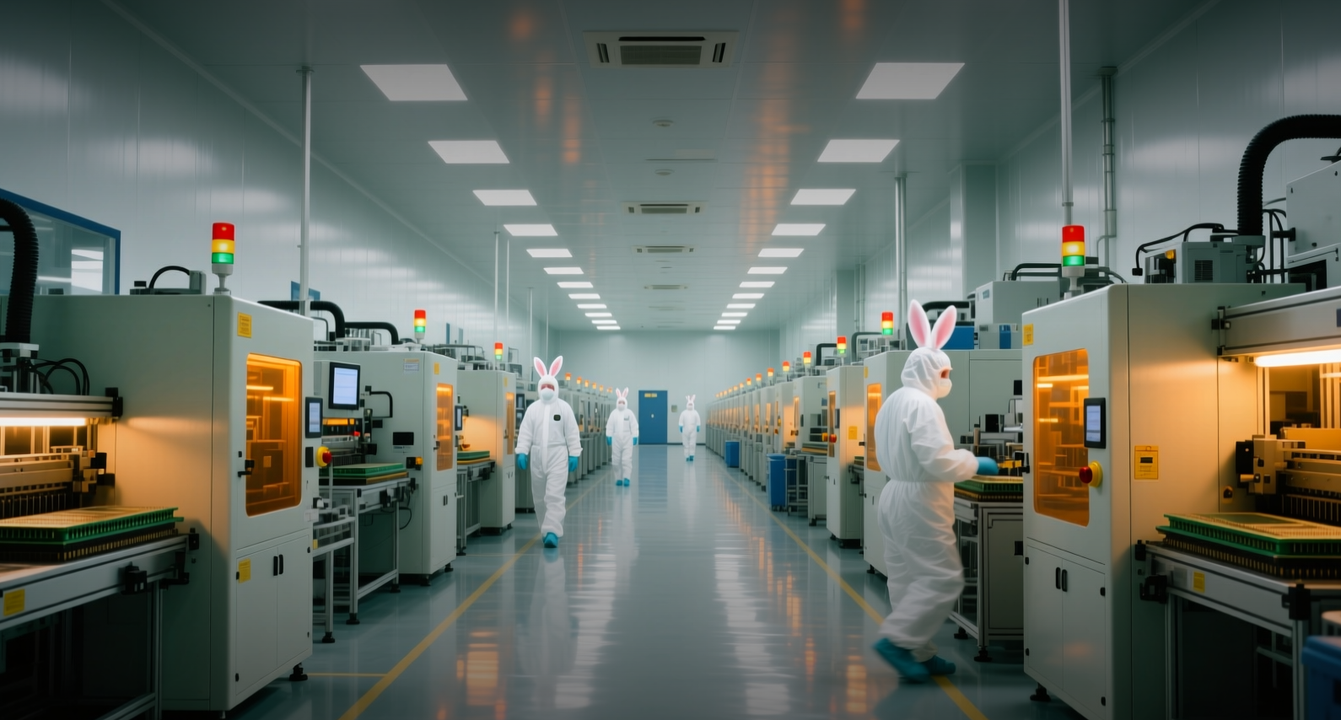
Z.ai's new GLM-5.3-Flash model, running entirely on Chinese-manufactured chips, drove an 8% surge in the company's shares and marked a milestone in China's drive to build AI computing independent of US suppliers.
"I tried the model and found it very impressive," Patrick Collison, chief executive of payments firm Stripe, said on X.
The model debuted anonymously as "ox-alpha" on OpenCode and OpenRouter on Aug. 20, becoming the most popular model of the week with all traffic served on Chinese AI chips, Z.ai said in a blog post. A Weibo hashtag about the model drew more than 13 million views in under 24 hours.
The launch strengthens confidence in China's domestic semiconductor ecosystem and adds competitive pressure on US chip leaders such as Nvidia, while showing the effectiveness of Beijing's import-substitution strategy in AI infrastructure.
Z.ai said it tested GLM-5.3-Flash anonymously as "ox-alpha" on OpenCode and OpenRouter to gather user feedback before release. The model quickly became the most popular of the week, with all of its traffic served on Chinese AI chips, the company said in a blog post.
Chinese internet users celebrated the announcement. A hashtag about Z.ai claiming ownership of Ox Alpha drew thousands of posts and ranked among the top 20 hot topics on Weibo, viewed more than 13 million times in under 24 hours. Users lauded the model's strong performance at low cost and praised Z.ai for using domestically produced chips, saying the example shows Chinese chips can efficiently support large-scale AI use.
The anonymous debut also carried a dose of humor. Over the weekend, Weibo users nicknamed the model "Niu Lai," the title of a Chinese animated movie released in August that triggered a mass of memes online in the country.
GLM-5.3-Flash is the latest Chinese AI model to make a splash beyond China. Moonshot AI launched Kimi K3 in July, an open-weight model that rivals the capabilities of models from OpenAI and Anthropic at a lower cost. Alibaba released its Qwen3.8-Flash-Next model on Wednesday, an efficiency-focused open-weight model promising lower training and inference costs.
The pattern reflects a broader shift: Chinese labs are increasingly shipping open-weight models that compete with US frontier systems on price and performance, even as Washington tightens export controls on advanced chips. Running those models on domestic silicon removes a key dependency and gives Beijing a path to scale AI infrastructure without relying on Nvidia's flagship GPUs.
The successful deployment of an AI model running entirely on Chinese chips boosts confidence in China's domestic semiconductor ecosystem. This could lift Chinese chipmaker stocks and Z.ai's valuation, while adding competitive pressure on US AI chip leaders like Nvidia and highlighting the effectiveness of China's import-substitution strategy in AI infrastructure. For investors, the question is whether the model's performance holds up under independent benchmarks — and whether the cost advantage on domestic silicon translates into durable market share for Chinese AI providers. If it does, the economics of AI inference could shift toward Chinese hardware, reshaping procurement decisions across the region's cloud and data center operators.
This article is for informational purposes only and does not constitute investment advice.
