
Key Takeaways: President Donald Trump publicly backed Fed Chair Kevin Warsh while reiterating that US interest rates are too high, deepening a standoff over monetary policy.
Key Takeaways: President Donald Trump publicly backed Fed Chair Kevin Warsh while reiterating that US interest rates are too high, deepening a standoff over monetary policy.
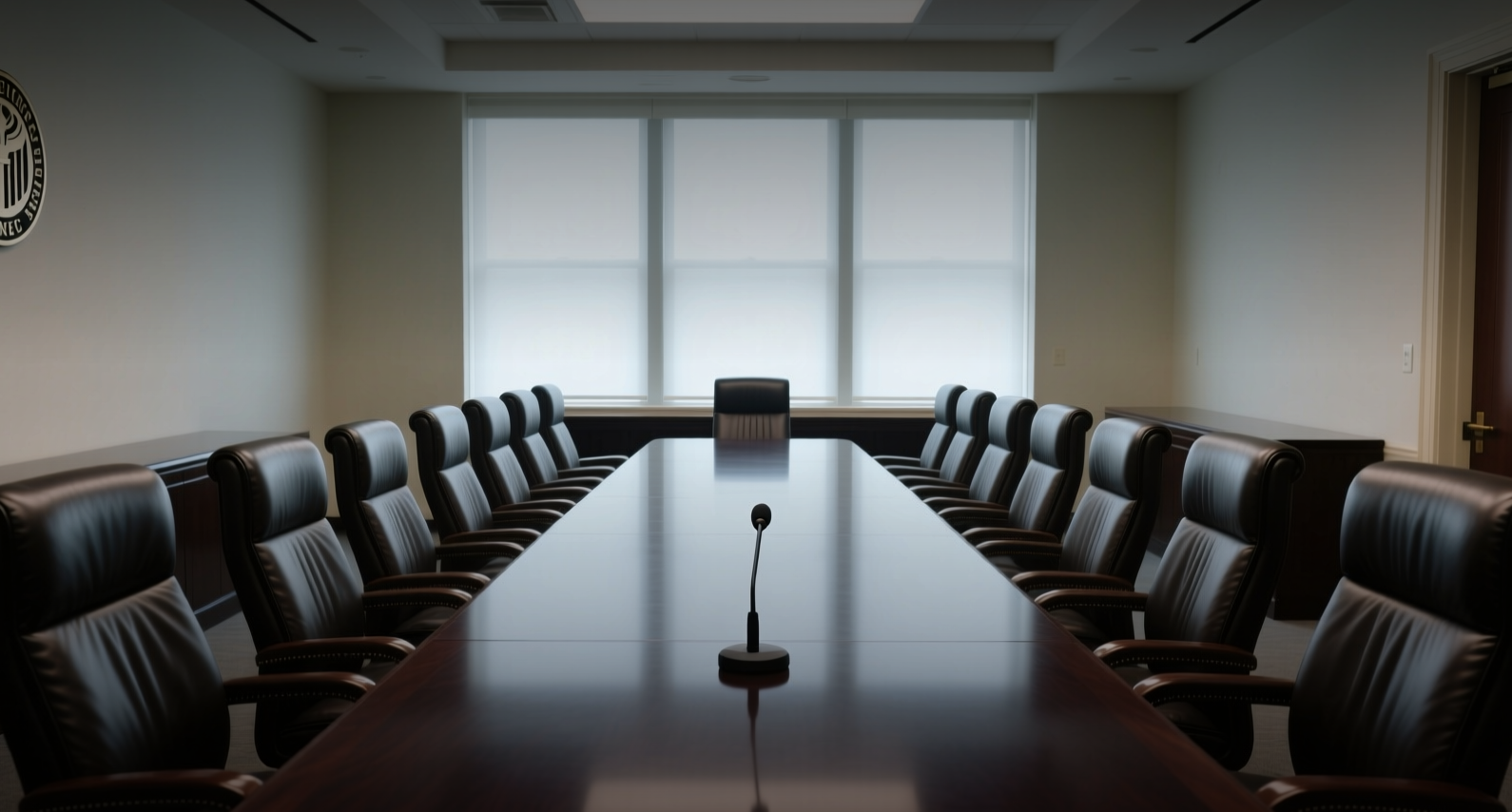
President Donald Trump publicly backed Fed Chair Kevin Warsh while reiterating that US interest rates are too high, colliding with swaps pricing a greater than 50 percent chance of a September hike.
"A warning isn't a decision, and investors racing to price in a hike are getting ahead of a Fed chairman who left himself every route to hold," said Nigel Green, chief executive of deVere Group.
Swaps traders pushed September hike odds above 50 percent, up from around 35 percent before Warsh's hawkish Jackson Hole address, while gold slid to a near two-week low and US stock futures slipped. July's consumer price index rose 3.4 percent year over year, down from 3.5 percent in June, with the monthly gain slowing to 0.1 percent.
The standoff sets up the September 15-16 meeting, with August CPI due September 11. A hike into a labor market that shed 23,000 jobs in July, with unemployment at 4.2 percent, risks turning a soft patch into something harder to reverse, while holding risks a credibility clash with a president who appointed Warsh.
Trump's remarks, which expressed deep respect for Warsh, mark the latest salvo in a running battle over borrowing costs. Warsh was appointed by Trump, who has pushed relentlessly for cheaper borrowing and openly criticized Warsh's predecessor for moving too slowly on cuts, with November's midterms falling weeks after the September decision.
The hawkish repricing has rippled across markets. Gold, a traditional hedge against looser policy, fell to a near two-week low as traders trimmed bets on cuts, while equity futures pointed lower on the prospect of tighter financial conditions. The moves show how a single central bank signal can reset pricing across asset classes within hours.
Warsh, for his part, has refused to offer forward guidance and insisted on a fixed 2 percent target, pointing to underlying price pressure even as the headline trend cools. "He deliberately didn't commit to timing, and that matters more than the tone," Green said. "It seems that too many investors latched onto the warning and skipped past the caution built into it."
The bigger complication sits in the labor market. July's jobs report showed the US economy unexpectedly shed 23,000 positions, while unemployment climbed to 4.2 percent. "You don't tighten policy into a labor market that just turned negative," Green said. "A reversal like this changes the calculation entirely."
August's CPI report, due September 11, lands just days before the vote and could move the needle either way. "A genuinely hot inflation print changes my view instantly, and I'd be watching energy costs and AI-driven demand as closely as anyone," Green said. "But barring a real shock in that report, the case for standing pat is far stronger than the swaps market currently believes."
If inflation prints hot, a hike becomes hard to avoid and the Fed risks a political firestorm heading into the midterms. If it cools further, Warsh can hold without conceding to the White House, preserving the independence that his July press conference put in question. Either path leaves the September decision as the defining test of whether the Fed can steer between political pressure and price stability.
"Nobody at the Fed wants to look like they're taking orders from the White House, and Warsh least of all after the credibility questions raised by his July press conference," Green said. "But raising rates just as the labor market cracks and heading into an election would be reckless, whatever the optics of holding firm."
This article is for informational purposes only and does not constitute investment advice.
