

SenseTime and Guoxing Aerospace aim to put 10,000 petaflops of AI compute into orbit by 2030, challenging the terrestrial data center model.
SenseTime and Guoxing Aerospace aim to put 10,000 petaflops of AI compute into orbit by 2030, challenging the terrestrial data center model.
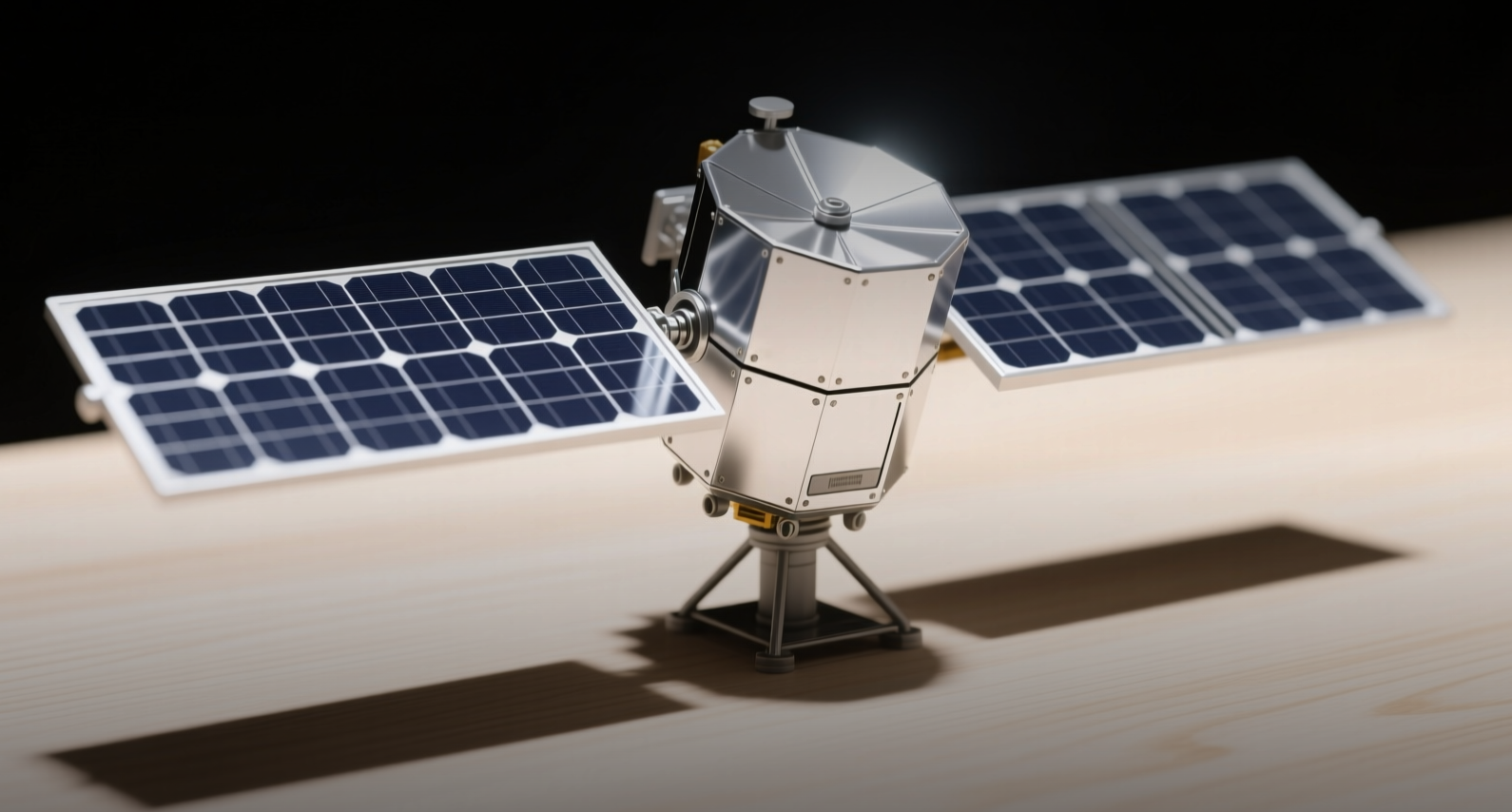
SenseTime and Guoxing Aerospace plan to launch a constellation of 1,000 AI computing satellites with total capacity exceeding 10,000 petaflops by 2030, extending the AI infrastructure race from earthbound data centers into orbit.
The partnership, announced at the 2026 World Artificial Intelligence Conference in Shanghai, follows a three-phase roadmap: single-satellite verification, a first launch of the "SenseTime-1" satellite in 2026, a space-ground hybrid cloud commercial backbone by 2028, and full constellation deployment by 2030. The companies said the network would form a global spatial intelligent computing grid, integrating ground-based data centers with in-orbit compute nodes.
The announcement comes as SenseTime, one of China's leading AI companies, also disclosed partnerships with Guoxin Data Computing to build a national integrated computing network and released a computing-electricity coordination agent. SenseTime said the agent improves token output per unit of electricity cost by 80 percent, achieves power load forecasting accuracy of 96 percent, and could reduce carbon emissions by 24,000 metric tons per 10,000 petaflops annually.
Why space-based compute matters
Terrestrial AI data centers face constraints on land, power, and cooling — a single 1-gigawatt facility can consume as much electricity as a small city. Space-based compute bypasses these bottlenecks by using solar power in orbit and offering global coverage without the latency of transoceanic fiber. The model mirrors the shift from centralized mainframes to distributed cloud computing, but at a far larger geographic scale.
The constellation's 10,000-petaflop target is roughly equivalent to 10 of the largest terrestrial AI supercomputers operating today. Nvidia's H100-based clusters, for comparison, typically deliver 1 to 2 exaflops of FP8 compute per 10,000-GPU deployment. A space-based network at this scale could serve inference workloads for autonomous systems, remote sensing, and global logistics — applications where terrestrial data center access is limited or unavailable.
Competitive landscape and investor angle
The move positions SenseTime against a growing field of companies pursuing space-based compute. LEOcloud, Aethero, and other startups have proposed orbital data processing, but none have announced a deployment at this scale. China's national space program has also prioritized satellite-based computing, with the "Space-Ground Integrated Information Network" listed as a strategic infrastructure project.
SenseTime, which trades on the Hong Kong exchange, has been diversifying beyond its core computer vision business into AI infrastructure. The company operates one of China's largest AI training clusters and has invested in optical computing and quantum computing as part of its "New Computing" strategy. The space constellation represents the most capital-intensive bet yet, though the companies did not disclose the total investment or financing structure for the project.
For investors, the key question is whether space-based compute can achieve the cost-per-watt economics of terrestrial data centers. Terrestrial AI inference costs have fallen to roughly $0.002 to $0.005 per 1,000 tokens for leading models, driven by competition between Nvidia, AMD, and custom chips. Space-based alternatives would need to match or beat those economics to attract commercial workloads beyond government and defense applications.
This article is for informational purposes only and does not constitute investment advice.
