

South Korea's two largest chipmakers lost tens of billions in market value as investors fled AI-linked stocks on dual fears of Nvidia financing risk and rising Chinese competition.
South Korea's two largest chipmakers lost tens of billions in market value as investors fled AI-linked stocks on dual fears of Nvidia financing risk and rising Chinese competition.
South Korea's two largest chipmakers lost tens of billions in market value as investors fled AI-linked stocks on dual fears of Nvidia financing risk and rising Chinese competition.
Samsung Electronics and SK Hynix tumbled as much as 9.5% and 10.9%, respectively, on Tuesday, as investors dumped AI-chip stocks on concerns over Nvidia's financing exposure and intensifying competition from Chinese rivals. The benchmark KOSPI index slid 7.3%, its steepest drop in months.
"The selloff reflects a convergence of three distinct risks — Nvidia's potential role in financing its own customers, China's accelerating progress in domestic chipmaking, and the emergence of low-cost AI models that could reduce demand for premium memory," said a Seoul-based semiconductor analyst who declined to be named because they are not authorized to speak publicly.
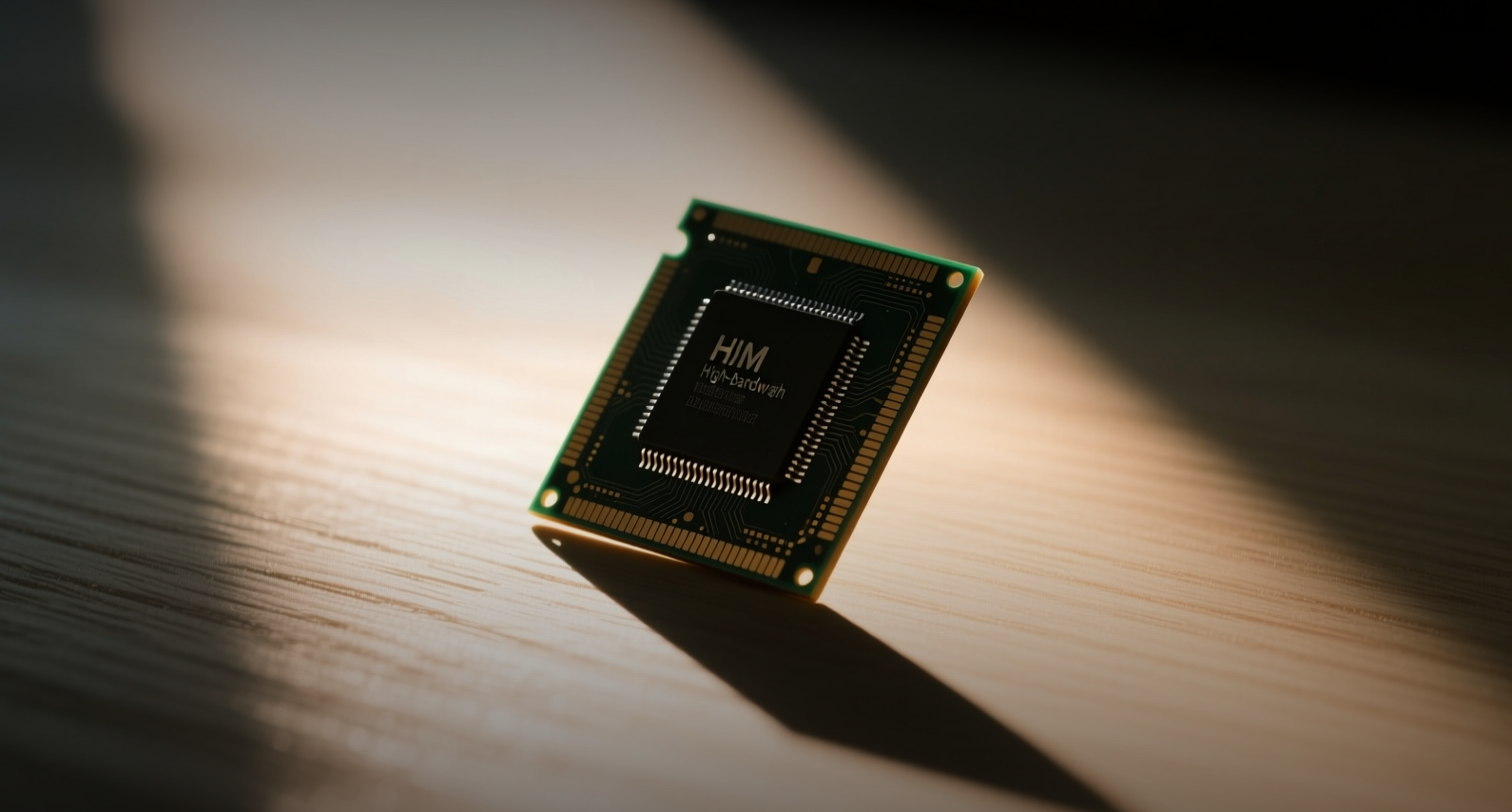
SK Hynix, a key supplier of high-bandwidth memory (HBM) chips to Nvidia, has been one of the biggest beneficiaries of the AI spending boom, making its shares particularly sensitive to shifts in investor sentiment. The company's U.S.-listed shares closed at $143.02, below their initial public offering price of $149, underscoring the depth of the selloff.
The rout was triggered by a Wall Street Journal report that Nvidia could provide a roughly $250 billion financial backstop for an OpenAI data-center project, raising questions about the extent to which the AI chip leader may be financing its own customers. Nvidia shares fell nearly 5% on the news, dragging the broader semiconductor complex lower.
China's Rising Threat
Adding to the caution, investors were rattled by reports of China's progress in developing homegrown deep ultraviolet (DUV) lithography tools — a potential step toward reducing the country's reliance on Western semiconductor equipment despite U.S. export restrictions. Separately, Chinese memory-chip maker CXMT's strong stock-market debut fueled concerns about intensifying competition in the global memory industry, where Samsung and SK Hynix have long dominated.
The listing came after reports that Apple had been lobbying the Trump administration to allow the use of Chinese-made chips in some of its products, further unsettling investors already concerned about China's growing technological capabilities.
Meanwhile, the growing popularity of low-cost Chinese open-source AI models such as Kimi K3 raised questions about whether future AI workloads could prove less intensive than previously expected — meaning potentially less demand for advanced AI chips and HBM memory.
What's at Stake for Investors
For Samsung and SK Hynix, the selloff represents more than a single-day correction. Both companies have ridden the AI boom to record valuations, with SK Hynix's stock more than tripling over the past two years on the back of its exclusive position as Nvidia's primary HBM supplier. Any sign that AI infrastructure spending is slowing — or that Chinese competitors are closing the technology gap — threatens the premium pricing power that has driven margin expansion.
Nvidia shares, trading at roughly 35 times forward earnings, face their own reckoning. The $250 billion financing backstop report, if confirmed, would represent a significant capital commitment that could pressure the company's balance sheet and raise governance questions about circular ownership structures in the AI supply chain.
The KOSPI's 7.3% decline also dragged down other South Korean technology stocks, with memory-chip maker Micron Technology's U.S.-listed shares falling 2.3% in sympathy. The selloff highlights how deeply interconnected the global AI supply chain has become — and how quickly sentiment can shift when the financing underpinning that chain comes into question.
This article is for informational purposes only and does not constitute investment advice.
