

Key Takeaways: Elon Musk's endorsement locks SpaceX into Nvidia's AI compute stack, extending the GPU maker's reach beyond data centers into aerospace.
Key Takeaways: Elon Musk's endorsement locks SpaceX into Nvidia's AI compute stack, extending the GPU maker's reach beyond data centers into aerospace.
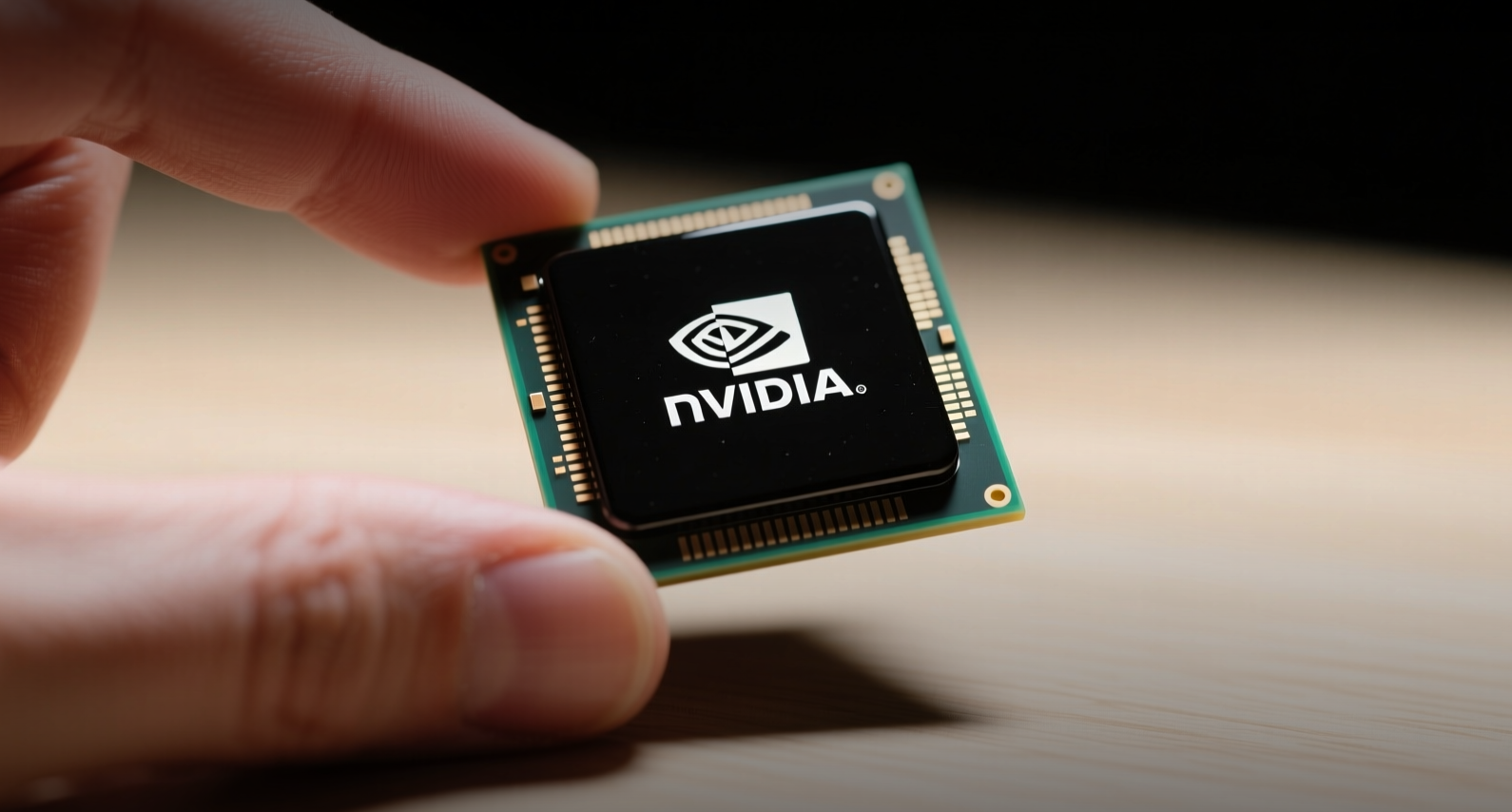
Elon Musk said SpaceX will use only Nvidia GPUs for its compute and AI infrastructure, citing the chips' performance as the deciding factor — a public endorsement that deepens Nvidia's hold on the AI hardware market.
"Nvidia GPUs are the best performing," Musk said Tuesday, without disclosing specific benchmarks or the scale of SpaceX's planned GPU procurement.
The commitment arrives as SpaceX reported its first quarterly results as a public company, with revenue nearly doubling and operating losses narrowing sharply, driven by growth in its Starlink satellite-internet and AI businesses. The company's surging AI costs have weighed on its shares since the listing, according to Reuters.
The endorsement strengthens Nvidia's competitive position against AMD and other AI chip rivals, and points to expanding GPU demand beyond traditional data centers into aerospace and satellite computing — a market that could add billions to Nvidia's addressable revenue.
Nvidia's H100 accelerator, built on TSMC's 4nm process, delivers 990 TFLOPS of FP16 compute — more than three times the 312 TFLOPS of the prior-generation A100, according to Nvidia's published specifications. The company's Vera Rubin platform, announced earlier this year, targets even higher performance for AI training and inference workloads, with 1.8 TB/s of NVLink connectivity per GPU. Nvidia's CUDA software stack, which developers have used for more than a decade, remains the default programming environment for GPU-accelerated AI workloads.
AMD, Nvidia's closest rival in data center AI chips, has positioned its MI300X accelerator as a lower-cost alternative with 192GB of HBM3 memory. But Musk's endorsement gives Nvidia a marquee customer win in a sector — aerospace and satellite operations — where AMD has yet to establish a foothold. The decision also complicates AMD's efforts to break into new AI compute verticals as it competes with Nvidia's CUDA software platform, which remains the industry standard for GPU programming. AMD has been gaining share in the data center GPU market, but the aerospace endorsement shows the breadth of Nvidia's customer base.
SpaceX's compute needs span satellite constellation management, autonomous landing systems, and increasingly, AI-powered data processing for its Starlink network. The company's Starlink business has been a primary growth driver, with quarterly revenue nearly doubling in its debut report. SpaceX's satellite ambitions have also begun to squeeze out rival space companies that depend on its rockets for launches, according to Reuters. The company is also expanding its AI capabilities for satellite imagery analysis and orbital debris tracking, applications that require substantial GPU compute.
The GPU commitment carries implications for SpaceX's AI cost structure. The company's first earnings report showed operating losses narrowing but AI-related expenses surging, a pattern that has pressured the stock since its public listing. By standardizing on Nvidia hardware, SpaceX gains a single-vendor optimization path but forgoes potential cost savings from multi-vendor procurement. The company did not disclose the dollar value of its GPU purchase commitments or the timeline for deployment.
For Nvidia, the endorsement extends its AI GPU franchise into a new vertical. The company's data center segment has been the primary revenue engine, and aerospace represents an incremental growth channel as hyperscaler demand shows signs of saturation. Nvidia shares have been volatile as investors weigh the sustainability of AI infrastructure spending against the $1.09 trillion in future lease commitments that Microsoft, Meta, Oracle, Amazon, and Alphabet have accumulated for data centers, according to Reuters. The aerospace endorsement provides a counter-narrative to concerns that AI GPU demand is concentrated among a handful of hyperscalers.
The broader AI infrastructure buildout continues to accelerate. Cloud giants poured nearly $600 billion into capital expenditures as AI demand surges, with hyperscalers saying they still cannot build capacity fast enough, according to The Register. Cloud revenue now exceeds $143 billion a quarter, and the majority of corporate IT workloads now run off-premises for the first time. Nvidia's GPU dominance in this buildout has made it the primary beneficiary, and Musk's endorsement adds aerospace to the list of sectors where Nvidia GPUs are the default choice.
This article is for informational purposes only and does not constitute investment advice.
