

mimik's mimOE Embedded Edition shifts more than 80 percent of agentic AI operations to the CPU, challenging the GPU-centric approach that has defined the industry.
mimik's mimOE Embedded Edition shifts more than 80 percent of agentic AI operations to the CPU, challenging the GPU-centric approach that has defined the industry.
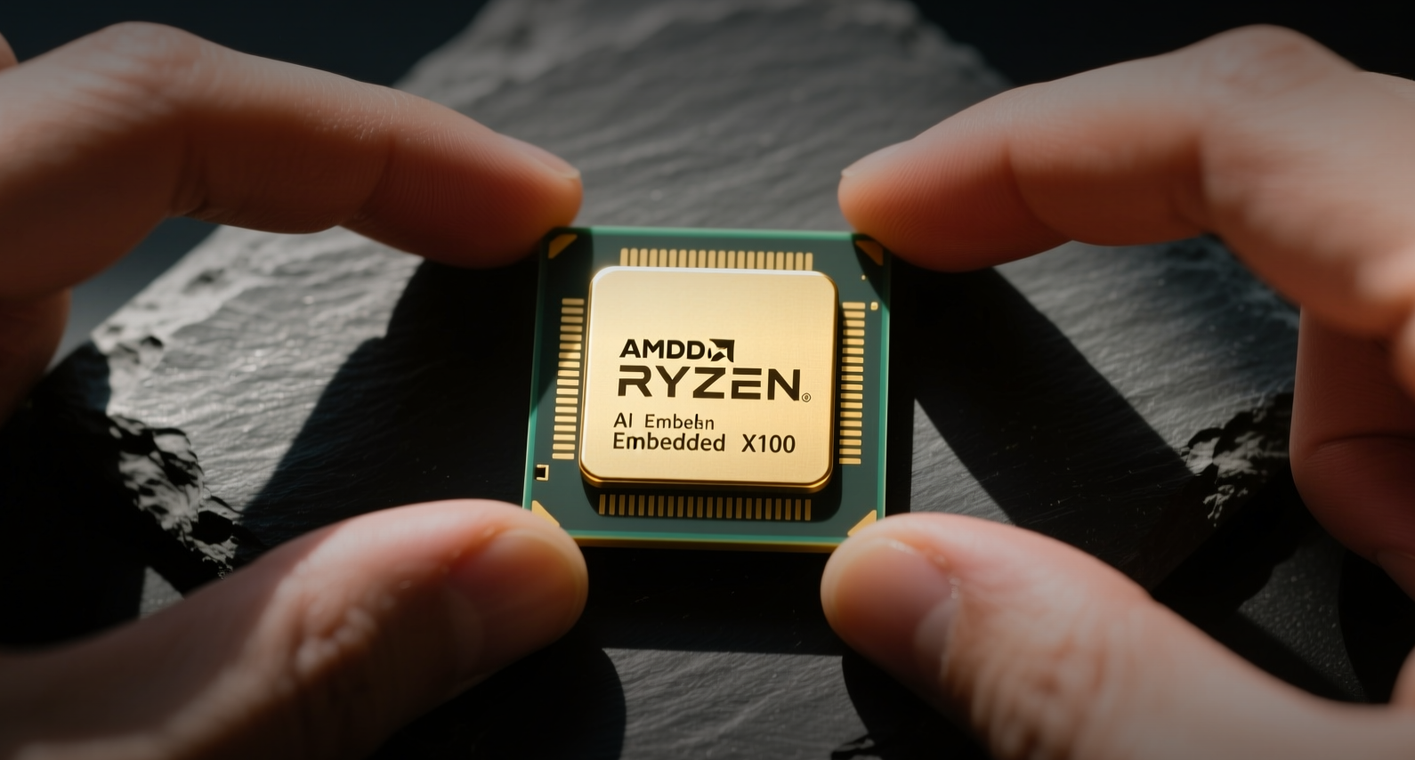
mimik's mimOE Embedded Edition shifts more than 80 percent of agentic AI operations to the CPU, challenging the GPU-centric approach that has defined the AI industry and opening a path for edge deployments on AMD's Ryzen AI Embedded X100 Series.
"The industry has solved intelligence. It has not solved operationalization, and the tools we use in the cloud today do not fit Agentix-Native systems," Sam Armani, Senior Vice President of Business Development at mimik, said. "That is why mimOE and the tools around it are purpose-built for the Agentix era."
The X100 Series combines up to 16 Zen 5 CPU cores, an RDNA 3.5 integrated GPU with as many as 40 compute units, and an XDNA 2 NPU on a single system-on-chip. mimik's benchmarking traced that more than 80 percent of operations in a multi-agent workflow — discovery, inter-agent collaboration, security, data movement, routing, and lifecycle management — were CPU-bound, with less than 20 percent requiring GPU inference. The platform loads shared models once and references them across agents and tenants, allowing multi-tenant workloads that would exceed conventional device memory to fit on a single X100 processor.
For AMD, the partnership establishes the X100 Series as a viable platform for production agentic AI at the edge, moving beyond proof-of-concept deployments. For enterprises, the ability to run more agents per device without adding silicon could meaningfully reduce the total cost of ownership for edge AI infrastructure.
The CPU-GPU Balance Shifts for Agentic Workloads
AMD's Ryzen AI Embedded X100 Series delivers deterministic control loop latencies as low as 125 microseconds on the CPU, AI reasoning in under 92 milliseconds on the GPU, and vision classification in less than 0.4 milliseconds via the low-power NPU, according to the company. Against Intel's Core Ultra Series 3, AMD claims up to 2.1 times higher multi-threaded CPU performance in CoreMark benchmarks and a 1.7 times uplift in OpenGL graphics rendering. On generative AI workloads, AMD projects 3.5 times higher token generation throughput and a 1.4 times faster time-to-first-token versus Intel's offering.
Against Nvidia's embedded lineup, AMD claims up to three times higher peak FP32 throughput relative to the Jetson T5000 and a 1.7 times average performance advantage over the RTX 4000 Ada in medical ultrasound beamforming tasks. The chips are designed for industrial-grade reliability, operating in temperatures from minus 40 degrees Celsius to 105 degrees Celsius for up to 10 years of continuous use.
Open Software Stack as a Competitive Advantage
mimOE Embedded Edition runs on an open software stack built around Linux, AMD's ROCm platform, the Xen Hypervisor, and ROS 2. The software includes tools to translate CUDA code to AMD's open-source HIP environment, reducing migration friction for original equipment manufacturers moving from Nvidia's platform. AMD also launched the Kria AI Robotics Developer Platform, a production-ready system-on-module in the COM-HPC form factor, and the AMD Robotics Partner Network, which includes module manufacturers Arbor, Congatec, iBase, IEI, Sapphire, and Seavo.
Customer sampling for the Ryzen AI Embedded X100 Series began in June, with full production availability scheduled for the fourth quarter of 2026. mimik's benchmarking tools are available for download, allowing developers to test agentic AI workloads on the platform.
For investors, the question is whether AMD can convert its embedded silicon advantage into meaningful market share in the edge AI segment, where Nvidia's Jetson family has dominated. The embedded segment represents a small but growing portion of AMD's revenue, and if the mimik partnership drives adoption among OEMs and system integrators, it could open a new revenue stream beyond the company's core data center and PC businesses.
This article is for informational purposes only and does not constitute investment advice.
