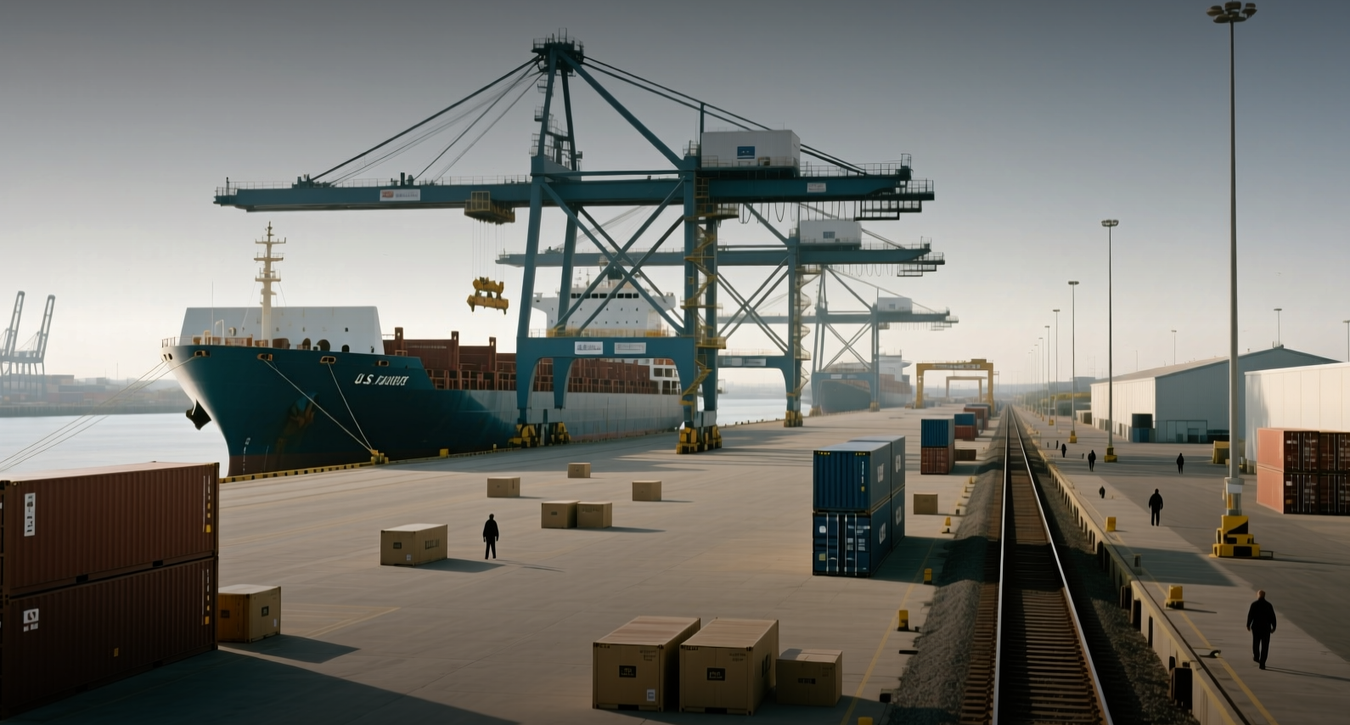
The U.S. labor market held steady last week while the goods trade deficit widened to its largest level in 16 months, giving the Federal Reserve room to keep its focus on inflation.
Initial jobless claims fell 4,000 to 203,000 in the week ended Aug. 22, the Labor Department said Thursday, while the goods trade deficit widened to $118.8 billion in July, the largest gap since March 2025.
"There is a modest, steady pace of private sector job creation that is right in line with the amount necessary to keep the unemployment rate steady," said Thomas Simons, chief U.S. economist at Jefferies.
Continued claims, a proxy for hiring, fell 18,000 to 1.778 million in the week ended Aug. 15, the lowest level in a month. Economists polled by Reuters had forecast 208,000 initial claims. The unemployment rate ticked down to 4.1% in July even as nonfarm payrolls unexpectedly fell, with employers adding an average of 61,000 jobs per month so far this year.
Claims have hovered in the lower end of their 189,000-230,000 range for this year, indicating that layoffs remain low even if hiring is soft. Economists describe a "no hire, no fire" job market, where companies scarred by post-pandemic worker shortages are reluctant to shed staff but also aren't expanding payrolls aggressively. More than 1.3 million people have dropped out of the U.S. labor force over the past year, partly because of the immigration crackdown and baby boomer retirements, reducing competition for available jobs.
Labor market stability gives the Fed headroom to keep rates at 3.50% to 3.75% while inflation runs at 3.7% — above the 2% target for 65 straight months. Three FOMC members dissented last month against holding rates steady, and Fed Chair Kevin Warsh faces pressure at the Jackson Hole symposium to address whether inflation remains a problem.
Trade Gap Widest Since Pre-Tariff Rush
The Census Bureau report showed exports fell 2.9% to $199.4 billion, the lowest since January, led by an 11.2% drop in industrial goods. Imports rose 3.7% to $318.2 billion, the highest since the record set in March 2025, driven by an 11.3% jump in capital goods imports tied to the AI investment boom.
"This category has been boosted by relentless business spending on high-tech goods associated with the AI buildout, which shows no signs of slowing at this point," said Matthew Martin, senior U.S. economist at Oxford Economics. "We expect capital goods imports to support strong growth in imports well into 2027."
The widening gap puts trade on track to be a net drag on U.S. GDP growth for a fourth straight quarter. Martin estimates a drag of 1 percentage point in the third quarter, after trade subtracted 1.14 percentage points from growth in the second quarter. The deficit also complicates the Trump administration's tariff strategy, which has sought to narrow the trade gap through import duties on goods from China and other trading partners.
Inflation Stays Sticky as Fed Gathers at Jackson Hole
The data landed as Fed policymakers gathered in Jackson Hole, Wyoming, for the Kansas City Fed's annual symposium. Kansas City Fed President Jeffrey Schmid described inflation as "still stubborn" and "still sticky" in a CNBC interview Thursday. Chicago Fed President Austan Goolsbee echoed the concern, saying his "biggest fear in the short run continues to be that inflation is not under control."
The Fed's preferred inflation gauge, the PCE index, held at 3.7% year over year in July, with core PCE at 3.3%. Market participants price a 74% chance of a quarter-point rate increase by December, according to Reuters. Gold fell 1.3% to $4,595.93 an ounce following the inflation data, as stronger rate-hike expectations weighed on the non-yielding metal.
The last time the Fed faced a similar inflation-versus-growth tradeoff was in 2022, when the central bank raised rates aggressively to bring inflation down from its 40-year peak. The current 65-month stretch above target is the longest since the 1980s, and the three dissents at last month's FOMC meeting mark the most public split within the committee in years.
Warsh, who has avoided commenting on the economy since taking office, delivers his keynote address Friday morning. His remarks will be scrutinized for any signal on whether the Fed views the current 3.7% inflation rate as transitory or entrenched. The August jobs report, due next week, is expected to show employers added about 65,000 jobs, according to a FactSet survey of forecasters — a pace that would keep the labor market stable but well below the 166,000 monthly average of 2023-2024.
This article is for informational purposes only and does not constitute investment advice.