
Key Takeaways: JPMorgan strategists flag potential commodity trading adviser buying as the 10-year Treasury yield approaches 5 percent, but persistent U.S. fiscal pressures may keep upward pressure on borrowing costs and equity valuations.
Key Takeaways: JPMorgan strategists flag potential commodity trading adviser buying as the 10-year Treasury yield approaches 5 percent, but persistent U.S. fiscal pressures may keep upward pressure on borrowing costs and equity valuations.
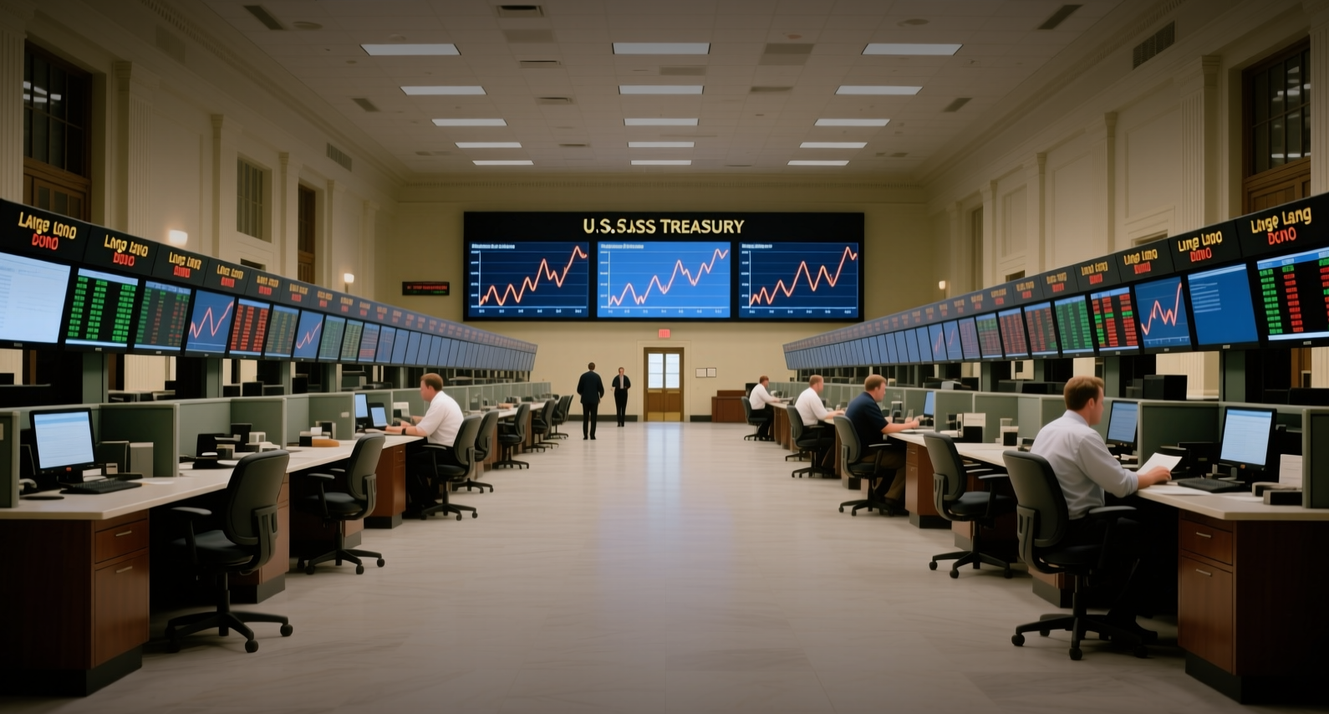
The 10-year Treasury yield is closing in on 5 percent, and JPMorgan strategists flag potential commodity trading adviser buying that could offer only temporary relief as fiscal pressures keep the yield pinned near 4.75 percent.
"It is easy to imagine Bessent being urged by his boss to solve the rising cost of borrowing, but the tools at his disposal are nowhere near sufficient," said Mark Dowding, chief investment officer at RBC Global Asset Management.
The yield has climbed from roughly 4.20 percent when Treasury Secretary Scott Bessent took office to nearly 4.75 percent, one step from the psychological 5 percent red line. The 30-year yield sits near its highest level in almost two decades, while the S&P 500 has slipped less than 2 percent since its last record high two weeks ago. A Bank of America survey of fund managers this month ranked a disorderly rise in bond yields the second-biggest risk to stocks after the AI bubble.
A break above 5 percent would raise financing costs for households and corporations, cool economic activity, and pressure high-duration equity valuations. With the Congressional Budget Office projecting a fiscal 2026 deficit of 6.6 percent of gross domestic product and midterm elections two months away, the Treasury's room to maneuver is narrowing.
CTA Buying Offers Only a Pause
Commodity trading advisers, which follow price trends and momentum, could step in to buy Treasuries as yields approach the 5 percent threshold, temporarily lowering yields. But JPMorgan's intel suggests such buying would be short-lived, because the fundamental driver — persistent U.S. fiscal pressures — remains intact. The Treasury's recent attempt to suppress yields through expanded long-end buybacks illustrates the limits of intervention.
Last week, the Treasury announced it would at least double the size of its long-end buyback program. The move produced the opposite of the intended effect: inflation expectations ticked higher, gold strengthened, and the dollar weakened. The 10-year yield, rather than declining, drifted toward 4.75 percent. Bessent had earlier proposed an additional $20 billion in long-dated bond buybacks for the next fiscal quarter, a sum dwarfed by the roughly $40 trillion in total U.S. debt.
Fiscal Pressures Keep the Bid Under Pressure
The fiscal backdrop explains why CTA buying is unlikely to hold. The Congressional Budget Office projects the fiscal 2026 deficit at 6.6 percent of GDP, a level rarely seen outside economic crises or wartime. The Trump administration's cost-cutting drive has shown signs of faltering: the Department of Government Efficiency, led by Elon Musk, claims $215 billion in savings, or about 3 percent of the budget, but the Government Accountability Office has publicly questioned the transparency and credibility of that figure.
The last time the Treasury leaned on short-dated issuance to relieve the long end was in late 2023, when then-Secretary Janet Yellen expanded T-bill supply. That drew roughly $2.4 trillion out of the Federal Reserve's reverse repo facility, injecting liquidity that helped Bitcoin bottom and the Nasdaq 100 rally while the fed funds rate stayed near 5.3 percent. Today the reverse repo balance has already fallen to about $100 billion, leaving far less dry powder for a repeat.
Without addressing entitlement spending or tax increases, any fiscal tightening pledge lacks substance, Dowding said. If the 10-year yield breaks above 5 percent, expect the Treasury to escalate — either by drawing down the roughly $1 trillion Treasury General Account or by following the Bank of Japan's model of unlimited bond market intervention. Either path would inject dollar liquidity, but the near-term cost is higher borrowing costs across mortgages, corporate credit, and government debt service.
This article is for informational purposes only and does not constitute investment advice.
