

uniQure secures FDA backing for accelerated approval of Huntington's gene therapy AMT-130, with a BLA submission on track for the third quarter of 2026 and four-year clinical data expected in September.
uniQure secures FDA backing for accelerated approval of Huntington's gene therapy AMT-130, with a BLA submission on track for the third quarter of 2026 and four-year clinical data expected in September.
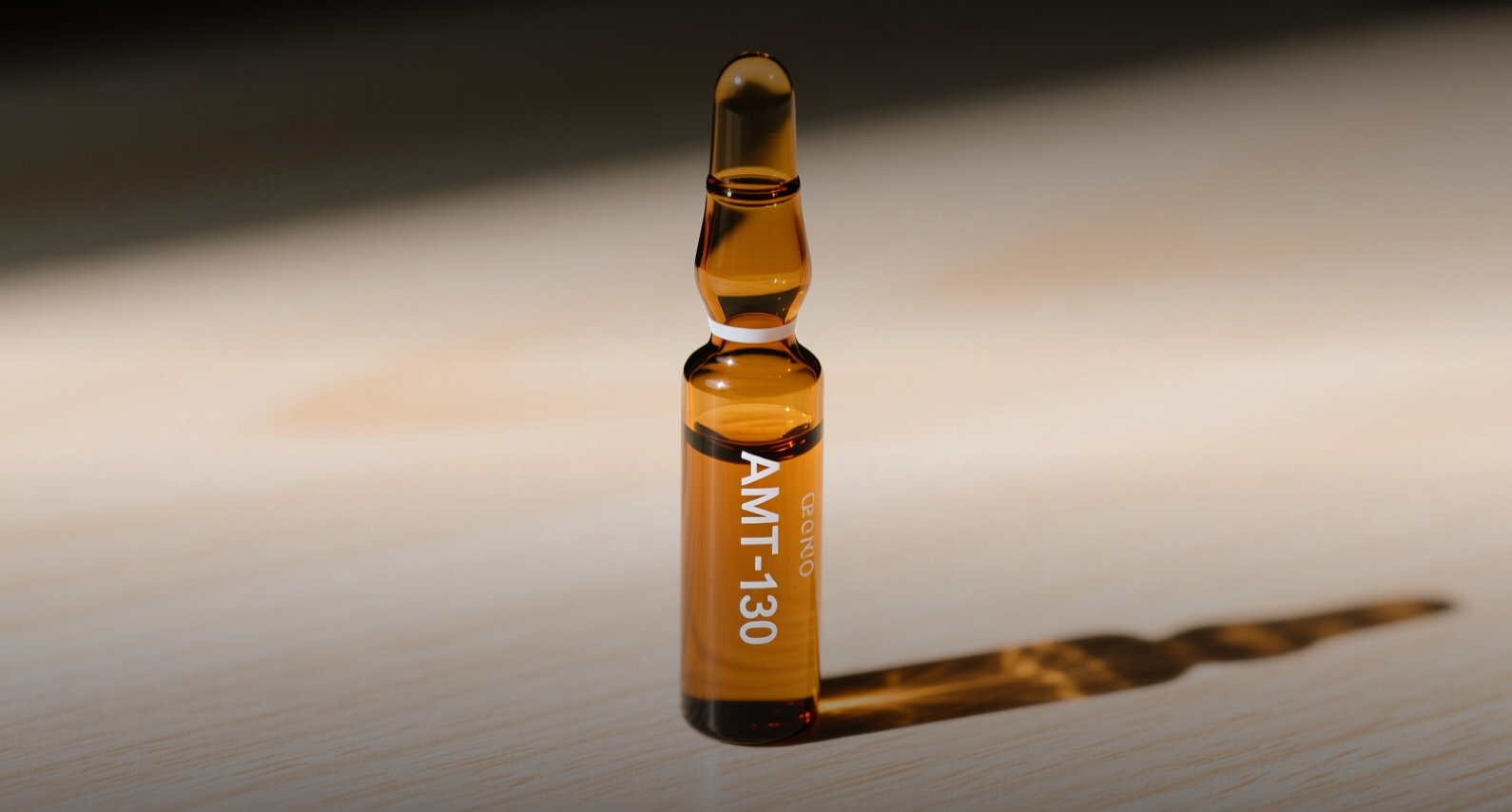
uniQure N.V. (NASDAQ: QURE) reached alignment with the U.S. Food and Drug Administration on an accelerated-approval pathway for AMT-130, its investigational gene therapy for Huntington's disease, clearing a regulatory path for what would be the first disease-modifying treatment for the fatal neurodegenerative disorder. The company remains on track to submit a Biologics License Application in the third quarter of 2026.
"Following a productive Type B meeting with the FDA, we remain on track to submit our BLA for AMT-130 in the third quarter — a milestone that reflects years of rigorous science, disciplined execution, and an unwavering commitment to the patients and families living with this devastating disease," Chief Executive Officer Matthew Kapusta said on the company's second-quarter earnings call.
The FDA indicated that three-year Phase I/II data could serve as the primary basis for an accelerated-approval application, a reversal from its November 2024 refusal to accept uniQure's filing over insufficient data. The agency now seeks alignment on a confirmatory study design before the BLA submission, recommending a randomized standard-of-care control rather than a sham procedure, with Total Functional Capacity at 36 months as the primary endpoint, Chief Medical Officer Walid Abi-Saab said. uniQure plans to present four-year follow-up data in September from 24 patients — 12 at the high dose and 12 at the low dose — including changes in cerebrospinal fluid neurofilament light chain, a biomarker of neuronal damage.
The regulatory shift matters because Huntington's disease affects about 75,000 people in the U.S., Europe and the U.K., with no approved therapies that slow its progression. The FDA often convenes an advisory committee when evaluating the first drug for a disease, and uniQure said it expects one is likely and is preparing accordingly. The company also plans to submit a marketing authorization application to the U.K. Medicines and Healthcare products Regulatory Agency in the third quarter, with European Medicines Agency engagement expected in 2027.
Pipeline progress and financial position
Beyond AMT-130, uniQure reported early clinical data for AMT-260, its gene therapy for refractory mesial temporal lobe epilepsy. Three of six patients in the first low-dose cohort achieved reductions in disabling seizures of 79 percent to 100 percent from baseline during months four through six, while the remaining three had outcomes ranging from a 33 percent decline to a 36 percent increase. No serious adverse events related to the therapy or surgical procedure were reported. Enrollment in a second, higher-dose cohort is expected to be completed in the third quarter, with updated results due in the first half of 2027.
For AMT-191 in Fabry disease, all 11 dosed patients showed dose-dependent elevations in alpha-Gal A activity, with levels reaching as high as 229.6-fold above the mean normal range at the mid dose. Plasma lyso-Gb3 levels remained stable after dosing, and all patients were withdrawn from enzyme replacement therapy. However, additional dosing in the mid- and high-dose cohorts remains paused after grade 3 liver enzyme elevations in two patients were classified as dose-limiting toxicities. The elevations resolved after immunosuppression as of the end of May.
uniQure held $810.3 million in cash, cash equivalents and investment securities as of June 30, up from $622.5 million at the end of 2025, following a $259 million follow-on offering in June. Chief Financial Officer Christian Klemt said the resources are expected to fund operations into 2030, including the confirmatory trial, potential commercial launches and continued pipeline investment. The company posted a net loss of $81.1 million for the second quarter, compared with $37.7 million a year earlier, driven partly by a $20.4 million unfavorable swing in foreign currency and a $16 million loss from changes in the fair value of pre-funded warrant liabilities.
What's at stake for investors
The FDA's willingness to consider accelerated approval for AMT-130 marks a meaningful de-risking of uniQure's lead asset after the agency rejected Biohaven Pharmaceutical's troriluzole for spinocerebellar ataxia in July, citing concerns about bias in a real-world study using external historical controls — the same type of data the FDA initially questioned in uniQure's case. The contrast highlights the agency's case-by-case approach to rare disease therapies and underscores the importance of uniQure's upcoming four-year data in September, which will include comparisons against a propensity-score-matched natural-history control from the Enroll-HD database.
If approved, AMT-130 would address a market with no approved competitors and a desperate patient population. uniQure is already preparing for a potential launch, mapping institutional processes at Huntington's disease centers of excellence in the U.S. and U.K. and engaging with payers. The company's cash runway into 2030 provides a buffer for the confirmatory study and early commercialization, though the path to profitability depends on AMT-130's approval timeline and pricing. Shares of uniQure trade on the Nasdaq, and the stock has been volatile as the regulatory narrative shifted over the past year.
This article is for informational purposes only and does not constitute investment advice.
