


Retailers are turning GLP-1 prescriptions into a recurring customer relationship as employers drop coverage and push patients into direct-to-consumer programs.
Retailers are turning GLP-1 prescriptions into a recurring customer relationship as employers drop coverage and push patients into direct-to-consumer programs.
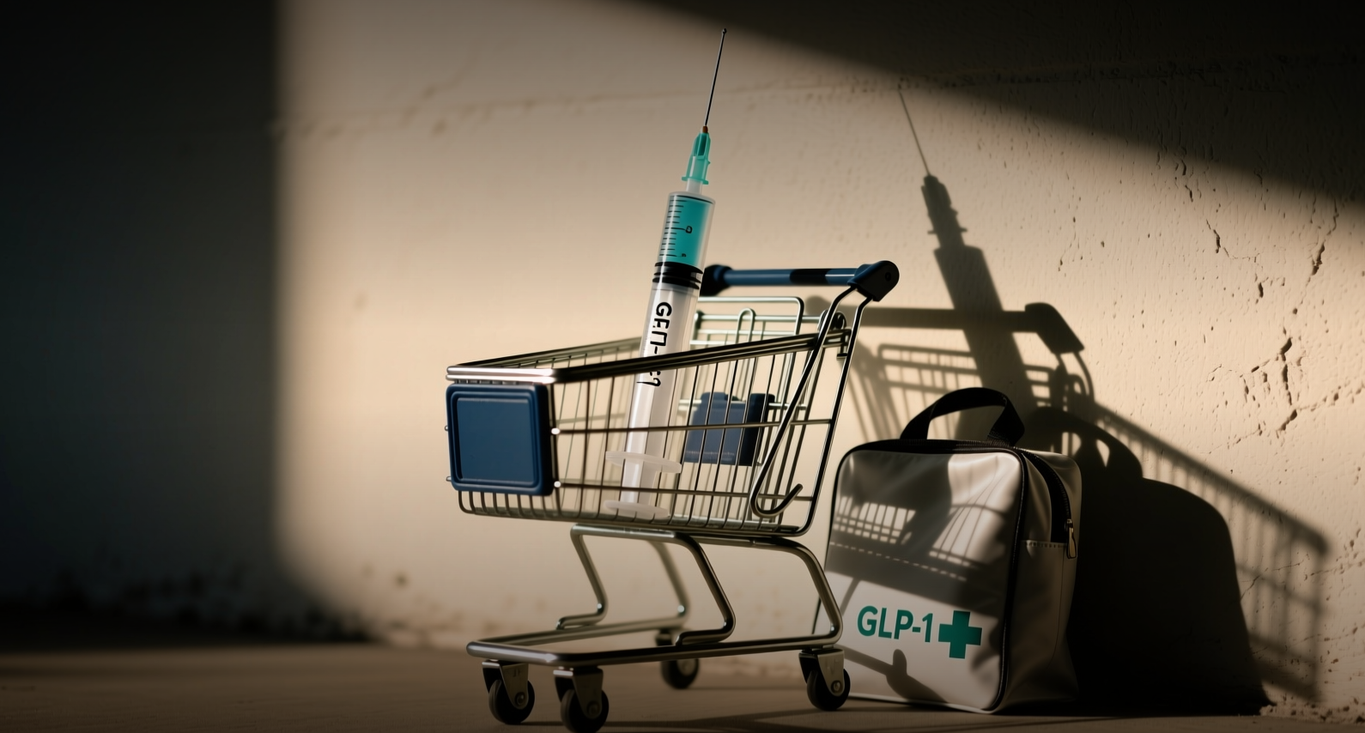
Retail giants from Walmart to Costco and Amazon are capturing GLP-1 market share as employers drop coverage and push patients into direct-to-consumer programs, turning a low-margin prescription into a recurring customer relationship.
"Retailers are betting that if they can become the front door for obesity care, they'll earn a relationship that extends far beyond a single GLP-1 prescription," said Eric Bormel, managing director specializing in digital healthcare at Solomon Partners.
The direct-to-consumer programs carry steep discounts tied to loyalty. LillyDirect's cash prices run $299 to $449 a month, with better pricing tied to refilling within 45 days. Novo Nordisk's NovoCare charges $199 for introductory months before stepping up to $349. Costco's Sesame partnership prices Wegovy at about $349 and requires a membership. Amazon offers insured patients prices as low as $25 a month through its One Medical and Pharmacy units, with same-day delivery in nearly 3,000 cities.
The stakes are large. A Mercer survey last month showed 6 percent of large employers dropped GLP-1 coverage this year, with the drugs' share of claims swelling to 11.4 percent from 6.9 percent in 2023. Health insurer Cigna said earlier this month it would stop covering the medicines for its own employees. A new Medicare Bridge program launched July 1 offers eligible patients GLP-1s at a flat $50 monthly copay.
Pharmacy lock-in becomes a loyalty play
Walmart, the nation's fifth-largest prescription provider with nearly 4,600 pharmacies, has moved aggressively to capture the shift. In April, the retailer expanded its Better Care Services digital platform to bundle GLP-1 prescriptions with weight-management support including nutrition coaching, fitness apps and AI-driven coaching tools. According to the most recent published data from Drug Channels Institute, Walmart holds 4.8 percent of the pharmacy market, well behind CVS's 14.7 percent and Walgreens' 14.6 percent.
"Pharmacy lock-in is loyalty-program economics applied to medicine, and it works because the refill, unlike almost everything else in retail, is non-negotiable," said Jackie Swanson, managing partner at Gartner Consulting. She called LillyDirect's refill discount "a loyalty program dressed as a discount schedule" and NovoCare's stepped pricing "a classic acquisition funnel."
The big retailers have struggled before to make healthcare profitable. Walmart shuttered its 51 Walmart Health clinics and virtual care service in 2024 after concluding the primary-care business wasn't sustainable. Amazon shut down its Amazon Care telehealth service at the end of 2022, weeks after unveiling its $3.9 billion deal for One Medical, and walked away from Haven, its joint venture with JPMorgan Chase and Berkshire Hathaway, in 2021.
Independent pharmacies lose out
On the other side of the opportunity are independent pharmacies. Seth Friedman, pharmacy and health plan services practice leader at Gallagher, said smaller pharmacies stand to lose volume. Dared Price, who owns nine pharmacies in small Kansas towns, said the shift puts independents at a disadvantage because big chains' programs don't share patient records, leaving his system unable to flag drug interactions.
"There are no good programs for independents. It is a travesty that there aren't," Price said.
Elina Onitskansky, founder and chief executive of Ilant Health, an obesity-care center, said the race for the lowest price has created a "gold rush" mentality that fragments patient care. "I don't think fragmentation helps," she said.
The economics of these programs favor scale. "The retailer that fills the prescription tends to sell the groceries too, and pharmacy is quietly becoming the membership battleground of American retail," Swanson said. With employers steering more workers to direct-to-consumer platforms, the chains that win the GLP-1 sign-up are positioned to capture years of refills and the shopping carts that come with them.
This article is for informational purposes only and does not constitute investment advice.
