Yijing X9 opened pre-sales at 299,800 yuan and drew 16,217 orders in 12 hours, taking Huawei's full-stack smart driving into the 300,000-yuan six-seat segment.
Yijing X9 opened pre-sales at 299,800 yuan and drew 16,217 orders in 12 hours, taking Huawei's full-stack smart driving into the 300,000-yuan six-seat segment.
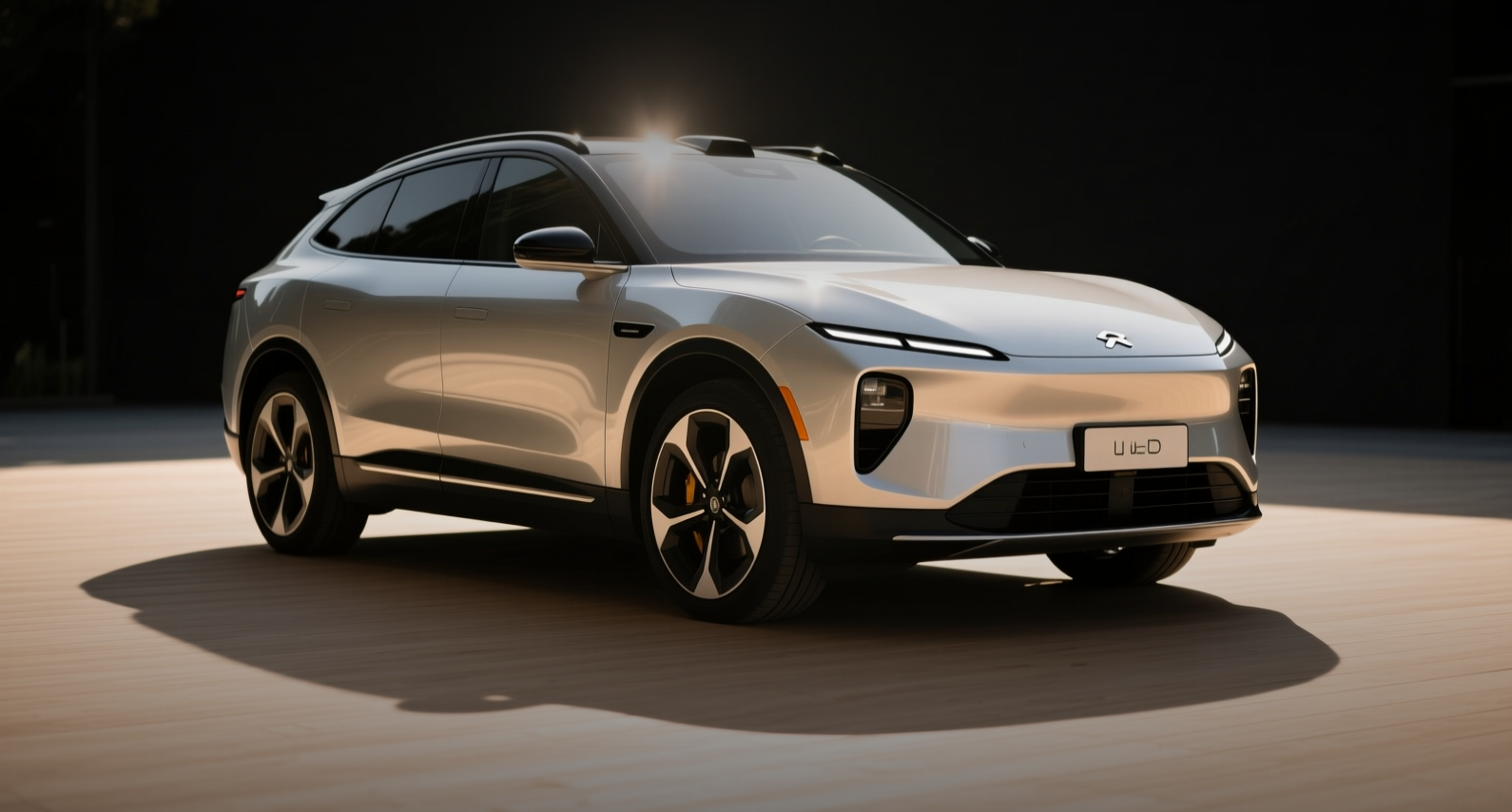
Huawei's full-stack Qiankun smart-driving stack now starts at 299,800 yuan, as the Dongfeng co-created Yijing X9 opened pre-sales and drew 16,217 orders in 12 hours, undercutting the 350,000-yuan band where top C-class SUVs sell.
The price leaves little room for profit, Yijing Auto brand general manager Zeng Qinglin said, adding the company chose to "sacrifice profit rather than cut features" on a vehicle that pairs Huawei's ADS 5 with a 5.3-meter six-seat body.
The X9, built on an 800V platform with a 74 kWh CATL battery, delivers 465 km of CLTC pure-electric range and more than 1,500 km combined, charging from 20 percent to 80 percent in 10 minutes. It carries four LiDAR units, including an 896-line imaging-grade sensor, and a HarmonySpace 6 cockpit. Three extended-range trims run from 299,800 yuan to 379,800 yuan ($45,000 to $56,000).
The launch tests whether Huawei's technology can build pricing power for an independent brand beyond its Wenjie partnership, in a C-class SUV market that grew 60 percent year on year to 540,000 units in the first seven months, with the top five models — from NIO, Zeekr and Wenjie — clustered above 350,000 yuan.
Huawei's Stack Moves Below the 350,000-Yuan Line
The X9's starting price undercuts the Wenjie M9's main range and sits below the 350,000-yuan band where the top five C-class SUVs — from NIO, Zeekr and Wenjie — cluster, according to CPCA data. Xiaopeng's GX and Li Auto's L8 have shown demand for large family SUVs exists, but each brand had to build its own technology credibility. Huawei's Qiankun label shortens that education process for Yijing, which targets buyers who previously put 300,000 yuan into joint-venture brands — teachers, doctors, civil servants and engineers, marketing vice president Cheng Jinwen said.
The full-stack package includes ADS 5, HarmonySpace 6, the Qiankun Chitu platform, vehicle lighting, vehicle cloud and WhaleFin communications. Yijing said the X9 passed a 16-tonne roof-crush test and a 105 km/h frontal offset collision with a 2.5-tonne trolley, earning CATARC TOP Safety certification. High-strength steel and aluminum make up 92.4 percent of the body-in-white.
Dongfeng's Chengdu Line Carries the Volume
Dongfeng and Huawei committed 10 billion yuan and a 5,000-person team to the project, working jointly on product definition, development and marketing. The X9 is built in Chengdu, where Dongfeng upgraded a former fuel-vehicle plant with AI visual inspection and industrial robots, and where Huawei and CATL have set up local operations. Yijing plans more than 300 experience stores across 79 cities, with 60 percent of initial dealers drawn from the national top 100.
The bet is that buyers walk in for Huawei's technology and stay for Dongfeng's vehicle engineering — the all-aluminum chassis, rear-wheel steering with a 5.3-meter turning radius, and dual-chamber air suspension tuned by Dongfeng's CTCC championship team. Zeng said Yijing will extend the lineup upward and downward next year, with future models developed to global standards.
The X9's order book pressures Wenjie M9, Xiaopeng GX and Li Auto L8 in the 300,000-yuan family segment, while giving Dongfeng — listed in Hong Kong and on the mainland — a higher-margin NEV story. For Huawei, it opens a second route to monetize Qiankun beyond its HarmonyOS-branded Wenjie cars, at a price point that could widen the addressable market for its smart-driving stack.
This article is for informational purposes only and does not constitute investment advice.
