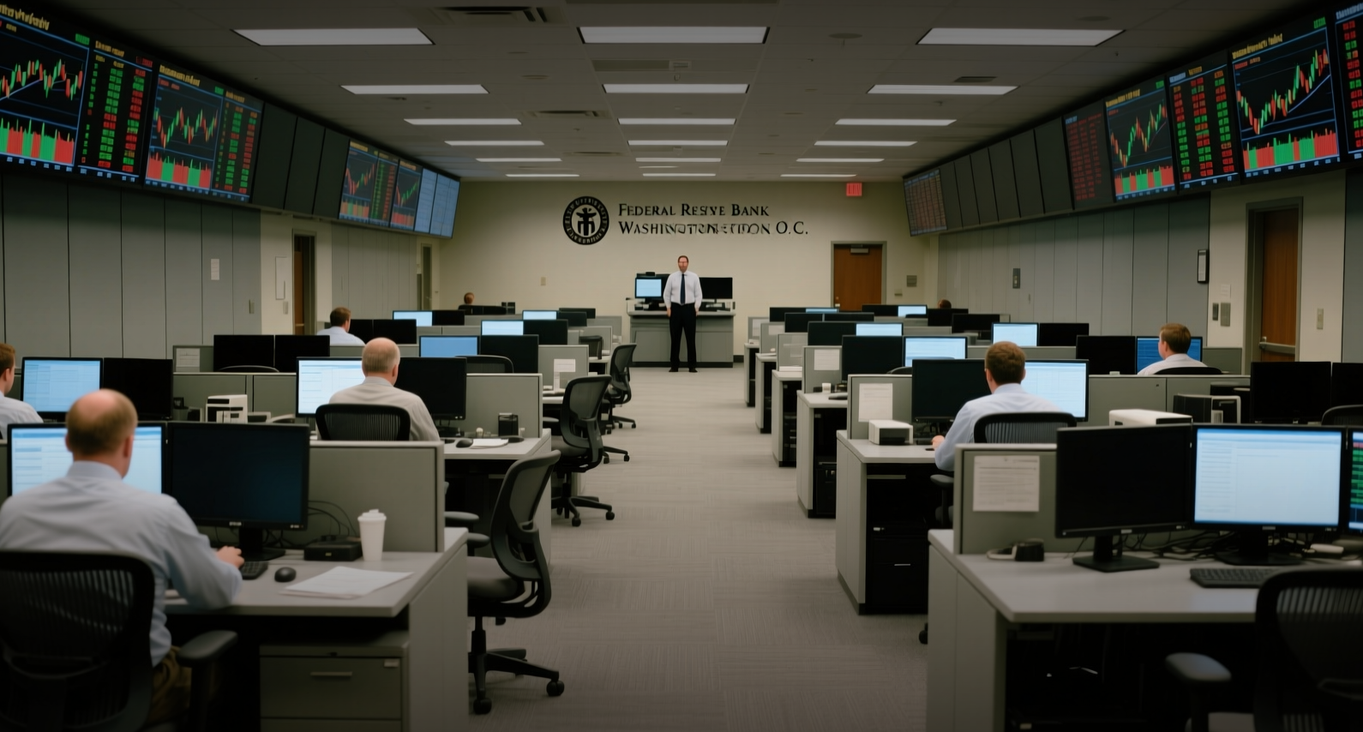
Kevin Warsh's supply-side playbook could let the Fed tame inflation by expanding growth rather than crushing demand with higher rates.
Fed Chairman Kevin Warsh's supply-side approach to inflation could deliver lower interest rates over time, as pro-market reforms shrink the central bank's footprint and let credit markets set the cost of capital.
"We're inferring aggregate supply. We're making a judgment about what productivity is," Warsh said last month, describing the same challenge he faced as a Fed governor from 2007 through 2011.
The Fed held its policy rate at 3.50%-3.75% in July, though three officials — Beth Hammack, Neel Kashkari and Lorie Logan — sought a quarter-point hike, the largest unified hawkish dissent since 2016. The 30-year Treasury yield has climbed to roughly 5.34%, its highest since 2007, while inflation has run above the Fed's 2% target for five years.
Warsh's Jackson Hole address Friday will test whether he can persuade markets that supply-side reform — not restrictive policy — is the path back to 2% inflation, a shift that would keep borrowing costs lower than the Fed's hawkish wing wants.
The core of Warsh's argument is that the Fed's outsized presence in financial markets distorts price signals. His plan pairs balance-sheet reduction — the central bank still holds $6.7 trillion in government-backed bonds — with a lower interest rate paid on the $3.1 trillion in reserve balances banks park at the Fed. Banks currently earn 3.65% on those reserves; cutting that rate would push them toward Treasury securities, raising prices and lowering yields across the curve.
This is the transmission chain: as the Fed sells bonds, upward pressure on yields is offset by the lower reserve rate, drawing banks into Treasurys. The result is lower borrowing costs for households and companies without the demand-crushing rate hikes that defined the post-2022 tightening cycle.
Warsh's historical record shows why he favors this path. As a governor during the 2007-09 crisis, he was more worried about inflation than nearly all his colleagues, projecting prices would rebound even as unemployment sat above 9%. He argued the crisis and government policies had durably raised unemployment, so it would not hold prices down the way his colleagues believed. The inflation he warned about arrived a decade late, triggered by a pandemic and a wave of stimulus.
His supply-side lens now shapes how he reads the current economy. Warsh has suggested AI-driven advances could give the economy more room to grow and that technology tends to lower costs over time. At his first meeting as chairman in June, he declined to submit either an interest-rate or economic projection, telling a private audience: "These forecasts have been abysmal. My dots wouldn't be perfect either, so I wouldn't give them."
The Long End Is the Problem
The bigger test is the bond market. The 30-year Treasury yield's climb to 5.34% — its highest since 2007 — reflects a global squeeze on savings, not just U.S. policy. Governments across the OECD borrowed a record $17 trillion in 2025 and are expected to borrow roughly $18 trillion this year, while hyperscaler debt issuance has reached about $220 billion in 2026, up from $12.5 billion in the same period last year. Global public debt stands near 94% of GDP, with the IMF projecting 100% by 2029.
The Fed can influence overnight rates and the expected path of short-term rates, but it cannot manufacture an unlimited supply of global savings. That is why Warsh's supply-side bet matters: if growth expands the economy's productive capacity, it can absorb more borrowing without stoking inflation — the same logic Paul Volcker pressed under President Reagan, when he called for balancing the federal budget while arguing that objective "cannot be achieved in a sluggish economy."
For everyday Americans, the stakes are direct. If Warsh's approach works, borrowing costs on credit cards, auto loans and mortgages could ease even as the Fed holds its policy rate. If it fails, the hawkish wing's case for another hike strengthens, and the 30-year yield's climb toward 5.5% would push financing costs higher across the economy.
This article is for informational purposes only and does not constitute investment advice.