
Key Takeaways: Treasury yields fell Monday as investors braced for Fed Chair Kevin Warsh's first Jackson Hole keynote, a speech that could decide whether September brings a rate hike.
Key Takeaways: Treasury yields fell Monday as investors braced for Fed Chair Kevin Warsh's first Jackson Hole keynote, a speech that could decide whether September brings a rate hike.
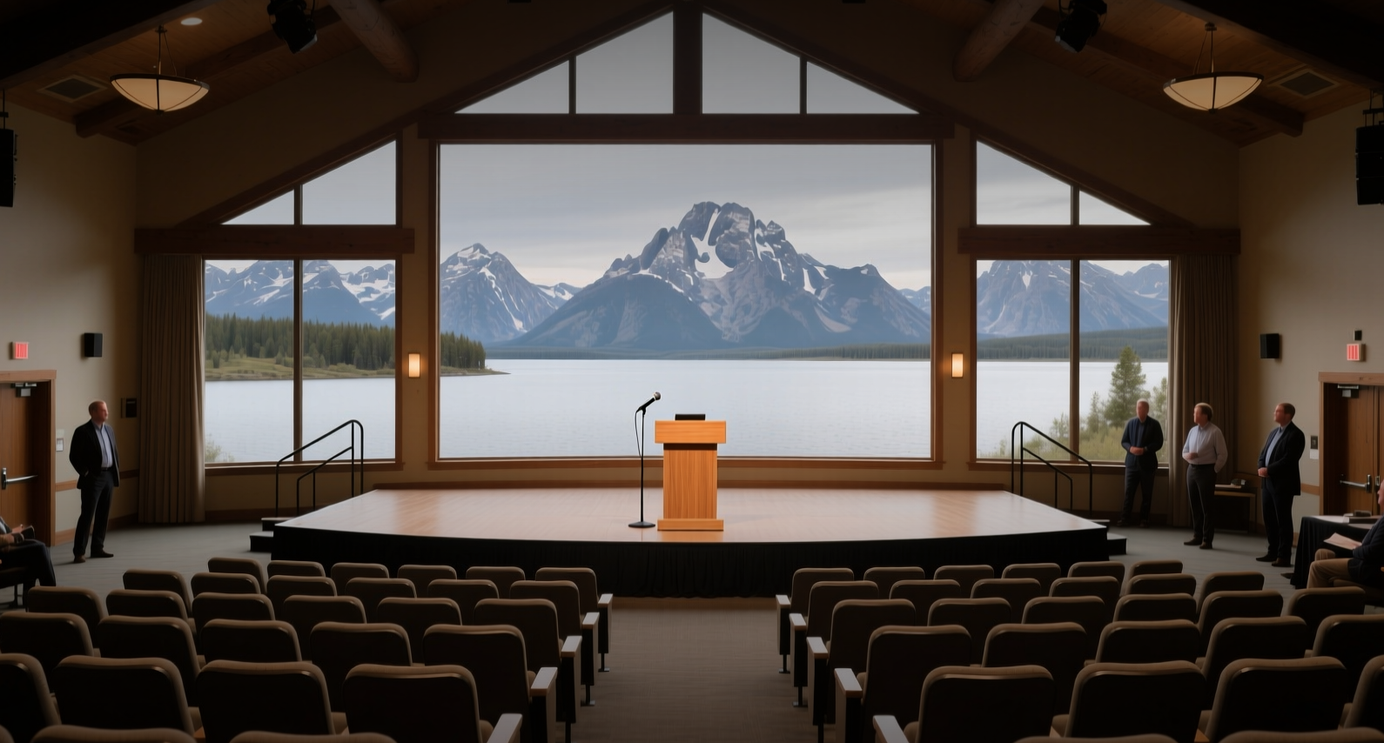
Treasury yields fell Monday as investors positioned ahead of Federal Reserve Chair Kevin Warsh's first Jackson Hole keynote, with futures pricing roughly one-in-three odds of a September rate hike. The 30-year yield hovered near 5.27 percent, its highest since 2007, after a Treasury buyback intervention fizzled within 48 hours.
"The rise in bond yields and the Treasury's purchases all set the stage for what will be a very important Jackson Hole speech next week, which gives Warsh the opportunity to talk to markets, which are in need of more clarity on the central bank's plans," said Paul Stanley, managing director at Arca.
Warsh, confirmed May 22 in a 54-45 Senate vote, will deliver his keynote Friday at about 10 a.m. ET, three weeks before the Sept. 16 FOMC decision. The committee voted 9-3 on July 29 to hold the fed funds rate at 3.50-3.75 percent, the fifth consecutive meeting without a move, with Cleveland's Beth Hammack, Minneapolis' Neel Kashkari and Dallas' Lorie Logan dissenting in favor of an immediate hike.
The stakes are asymmetric: 69 percent of fund managers surveyed by Bank of America expect a neutral tone, meaning a hawkish surprise could reprice rate-sensitive equities and push long yields higher, while a dovish tilt risks a dollar decline that would embarrass Treasury Secretary Scott Bessent's buyback program.
The data between the July meeting and today has scrambled the picture in both directions. July nonfarm payrolls fell 23,000 against a consensus forecast for an 85,000 gain, dragging September hike odds from near 60 percent down to roughly one-in-three. But July CPI printed at 3.4 percent, still running well above the 2 percent target, while core PPI accelerated 0.4 percent on a 6.5 percent spike in portfolio management fees that will feed directly into August PCE.
Warsh has given markets little to work with since taking office. He has cut post-meeting statements to about 130 words, roughly half their prior length, withheld his own dot-plot projection — the first chair to do so since the tool was introduced in 2012 — and removed forward guidance in favor of a data-dependent approach. At his July 29 press conference he described the speech as "like a blank sheet of paper," leaving open whether it would be a broad philosophical address or lay explicit groundwork for autumn policy.
The last time a new Fed chair used the Jackson Hole platform to reset expectations was 2022, when Jerome Powell's eight-minute address warned of the "pain" required to tame inflation and the S&P 500 fell about 3.4 percent that day. Powell's 2024 speech opened the door to rate cuts and the Russell 2000 surged. Warsh arrives with less established market vocabulary than either predecessor at this stage, so every sentence of Friday's keynote will be parsed, debated and traded within seconds of hitting the wires.
Four threads will dominate the parsing. First, whether Warsh reiterates his post-July language that "there is no soft inflation target" or softens it given the deteriorating labor market. Second, any clarification of how he weighs the dual mandate would immediately reprice September odds. Third, his argument that AI-driven productivity gains could prove disinflationary — a view contested inside the committee — would suggest the Fed can tolerate current inflation without hiking. Fourth, whether he addresses the Treasury-Fed tension after Bessent's buyback, which Evercore ISI's Krishna Guha described as "a weak form of Operation Twist."
The calendar adds pressure in both directions. The August jobs report and August CPI still land between Jackson Hole and the Sept. 16 decision, giving Warsh a genuine data-dependence argument for keeping options open. But the crowded week before the symposium — Nvidia's earnings after the close Aug. 26 and July PCE that same morning — means markets arrive at Jackson Hole already at elevated sensitivity. Goldman Sachs predicts the Fed will hold rates at 3.50-3.75 percent through 2026, with any cuts postponed to 2027, while CME FedWatch shows December hike odds at 67.6 percent, rising to 79.5 percent by March.
For investors, the question is whether the hiking cycle is paused or finished. A hawkish speech that validates the three dissenting hawks would push long yields higher and pressure high-valuation tech stocks, while a dovish acknowledgment that the July jobs shock is material could trigger a bond rally that undermines the Treasury's intervention. With neutral already priced in, the surprise — in either direction — is what moves markets.
This article is for informational purposes only and does not constitute investment advice.
