
Washington's biggest effort yet to cap long-term borrowing costs is drawing comparisons to Japan's yield-suppression playbook.
Washington's biggest effort yet to cap long-term borrowing costs is drawing comparisons to Japan's yield-suppression playbook.
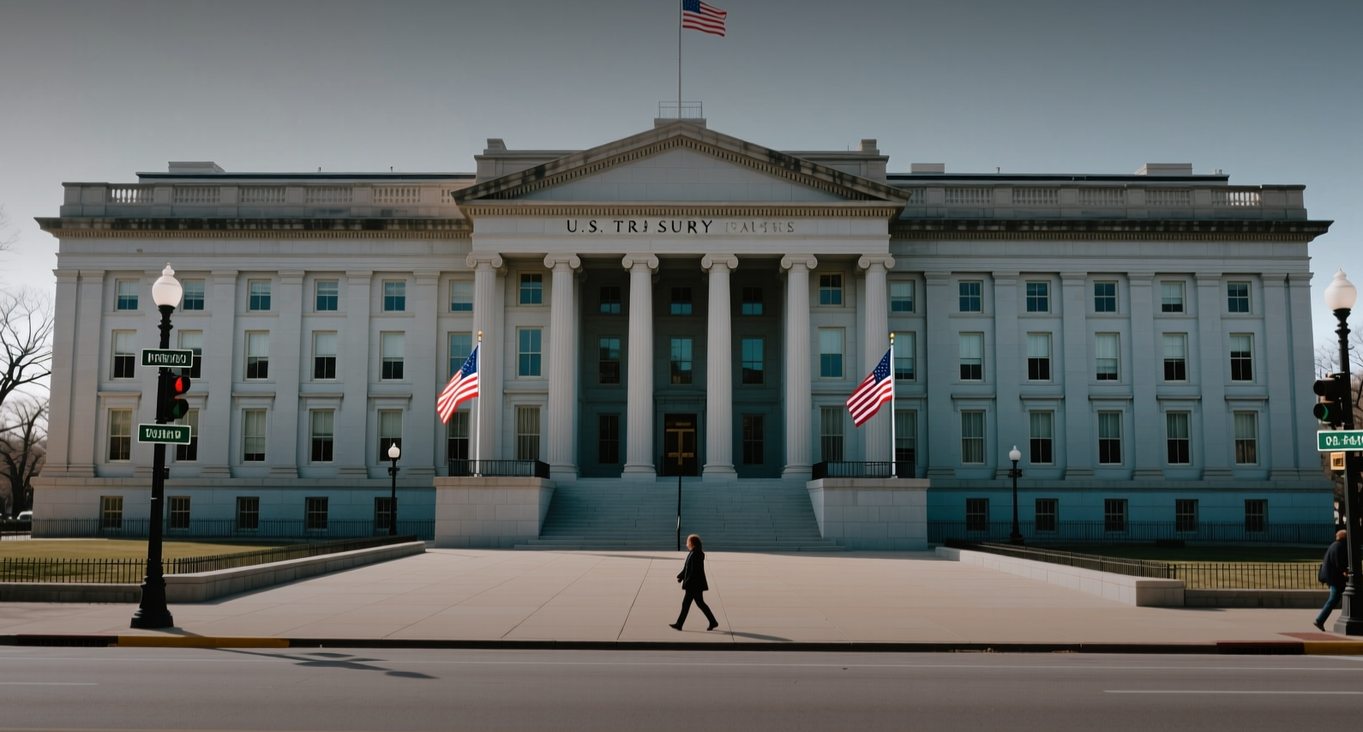
Washington's biggest effort yet to cap long-term borrowing costs is drawing comparisons to Japan's yield-suppression playbook.
The Treasury's decision to at least double long-dated bond buybacks to $4 billion per session has revived fears that Washington will lean on a weaker dollar rather than let borrowing costs clear at market levels. The expanded purchases target securities with 10 to 30 years remaining to maturity, the corner of the market where yields have come under the most pressure.
"There has to be a price to pay," said Shaun Osborne, chief FX strategist at Scotiabank. "Either in the form of higher yields, or they're going to get a concession from the U.S. dollar."
Gold jumped more than 3 percent and bitcoin rose 13 percent over two days after the Aug. 19 announcement, while the 30-year Treasury yield fell as much as 10 basis points before settling near 5.2 percent. The Bloomberg dollar index is down about 1 percent this year.
The expanded purchases run Sept. 9 through Nov. 4, overlapping the final stretch of the midterm campaign, and Fed Chair Kevin Warsh's Jackson Hole speech this month is the next event that could either steady the dollar or accelerate the depreciation trade.
The 30-year yield touched 5.31 percent on Aug. 18, the highest since 2007, as the Iran war pushed oil prices higher and the national debt crossed $40 trillion after doubling in a decade. Robin Brooks, a senior fellow at the Brookings Institution, called the move the clearest signal yet that the U.S. is "following Japan down the path of currency depreciation," warning Washington is "playing with fire." The comparison echoes the Abenomics era, when Japan's large-scale bond purchases and monetary easing suppressed yields and accompanied a sharp slide in the yen.
The mechanics differ from quantitative easing. The Treasury must fund the buybacks by borrowing elsewhere, effectively swapping longer-dated debt for shorter-dated bills — a structure Gennadiy Goldberg, head of U.S. rates strategy at TD Securities, likened to the Fed's 2011-12 "Operation Twist." "This is not QE," Goldberg said. "This is their own little version of 'Operation Twist.'" Deutsche Bank's George Saravelos described the buybacks, along with efforts to steer foreign central banks toward a Fed repo facility rather than selling Treasuries outright, as "soft-form financial repression" to hold down longer-dated yields.
Not everyone reads the move as a decisive shift. Sarah Ying, head of FX strategy at CIBC Capital Markets, called it a "mini" version of past dollar-stress episodes, milder than April 2025's "Liberation Day" selloff. "It's really Bessent testing the market, and then the market fighting back," she said. Standard Bank's Steven Barrow argued the buybacks may fail to address the root cause of rising yields — the widening fiscal deficit. "The problem is the U.S. can't have it both ways," Barrow said.
The political timing has drawn scrutiny. With midterms approaching, lower long-term yields and mortgage rates would help the Trump administration, and Treasury Secretary Scott Bessent told CNBC on Thursday the buyback could exceed $4 billion per session. Bessent has shown a willingness to step into markets, intervening to support the Japanese yen earlier this month.
The July FOMC minutes, released Aug. 19, showed growing concern about inflation, with some officials suggesting additional tightening could be necessary if price pressures persist. Bessent last month defended Warsh's lack of forward guidance, calling the market adjustment a "detox" from years of excessive Fed guidance. Steve Englander, global head of G10 FX research at Standard Chartered, said the interventions risk looking like "a panic response" if overused, though he expects the dollar to be supported by strong U.S. productivity and earnings growth. "It's not going to change the good fundamental, which is the productivity side of the economy. It's not going to change the bad fundamental, which is the deficit side," he said.
The buybacks are small relative to the roughly $30 trillion Treasury market, and analysts caution the relief may be fleeting. Capital.com's Daniela Hathorn said a hawkish Warsh at Jackson Hole could give the dollar breathing room, while a dovish tone would fuel the depreciation trade. Brooks warned that once a currency enters a depreciation spiral, "it's almost impossible to stabilize it again."
This article is for informational purposes only and does not constitute investment advice.
