

Key Takeaways: Qualcomm's upcoming flagship Snapdragon chip will feature the first mobile CPU to reach 5GHz, a milestone achieved through custom microarchitecture rather than process node alone.
Key Takeaways: Qualcomm's upcoming flagship Snapdragon chip will feature the first mobile CPU to reach 5GHz, a milestone achieved through custom microarchitecture rather than process node alone.
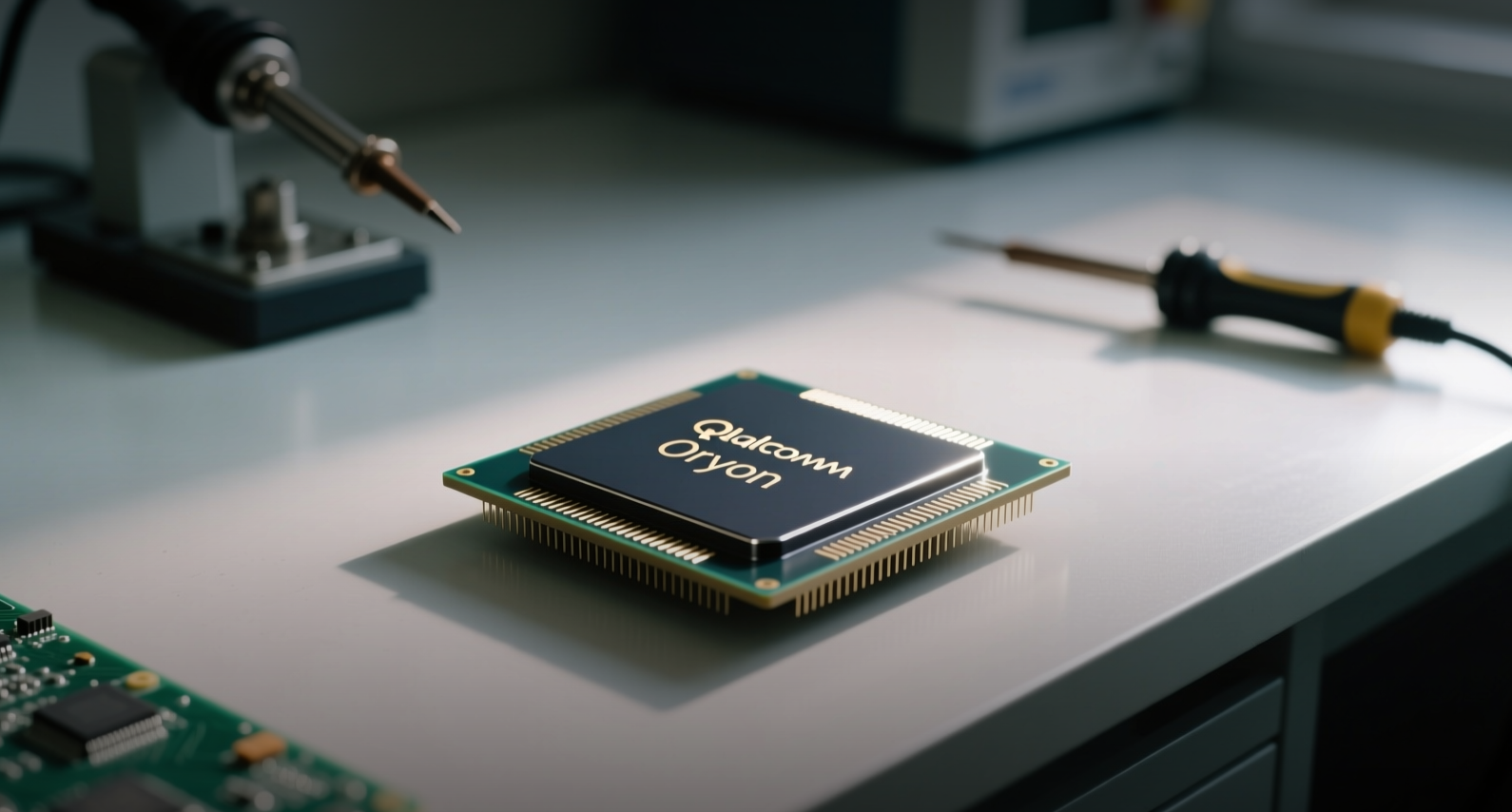
Qualcomm's new Oryon CPU becomes the first mobile processor to reach 5GHz, a 5.5 percent jump over the 8 Elite Gen 5's 4.74GHz that challenges Apple and MediaTek at the premium tier.
"With FlexCache, Prime cores can draw on the entire pool when a workload demands it. Larger working sets stay resident instead of spilling to memory, so peak performance holds instead of tapering off the moment a task outgrows its share," Qualcomm said in its technical preview ahead of Snapdragon Summit.
The new architecture introduces FlexCache, a memory subsystem that lets heterogeneous cores access a shared cache pool with dynamic allocation based on workload. Each core features a large L1 instruction cache, while an L2 cache sits directly in the CPU complex. The 5GHz clock speed represents a 5.5 percent increase over the Snapdragon 8 Elite Gen 5's 4.74GHz and an 11.9 percent jump from the original 8 Elite at 4.47GHz.
The announcement comes as Qualcomm prepares for Snapdragon Summit on September 22-24, where it will detail the platform's updated Adreno GPU and Hexagon NPU. The 5GHz Oryon CPU, combined with FlexCache's ability to reduce system memory traffic, targets the growing on-device AI segment where Apple's A-series and MediaTek's Dimensity compete for flagship design wins.
Qualcomm credits the clock-speed milestone to a "fully custom design" spanning microarchitecture, CPU subsystem, and implementation choices — not merely a process node shrink. The company pairs two 5GHz Prime cores with six Performance cores in an eight-core layout tuned for modern agentic AI workloads, where an AI agent manages multi-step workflows involving tokenizing inputs, planning actions, routing requests, calling external tools, and dispatching inference tasks across the Adreno GPU and Hexagon NPU.
"What you ask your phone to do is no longer a single task. It is a request that turns into a plan, and that plan moves across the entire CPU. A 5GHz Oryon CPU sets the pace, and FlexCache keeps every core fed as the work moves between them," Qualcomm said.
The FlexCache subsystem arrives as the broader semiconductor industry grapples with memory bandwidth limitations. By allowing Prime cores to draw on the entire cache pool during heavy workloads, Qualcomm says larger working sets stay resident instead of spilling to system RAM, cutting latency on bandwidth-hungry tasks like video editing, heavy multitasking, and gaming. The design also reduces how often cores need to reach system memory, sustaining performance even when memory is constrained.
For gaming, optimized access to local cache boosts performance and stabilizes frame rates, reducing dropped frames and stutter. In multitasking scenarios, a shared cache means switching between apps doesn't start cold — returning to a previous task picks up quickly. Video editing workflows that hand frames between decode, effects, and export stages keep those handoffs inside the cache instead of routing through the interconnect.
The 5GHz milestone gives Qualcomm a headline spec advantage over Apple's A-series chips and MediaTek's Dimensity line, both of which have yet to publicly announce mobile CPUs at that clock speed. The company's Oryon architecture, first introduced in its Snapdragon X PC processors, is now being pushed deeper into the mobile segment where clock speed and sustained performance are key differentiators for flagship Android devices.
Qualcomm's announcement is the first in a series of technical deep dives leading up to Snapdragon Summit, with subsequent disclosures scheduled for the platform's updated Adreno GPU and Hexagon NPU. The company has not yet disclosed the chip's official name, process node, or production timeline.
For investors, the 5GHz Oryon CPU strengthens Qualcomm's competitive position in the premium smartphone segment, where it competes directly with Apple's silicon and MediaTek's Dimensity 9000 series. The company's QCOM shares could benefit from renewed confidence in its mobile roadmap as it prepares to defend its position in a market where AI-capable devices are driving upgrade cycles.
This article is for informational purposes only and does not constitute investment advice.
