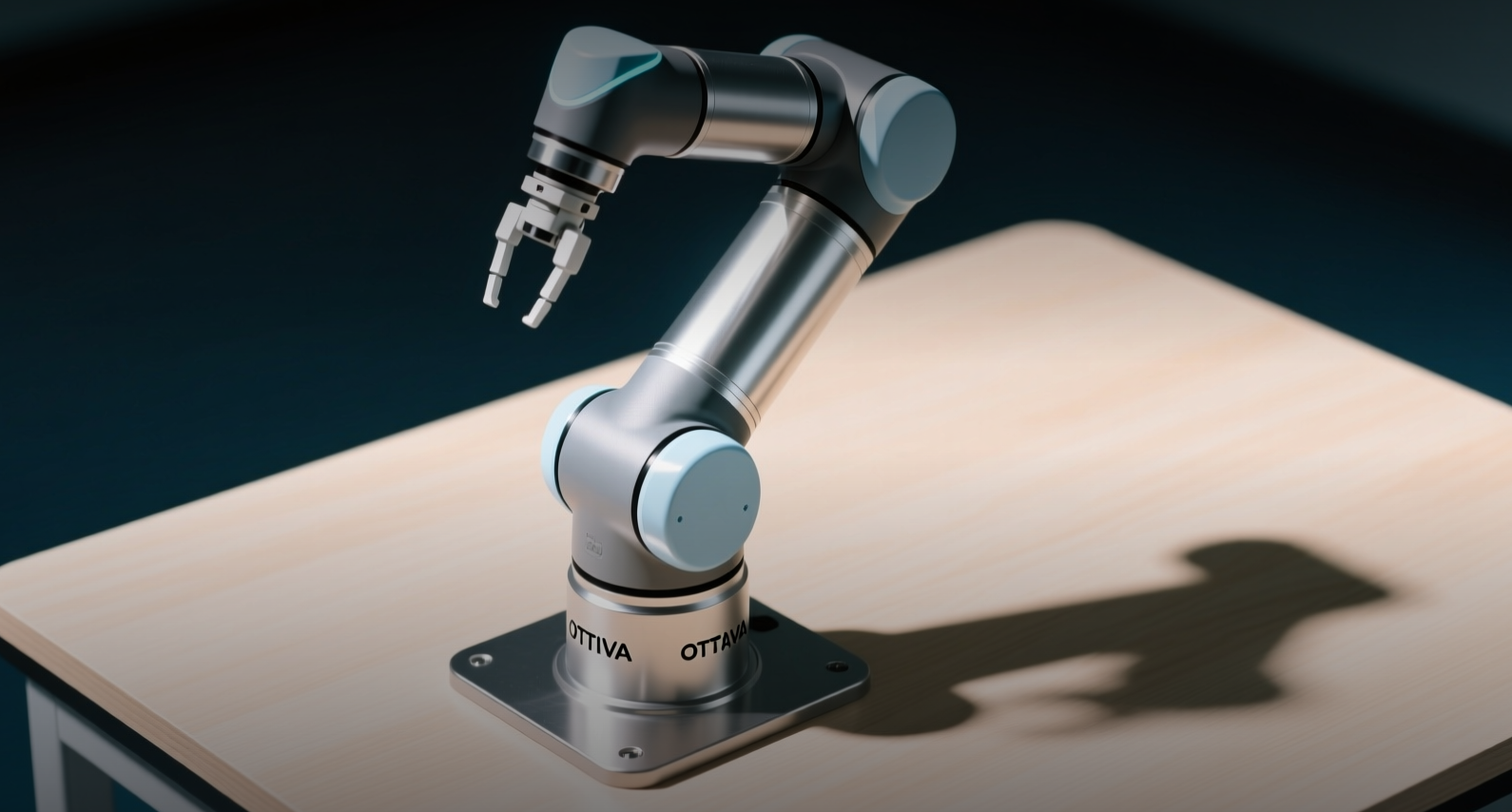
Johnson & Johnson received FDA marketing authorization for its OTTAVA robotic surgical system, the first table-integrated soft-tissue robot, clearing the healthcare giant to compete directly with Intuitive Surgical's dominant da Vinci franchise.
Johnson & Johnson said Wednesday the U.S. Food and Drug Administration granted De Novo authorization for the OTTAVA Robotic Surgical System, the world's first table-integrated soft tissue robotic system, for use in 10 general surgery procedures including gastric bypass, cholecystectomy and hiatal hernia repair. The clearance opens a direct challenge to Intuitive Surgical, whose da Vinci systems performed more than 2.4 million procedures globally in 2025 and generated $7.1 billion in revenue.
"We are pioneering a new category of surgical robotics with OTTAVA," said Tim Schmid, Executive Vice President and Worldwide Chairman of MedTech at Johnson & Johnson. "This is the start of the next era in surgery as we deliver not just a new surgical robotics system, but a catalyst for fundamentally better surgical care."
The OTTAVA system's defining architectural feature is its integration of four robotic arms directly into the operating table, eliminating the boom- and cart-mounted designs used by Intuitive's da Vinci and competitors such as Asensus Surgical and CMR Surgical. J&J said the design occupies 30% to 50% less floor space than traditional systems, creating additional room for surgical teams. The system includes automated pre-defined procedural poses for setup and breakdown, and a "twin motion" feature that synchronizes table and arm movement for patient repositioning without intraoperative adjustments. Instrumentation includes a two-in-one needle driver designed to reduce unintended suture cutting and monopolar curved scissors for consistent cutting performance, tested across 900 cold and 2,460 hot cuts.
Why OTTAVA Is Different From Existing Surgical Robots
The soft-tissue robotics market has been dominated by Intuitive Surgical for more than two decades, with the da Vinci system holding an estimated 80% share of the global installed base of roughly 9,000 systems. J&J's entry comes after years of development and a prior failed attempt with the Verb Surgical joint venture, which was dissolved in 2020. The OTTAVA system's table-integrated design addresses a key pain point for hospitals: OR space constraints. Traditional robotic systems require dedicated carts and booms that consume significant floor area and complicate room turnover. J&J claims its smaller footprint can help hospitals expand robotic surgery capacity without renovating operating rooms.
The system is also connected to J&J's Polyphonic digital ecosystem, a secure platform that aggregates surgical data, learning tools and performance analytics. "Variability of surgical outcomes remains a challenge in healthcare," said Peter Schulam, M.D., Ph.D., Chief Scientific Officer of MedTech at Johnson & Johnson. "While surgical robotics has helped augment surgical skill, the next generation of care must also integrate data and insights across the surgical ecosystem to support surgeon judgement."
Commercial Rollout and Competitive Timeline
J&J said it will begin a U.S. commercial launch with select customers, focusing on early customer success before expanding to additional indications and regulatory jurisdictions. A U.S. clinical trial for OTTAVA in inguinal hernia procedures is ongoing. The company will host an investor conference call on Aug. 3 at 8 a.m. Eastern Time to discuss the launch strategy.
The De Novo classification is notable: it means the FDA determined OTTAVA is a novel device with no legally marketed predicate, creating a higher regulatory bar for potential copycats. J&J will need to build surgeon training programs and clinical evidence to drive adoption — a process that took Intuitive years to establish. The company said its OTTAVA education program, developed with clinicians and surgical societies, includes virtual, hands-on and immersive training modules.
For investors, the question is how quickly J&J can capture share in a market where Intuitive's installed base and surgeon familiarity create high switching costs. JNJ shares trade at roughly 16 times forward earnings, a discount to Intuitive's 55 times multiple, reflecting the market's uncertainty about J&J's ability to disrupt the robotics market. If OTTAVA gains traction, it could add $1 billion to $2 billion in annual MedTech revenue within five years, analysts at Bloomberg Intelligence have estimated. The investor call on Aug. 3 will provide the first detailed look at J&J's pricing, target accounts and adoption timeline.
This article is for informational purposes only and does not constitute investment advice.