

Dell's AI infrastructure surge drove quarterly revenue to a record $47 billion and pushed its order backlog to $95 billion, prompting a $25 billion raise to full-year guidance.
Dell's AI infrastructure surge drove quarterly revenue to a record $47 billion and pushed its order backlog to $95 billion, prompting a $25 billion raise to full-year guidance.
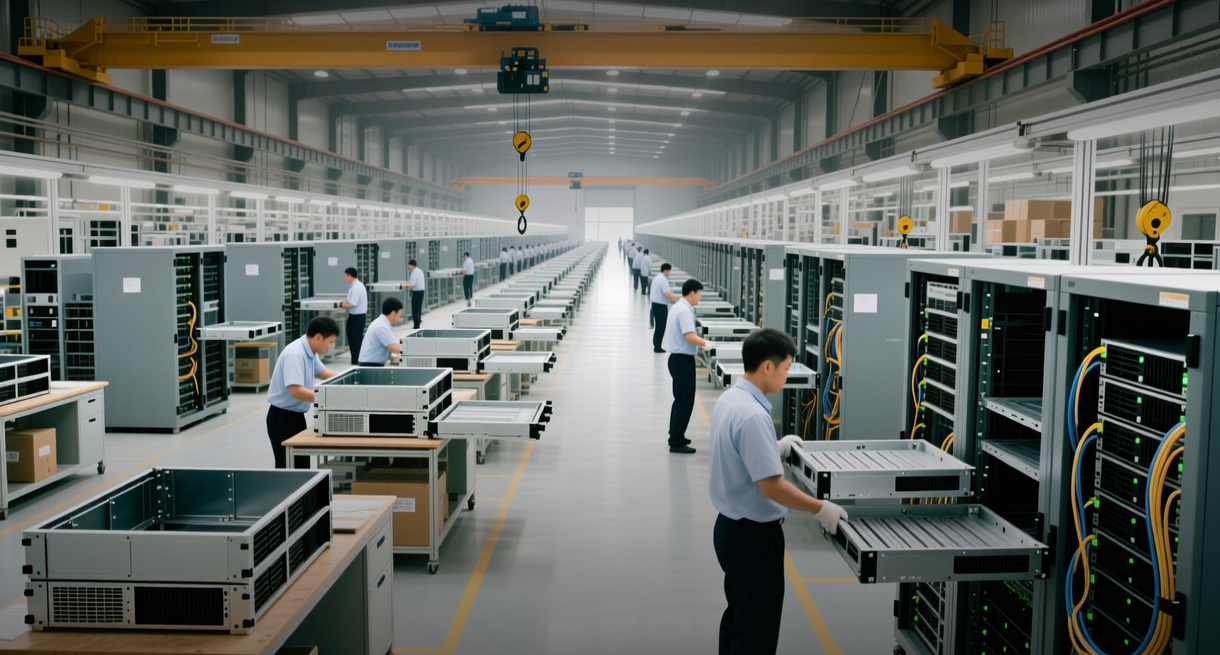
Dell Technologies' AI-optimized server revenue doubled to $16.4 billion in fiscal Q2, with a record $95 billion backlog cementing the company's position at the center of the AI infrastructure buildout. Total revenue reached an all-time high of $47 billion, up 58 percent from $29.8 billion a year earlier, while adjusted earnings of $7.04 per share more than tripled from $2.32.
"Our AI server momentum continues to accelerate," Jeff Clarke, Dell's chief operating officer, said on the earnings call. "We booked $60.9 billion in AI orders this quarter, the most in our history."
The company raised its full-year revenue forecast by $25 billion to $192 billion, up nearly 70 percent year over year, and lifted AI-optimized server revenue guidance to $74 billion from $60 billion. The revised outlook exceeds the $174 billion consensus analysts had modeled. Dell also raised non-GAAP fiscal 2027 EPS guidance to $25 from $17.90.
The AI server backlog of $95 billion represents roughly two years of AI server revenue at current run rates, and Clarke said the sales pipeline "continued to grow sequentially and remains multiples" of that figure. Dell has booked $131.7 billion in AI orders over the past 12 months, with the customer base surpassing 6,500 and demand broadening across neoclouds, sovereign entities and enterprise buyers.
The AI buildout is also pulling through Dell's conventional hardware lines. Traditional server and networking revenue hit a record $10.5 billion, up 122 percent year over year, as enterprise customers add CPU capacity to support AI and agentic workloads. Storage revenue reached a record $4.9 billion, up 26 percent, with Dell citing incremental demand from AI workloads that require managing increasingly large data volumes. Clarke said Dell has gained more than 10 points of traditional server market share over the past two quarters and expects further gains.
Clarke attributed the across-the-board strength to a fundamental shift in how enterprises view IT spending. "IT environments have shifted from cost centers to value drivers that fuel growth and competitive advantage," he said. Customers are "expanding and reallocating budgets" to support continued IT investments, creating opportunities across Dell's portfolio from infrastructure to client devices.
Dell's results highlight the scale of the AI infrastructure race among server vendors. Hewlett Packard Enterprise, up roughly 110 percent year to date, also moved higher in after-hours trading following Dell's report. Super Micro Computer delivered better-than-expected fiscal Q4 results on Aug. 11 with optimistic full-year guidance, and Cisco Systems cited AI hardware demand in its recent earnings. The competitive field is intensifying as hyperscalers and enterprises pour capital into AI compute capacity, with Dell leaning on its engineering capabilities, global supply chain and deployment expertise as differentiators.
Dell shares, up more than 230 percent year to date, were near $425 at Tuesday's close before vaulting to $467 in after-hours trading. The stock trades at roughly 20 times forward earnings, well above its five-year historical average of 10.9 times, reflecting market confidence in sustained AI infrastructure spending.
C.R. Howdyshell, CEO of Dell partner Advizex, said the record performance reflects growing enterprise adoption. "Our AI sales pipeline with Dell continues to grow," he said. "We are seeing significantly more adoption in the enterprise segment with a high level of interest across all industries."
The question for investors is whether Dell can convert its $95 billion backlog into profitable revenue at scale while managing the margin pressure inherent in AI server manufacturing. The raised guidance implies confidence, but competitive intensity from HPE, Super Micro and original design manufacturers will test Dell's ability to sustain this trajectory through fiscal 2028.
This article is for informational purposes only and does not constitute investment advice.
