

Check Point's new AI Network Firewall turns existing hardware into a security control point for the 93% of organizations hit by high-risk AI interactions monthly.
Check Point's new AI Network Firewall turns existing hardware into a security control point for the 93% of organizations hit by high-risk AI interactions monthly.
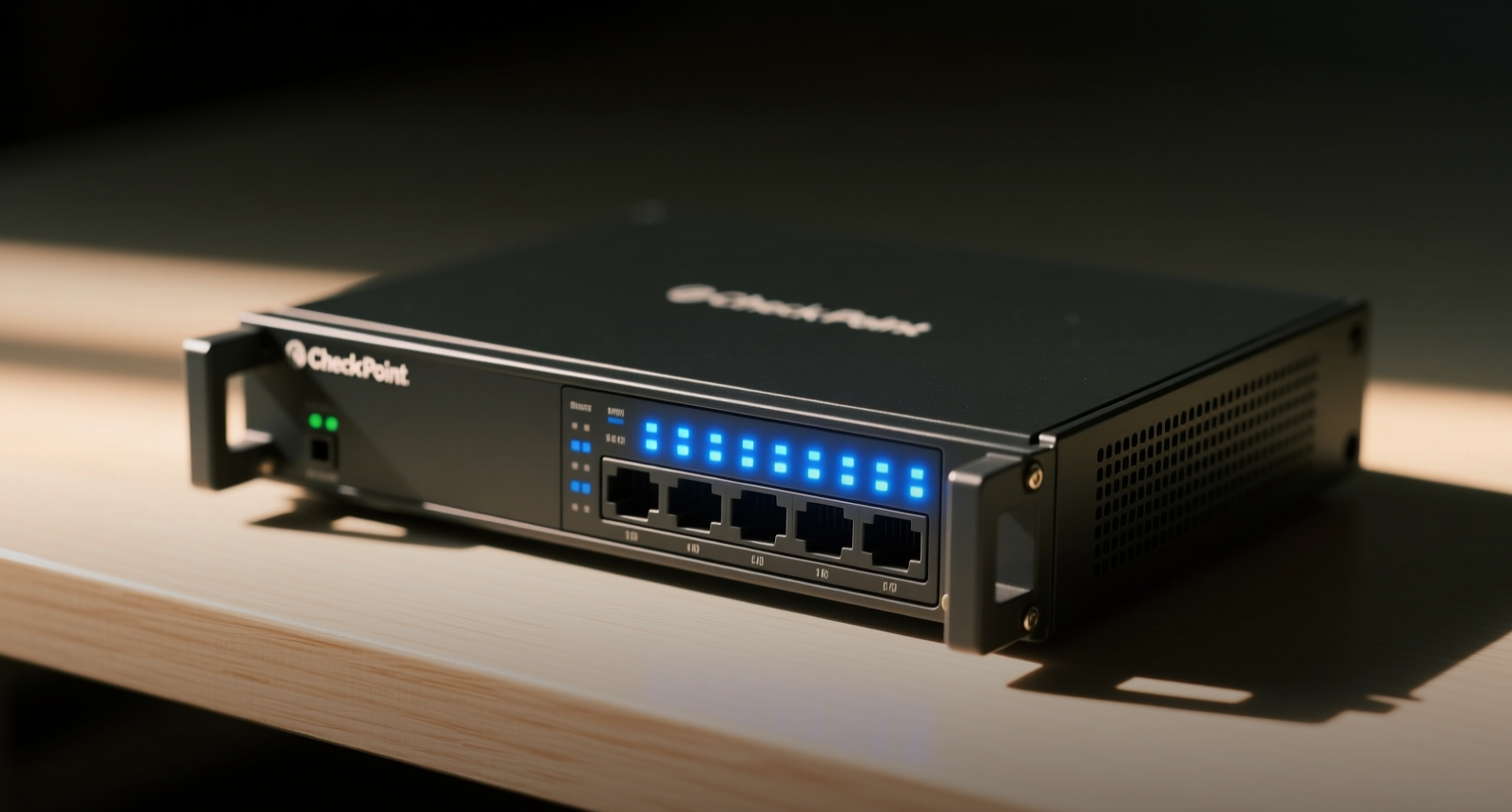
Check Point Software Technologies launched an AI Network Firewall that runs on the physical firewalls organizations already operate, giving security teams visibility into employee AI use, agent traffic, and prompt-level threats without new hardware.
"AI is transforming the enterprise network, and with the AI Network Firewall, we are transforming the firewall to secure it," Nataly Kremer, Chief Product Officer at Check Point, said.
The product, delivered through firewall software release R82.20, addresses a blind spot that Check Point Research quantified in its AI Security Report 2026: between 87% and 93% of organizations experience at least one high-risk generative-AI interaction every month, and the share of prompts carrying sensitive corporate or regulated data doubled in a year to one in every 25 interactions. Organizations now run an average of 10 AI applications per month, many outside any formal procurement process.
Check Point, which protects more than 100,000 organizations globally, is betting that the AI security market will reward the company that integrates protection into existing infrastructure rather than requiring new tool stacks. The move positions Check Point against Palo Alto Networks and Fortinet in a segment where IDC projects security spending tied to AI will accelerate as enterprises close what the research firm called a "sprawl of disjointed, siloed security tools."
The AI Network Firewall extends Check Point's AI Defense Plane, a unified control plane for discovering, governing, and protecting AI across network, endpoints, cloud, applications, and APIs. The architecture covers three domains: employee AI use, where it discovers shadow and sanctioned tools and blocks sensitive data exfiltration based on prompt context; Model Context Protocol communication, where Check Point found security weaknesses in 40% of 10,000 MCP servers reviewed; and AI application protection, where it blocks prompt injection and adversarial inputs before they reach the large language model. Check Point Research identified 15,300 indirect-injection payloads planted in public web pages, roughly 70% of them hidden in parts of the page no human ever sees — a threat vector that traditional firewalls were never designed to intercept.
Competitive Positioning
The approach differs from alternatives that require a separate virtual firewall deployed alongside existing infrastructure. Check Point delivers the protection from the physical or virtual firewalls customers already operate and scales across branches, data centers, cloud, and multi-cloud environments. The company is also extending central policy management to Check Point SASE and SD-WAN, with integrations for Illumio and other micro-segmentation tools.
The launch comes as edge-device security draws increased regulatory attention. CISA issued Binding Operational Directive 26-02 this year directing federal agencies to address end-of-support edge devices, and VulnCheck's H1 2026 exploitation report logged new known-exploited vulnerabilities across Cisco, Palo Alto, Check Point, F5, Juniper, Fortinet, and SonicWall — showing that firewall and VPN concentrator hardware remains a primary attack surface.
Investor Impact
Check Point shares (CHKP) trade at a premium to legacy firewall peers as the company pushes into AI-native security. The AI Network Firewall gives existing customers a reason to upgrade without switching vendors, potentially expanding the company's share of wallet in an installed base of more than 100,000 organizations. The broader market opportunity is substantial: global AI infrastructure investment is forecast to reach $1 trillion by 2029, according to IDC, and security spending is expected to capture a growing share as enterprises move from AI experimentation to production deployment.
This article is for informational purposes only and does not constitute investment advice.
