
Key Takeaways: Treasury Secretary Scott Bessent said he and Federal Reserve Chair Kevin Warsh share the same stance on bonds, a rare fiscal-monetary alignment as the 10-year Treasury yield holds flat since President Donald Trump took office.
Key Takeaways: Treasury Secretary Scott Bessent said he and Federal Reserve Chair Kevin Warsh share the same stance on bonds, a rare fiscal-monetary alignment as the 10-year Treasury yield holds flat since President Donald Trump took office.
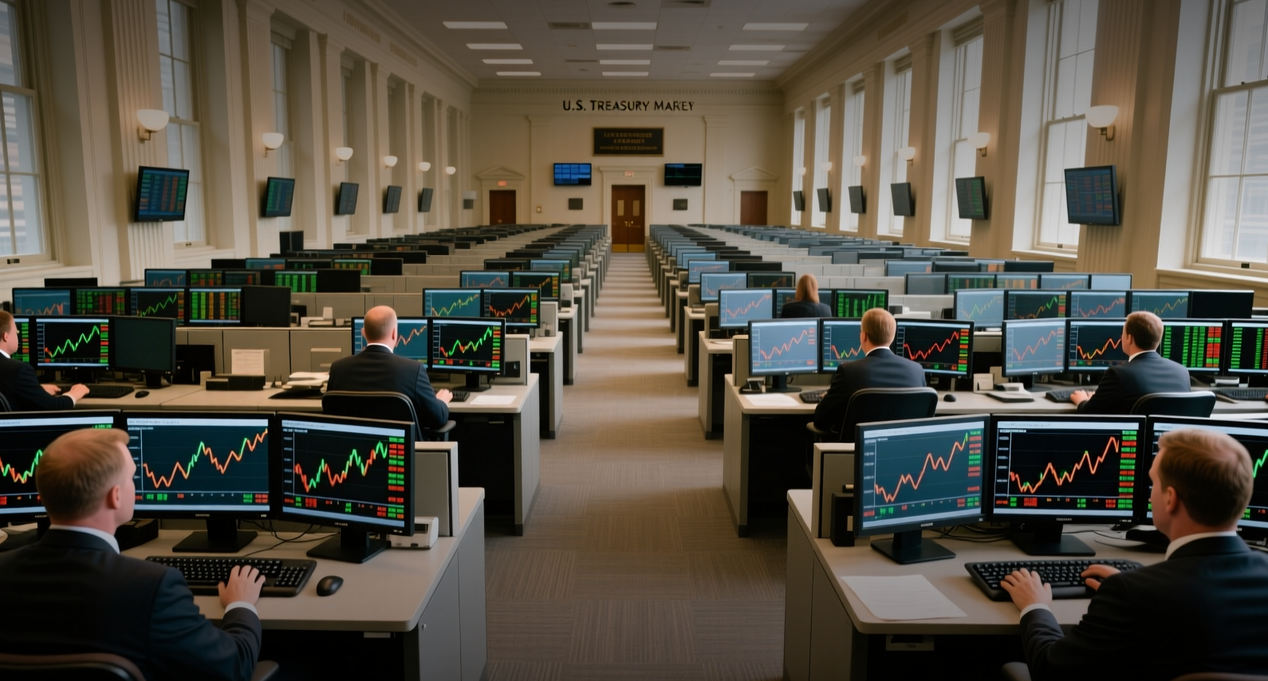
Treasury Secretary Scott Bessent said he and Federal Reserve Chair Kevin Warsh share the same stance on bonds, a rare fiscal-monetary alignment as the 10-year Treasury yield holds flat since President Donald Trump took office.
Treasury Secretary Scott Bessent said he and Federal Reserve Chair Kevin Warsh share the same stance on bonds, as the 10-year Treasury yield holds flat since Trump took office and Fitch affirmed the U.S. credit rating.
"I never said I intended to change the direction of bond prices," Bessent said in an interview. "I don't think I can change bond prices." He declined to speculate on what the Fed might or might not do.
The 10-year Treasury yield sits at 4.722 percent, while the U.S. bond market ranks as the best-performing market this month. Fitch affirmed the U.S. credit rating, and the national debt topped $40 trillion.
The alignment matters because coordinated fiscal-monetary policy could stabilize long-term rates, supporting equities and risk assets. FedWatch odds for a 25-basis-point rate hike on Sept. 16 rose from 36 percent to 62.9 percent after Warsh's hawkish Jackson Hole speech.
The Treasury-Fed alignment comes as Bessent faces scrutiny over an unusual bond buyback program and the $40 trillion debt pile. Stan Druckenmiller, CEO of Duquesne Family Office and a former Bessent boss in the 1990s, wrote in The Wall Street Journal that the Treasury Department was "on the wrong side of that trade" and needed to do more to address the deficit.
Bessent pushed back, saying long-term U.S. bond yields were down in August "for all the noise" and that rising yields were "a global phenomenon." He said he was working with Russ Vought, director of the Office of Management and Budget, on a fiscal package to bring down the debt and deficit that would be revealed in coming weeks.
Rate Hike Odds Jump After Warsh's Hawkish Tone
Warsh reiterated his commitment to the Fed's 2 percent PCE inflation target at Jackson Hole, and FedWatch odds for a 25-basis-point rate hike on Sept. 16 rose from 36 percent to 62.9 percent. The hawkish stance contrasts with the Treasury's push for growth, which Bessent said is needed because "the world has this mountain of debt."
Cross-Asset Ripple
The bond stance has cross-asset implications. The 10-year JGB yield climbed to 2.93 percent, a three-decade high, as investors grew nervous about Japan's towering debt pile. The yen slid below 160 per dollar, a threshold widely seen as increasing the likelihood of intervention, after a rare joint Japan-U.S. yen-buying intervention on July 31.
Bessent said recent yen moves were "pretty well contained" and not the kind of disorderly moves that led to the joint intervention. He expects Bank of Japan Governor Kazuo Ueda to "do the right thing" on monetary policy, and said Japan has "conquered" deflation and shifted to "Takaichi-nomics" under Prime Minister Sanae Takaichi.
Bessent is presiding over the Group of 20 finance ministers' two-day gathering in Asheville, North Carolina, where he plans to push the rest of the group to fall in line behind Washington while pinning America's economic troubles on China and the previous administration. He also defended the Treasury's decision to bar reporters from The New York Times, The Wall Street Journal and Bloomberg News from covering the meetings, saying the exclusion "has nothing to do with point of view."
The alignment between the Treasury and the Fed on bonds could signal coordinated fiscal-monetary policy direction, potentially stabilizing long-term rates. If the Fed hikes in September and the Treasury delivers a credible fiscal package, the 10-year yield could hold its range; if not, the $40 trillion debt pile keeps long-term rates elevated.
This article is for informational purposes only and does not constitute investment advice.
