
The Justice Department is reviving Civil War-era prize courts to fast-track seizure of Iranian oil tankers, tightening the blockade on Tehran's crude exports.
The Justice Department is reviving Civil War-era prize courts to fast-track seizure of Iranian oil tankers, tightening the blockade on Tehran's crude exports.
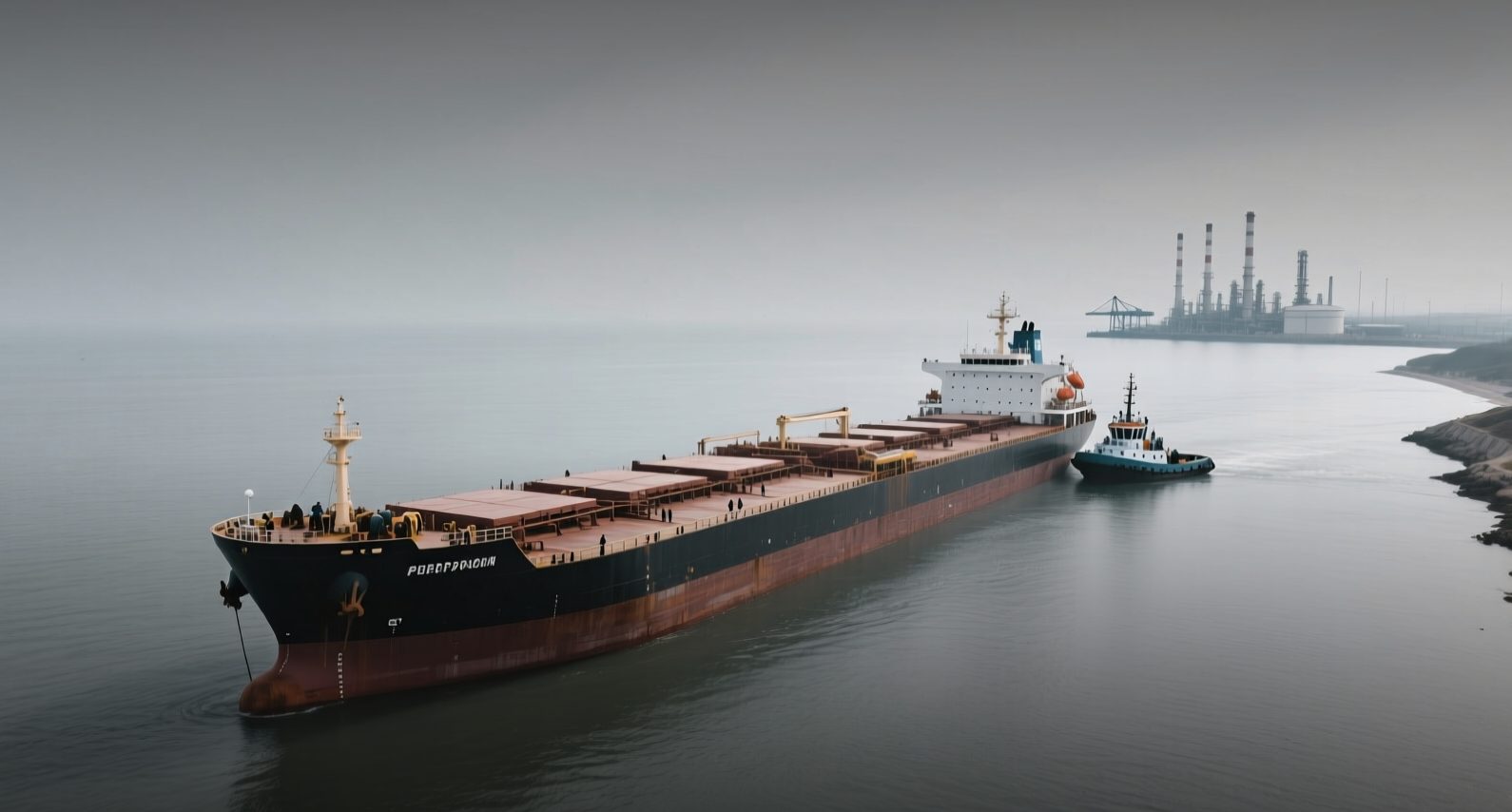
The Justice Department is reviving prize courts — dormant since World War II — to fast-track seizure of Iranian oil tankers, tightening a blockade that has already intercepted multiple vessels since April. The unfinalized plans, coordinated with the Pentagon, would offer federal prosecutors a faster path to claim oil and cargo taken from enemy or neutral vessels as US property, with proceeds sold and transferred to the treasury.
"Our national security interests may require the United States military to seize vessels or cargo supporting the enemy during military conflict," Aaron Reitz, the Houston-based US attorney whose office is partnering with department headquarters, said in a statement. "If that happens, our federal courts must be ready to adjudicate the disposition of these captured vessels and cargo."
Prize courts have gone largely unused since the Spanish-American War of 1898 and entirely dormant since World War II. In recent decades, the US has relied on civil forfeiture law to seize ships and enforce sanctions violations — a process that has proven slow and contested. In one ongoing case, the seizure of a Venezuelan supertanker that supported Iran led DOJ to file a civil complaint seeking to liquidate the ship and its 18 million barrels of crude oil. Multiple third parties, including the shipping company and families of Iranian terrorism victims holding judgments under a separate statute, have intervened, bogging down the process.
The anticipated revival is the second time this year the administration has turned to an obscure court system to carry out its agenda, after bringing the first-ever case before the Alien Terrorist Removal Court in July.
Houston Port as Venue
DOJ has focused on the Southern District of Texas federal trial court as the venue, according to two people familiar with the deliberations. The Houston-based district is home to the nation's largest petrochemical complex, located off Houston's 50-mile port, which can store large volumes of crude. Prize courts can function out of any US district court with jurisdiction over the port where a captured ship is taken. Once the district court adopts rules for the proceedings, it could adjudicate a prize claim filed by the US attorney.
Outside parties, including ship owners, could still enter an appearance and object to the capture, but their arguments would be limited compared with forfeiture cases, said Allison Luzwick, a Holland & Knight attorney specializing in the maritime industry. "Great strides have been made in international law and the law of war since the late 1800s, and all of that is going to come into play when we're actually looking at proceedings involving a vessel that is potentially seized under Prize Act authority."
In Southern Texas, the responsibility for filing claims would fall on Reitz, who was appointed in July and maintains close ties to department officials in Washington from his brief stint last year as head of DOJ's Office of Legal Policy.
Legal Risks and Market Fallout
Supporters describe prize law's benefits of expediting the transfer of proceeds from oil tanker cargo into the US treasury. The move may also demonstrate President Donald Trump's intent to add a legal enforcement mechanism to strengthen the US blockade. "It helps offset the price of the war," said Eugene Kontorovich, an international law professor at George Mason's Antonin Scalia School of Law. "It also shows Iran that America is really treating this as a serious international blockade and is willing to use all the tools at its disposal."
If established, however, the approach would invite legal challenges over whether the US is engaged in hostilities that give rise to the Prize Act and whether the lack of congressional authorization renders captures unlawful. Jill Goldenziel, a law professor who trains US military leaders at the National Defense University, warned in an April Forbes column that while prize law would "send a strong message to non-sanctioned, neutral merchant ships bound for Iranian ports not to violate the U.S. blockade," it "could also open the door for China to apply prize law against the United States — a dangerous proposition for U.S. and neutral merchants in any war with China."
The prize court revival carries direct implications for global crude markets. Tighter enforcement of the blockade could reduce Iranian oil export capacity, tightening global crude supply and potentially pushing oil prices upward. The escalation in sanctions enforcement may increase geopolitical risk premiums in energy markets, affect tanker insurance rates, and create uncertainty for oil-dependent sectors.
The last time the US relied on prize courts at scale was during the Spanish-American War, when captured Spanish vessels and cargo were liquidated to fund military operations. The modern revival, if it survives legal scrutiny, would mark the first application of 19th-century prize law to 21st-century sanctions enforcement — a test case for whether the US can use maritime war courts as a tool of economic warfare.
This article is for informational purposes only and does not constitute investment advice.
