
A single university lab in China produced the computer scientists now closing the AI gap with Anthropic and OpenAI to a matter of weeks.
A single university lab in China produced the computer scientists now closing the AI gap with Anthropic and OpenAI to a matter of weeks.
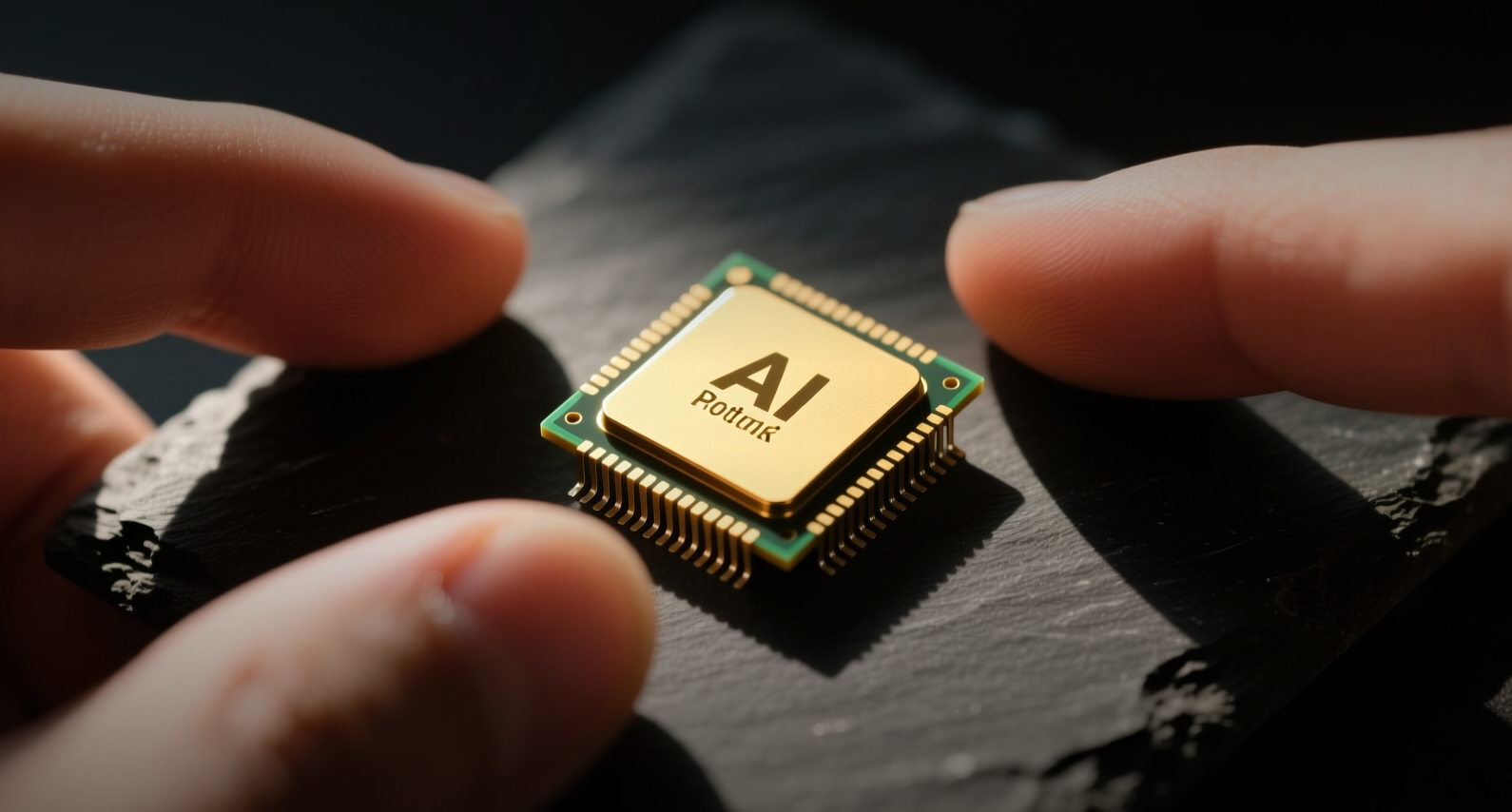
A Chinese university lab produced the scientists behind China's AI leap, with Kimi K3 now beating Claude Opus 4.8 on coding benchmarks and closing the gap with US frontier labs to a quarter. The researchers, trained in a single academic program, have translated their work into commercial products that compete directly with Silicon Valley's top offerings.
"The more important race in China may be the race to diffuse AI into the real economy," Grace Shao, an analyst who covers AI and China and author of the newsletter AI Proem, said. "I don't think I've ever heard any executives or researchers describe their work as part of a national contest against the United States."
Chinese models from Moonshot AI, Z.ai, DeepSeek, and Alibaba are nearly as capable as and far cheaper to use than offerings from OpenAI, Anthropic, or Google. Kimi K3, the largest open-source model ever released, placed ahead of Claude Opus 4.8 on real-world coding benchmarks. US export controls were supposed to keep China behind — the gap instead went from a semester to a quarter.
The acceleration threatens the valuation premium US AI leaders command. Anthropic pays xAI $1.25 billion a month to rent GPUs, while Chinese labs achieve comparable results at a fraction of the cost. If the trend holds, the competitive dynamics of the global AI market could shift decisively.
The university lab's output spans frontier research and commercial deployment. DeepSeek R2 and Qwen 3, released earlier this year, demonstrated that Chinese labs could match US frontier performance without access to the most advanced Nvidia chips. The scientists' ability to monetize their work — as one source familiar with the lab's operations put it — has turned academic papers into revenue-generating products.
China's manufacturing base strengthens the advantage. The country produces roughly 90 percent of the crucial components in solar panels and nearly 90 percent of humanoid robots sold globally. That physical-world edge, combined with AI software advances, positions Chinese companies to export AI services through the Belt and Road Initiative, building data centers and fiber-optic networks across Asia, Africa, and Latin America.
The cost differential is stark. Chinese frontier models are reportedly far cheaper to operate per token than their US counterparts, making them more economical for companies adopting AI at scale. While OpenAI and Anthropic charge premium rates for API access, Chinese labs have used aggressive pricing and open-weight distribution to capture market share in emerging economies. China has even built a data center 35 meters beneath the East China Sea, cooled by seawater and powered by offshore wind — a sign of the country's willingness to invest in unconventional AI infrastructure.
For OpenAI and Anthropic, the competitive threat is no longer theoretical. Chinese models are closing the gap on benchmarks while undercutting US pricing. Anthropic's $1.25 billion monthly GPU rental from xAI highlights the capital intensity of US frontier AI — a cost structure Chinese labs have avoided through more efficient training methods and open-source distribution.
The White House's contradictory stance on Chinese technology — easing chip export restrictions while debating whether federal agencies can use Anthropic's models — has further muddled the competitive picture. Kyle Chan, a fellow at the Brookings Institution's John L. Thornton China Center, said China's government and businesses are "moving very fast" relative to the US.
For investors, the question is whether US AI leaders can sustain their valuation premiums as Chinese competitors deliver comparable capability at lower cost. The gap has narrowed from a semester to a quarter in under a year — at this pace, the race may be closer than the market prices in. US AI stocks trade at significant multiples of forward earnings, and any sustained erosion of the technological moat could compress those valuations.
This article is for informational purposes only and does not constitute investment advice.
